





 Subscribe


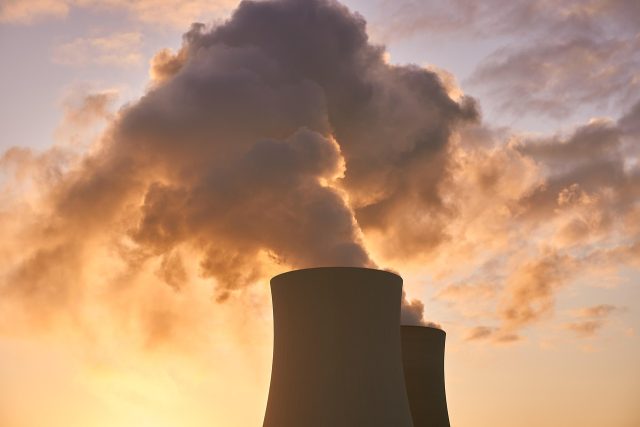
For decades, Ireland’s approach to nuclear energy has rested on an odd contradiction. The State has prohibited the generation of electricity by nuclear fission at home, while accepting electricity imports from systems that include nuclear power abroad. It has treated domestic nuclear generation as politically unthinkable, while relying on interconnection with Britain and, soon, France to strengthen security of supply. That position was never especially coherent. It is now becoming impossible to defend.
This is why James O’Connor TD’s Electricity Regulation (Removal of Nuclear Fission Prohibitions) Bill 2026 matters. The Fianna Fáil deputy’s proposal would remove the statutory barriers that prevent nuclear fission from even being considered as part of Ireland’s electricity system. It does not build a reactor. It does not choose a site. It does not settle questions of cost, waste, regulation, planning or public consent. But it does something important: it challenges the legal taboo that has kept Ireland from having a serious national debate about one of the most reliable low-carbon electricity sources available.
That alone is a significant political moment.
The prohibition dates from the Electricity Regulation Act 1999, which states that an order authorising electricity generation shall not provide for the use of nuclear fission. The ban has also been reflected in planning law, including the Planning and Development Act 2024. In practice, Irish policy has not merely chosen not to build nuclear power. It has made the option legally unavailable.
For years, this position was defended with very little argument. In March 2021, when Carol Nolan TD asked whether the Government intended to revisit the prohibition, Eamon Ryan’s answer as energy minister was direct: nuclear-powered electricity generation plants were prohibited and the Government had no plan to change that position. The response captured the mood of the time. Nuclear was not assessed as one energy technology among others. It was excluded before the analysis began.
That old certainty is now weakening. Taoiseach Micheál Martin has said Ireland should examine nuclear energy seriously, including the potential of small modular reactors. O’Connor says senior figures in Fianna Fáil have been supportive of his Bill. The Irish Times, hardly a reckless voice on energy policy, has argued that the debate is worth reopening. Even opponents now increasingly frame their objections around cost, timescale and practicality, rather than pretending the subject cannot be discussed.
That shift has been forced by reality. Ireland has some of the highest electricity prices in Europe. Eurostat data for the second half of 2025 showed Ireland with the highest non-household electricity prices in the EU. Households also face severe energy costs. For businesses, especially energy-intensive ones, this is a competitiveness problem. For families, it is a cost-of-living problem. For the State, it is an energy-security problem.
At the same time, Ireland’s electricity demand is rising. Population growth, data centres, electrified heating, electric vehicles and industrial activity all increase pressure on the grid. The Government’s answer has been to rely heavily on renewables, especially wind, with a target of meeting 80 per cent of electricity demand from renewable sources. Ireland has made real progress in onshore wind and solar. That should be acknowledged. But it does not remove the central difficulty. Wind and solar are weather-dependent. They require grid reinforcement, storage, backup generation and interconnection. They are essential parts of the system, but they are not, by themselves, a complete system.
Ireland’s offshore wind potential is enormous. It should be developed. But the programme has already run into familiar problems: planning delays, grid constraints, port capacity, financing questions and delivery risk. A serious energy policy cannot place every strategic bet on one set of technologies and then hope that engineering, weather and planning law will align neatly with political targets.
Nuclear power addresses a different part of the problem. It provides firm, high-capacity, low-carbon electricity. It can run day and night. It does not depend on wind speed or sunlight. It offers system stability in a way that intermittent sources cannot. That does not make it simple, cheap or quick. It does make it relevant.
The usual objections deserve to be taken seriously. Large nuclear plants are capital-intensive and slow to build. Western projects have too often suffered from cost overruns and delay. Ireland has no domestic nuclear regulator for power generation, no established nuclear workforce, no selected sites and no settled waste policy. Small modular reactors are promising, but most are not yet deployed commercially at scale in Europe. Anyone pretending nuclear could cut Irish electricity bills in the next five years is not being honest.
But that is not an argument for keeping a ban. It is an argument for beginning the work.
Repealing the prohibition would allow Ireland to conduct proper feasibility studies, establish a regulatory pathway, examine grid implications, assess possible sites, participate more seriously in European nuclear research and consider whether small modular reactors could fit a smaller island grid. It would also allow policymakers to compare nuclear honestly against the full system costs of a renewables-heavy grid, including backup capacity, storage, curtailment, transmission upgrades and security-of-supply measures.
That is the debate Ireland has avoided for too long.
The European context has changed sharply. In 2022, the European Commission included nuclear energy, under conditions, in the EU Taxonomy for sustainable activities. The ECR Group welcomed that decision, arguing that nuclear and gas must be recognised as part of a realistic transition. Alexandr Vondra made the point that nuclear had previously been treated almost as a forbidden word in parts of Brussels, but had now been acknowledged as a clean resource. Bogdan Rzońca similarly argued that nuclear and gas could support stable, affordable supply and rapid emissions reduction if given access to capital.
That position has aged well. Europe’s energy crisis after Russia’s invasion of Ukraine exposed the danger of relying too heavily on imported fossil fuels and politically convenient assumptions. Germany’s nuclear phase-out remains a warning. By shutting down functioning nuclear capacity while depending heavily on gas and, at times, coal, Germany showed how ideological energy policy can collide with physical reality.
Other countries have drawn different conclusions. France continues to rely on nuclear for the bulk of its electricity and has one of Europe’s lowest-carbon power systems. Finland’s Olkiluoto 3, despite its long and costly construction, now supplies major low-carbon capacity to the Finnish grid. Belgium, once committed to a nuclear phase-out, has moved to extend reactor lifetimes and in 2025 repealed its phase-out law. Across Europe, the conversation has shifted from whether nuclear is acceptable in principle to how it can support energy security, decarbonisation and industrial competitiveness.
The European Commission’s March 2026 strategy on small modular reactors reinforces that change. Brussels now wants the first European SMR projects online in the early 2030s. That does not mean Ireland should buy into every optimistic claim made by the nuclear industry. It does mean the EU itself now recognises that modular nuclear technology may have a role in the next phase of clean-energy development. Ireland should not be legally absent from that conversation.
There is also the question of interconnection. Ireland already imports electricity through links with Britain, whose generation mix includes nuclear. The Celtic Interconnector with France will deepen Ireland’s connection to a country where nuclear power is central to the electricity system. This is sensible from a security-of-supply perspective. But it also exposes the weakness of Ireland’s domestic position. If nuclear-generated electricity is acceptable when produced abroad, why is the technology so unacceptable that Ireland cannot even examine producing it at home?
Opponents answer that Ireland is too small, that nuclear would take too long, and that investment should focus on offshore wind. These points may affect the final decision. They do not justify a statutory ban. A mature country should be able to study an option and reject it on evidence if the numbers do not work. What it should not do is prohibit the analysis in advance.
The O’Connor Bill should therefore be understood modestly but seriously. It is not a complete energy policy. It is a necessary opening. If passed, Ireland would still need a national nuclear assessment, a regulatory design, public consultation, skills planning, emergency preparedness, waste-policy analysis and clear comparison with alternatives. Those steps would take years. That is precisely why the work should begin now.
The worst argument in Irish energy policy is the claim that because something cannot help immediately, it should not be examined. That mentality has contributed to the present weakness. Power systems are built over decades. The decisions Ireland failed to take twenty years ago are shaping today’s prices and constraints. The decisions avoided today will shape the 2040s.
Ireland needs wind. It needs solar. It needs interconnectors. It needs storage. It needs grid investment. It will probably need flexible gas for some time. But it also needs firm low-carbon power, and it needs the intellectual honesty to admit that nuclear belongs in that discussion.
The ECR has been right on this question. A serious decarbonisation strategy should not discriminate against proven technologies to satisfy ideological preferences. The test should be whether an energy source strengthens security, reduces emissions, supports affordability and protects industrial competitiveness. Nuclear plainly has the potential to meet those tests.
Ireland is not about to become France. Nor should anyone pretend that nuclear power is an effortless answer to the State’s energy problems. But keeping a legal prohibition in place while importing nuclear-derived electricity and struggling with high prices is not prudence. It is avoidance.
James O’Connor’s Bill gives the Dáil a chance to end that avoidance. Ireland should take it. The first step toward a rational energy policy is not to choose nuclear tomorrow. It is to stop making it illegal to think seriously about nuclear at all.