





 Subscribe


As the European Commission steps up diplomatic efforts to finalize the details of what is shaping up to be the 21st sanctions package against the Russian Federation, the strategic challenges related to the Old Continent’s defense and maritime sovereignty are coming to a head. A preliminary analysis of the measures under discussion—recently revealed by authoritative international publications such as Politico—exposes the structural futility of a bureaucratic and hyper-regulated approach in the face of hybrid threats of a purely geopolitical and military nature.
In Brussels, there is an air of renewed political momentum. Prominent figures in the EU leadership, from High Representative for Foreign Affairs Kaja Kallas to Commission President Ursula von der Leyen, are loudly calling for a “package of unprecedented proportions.” The theoretical premise is simple, almost straightforward: the Russian economic apparatus is said to be in a state of severe distress due to a “static inflationary shock.” Consequently, the EU executive sees an opportunity to launch a decisive strike to force the Kremlin to scale back its negotiating demands regarding Ukraine.
The Achilles’ heel of the Shadow Fleet and maritime security
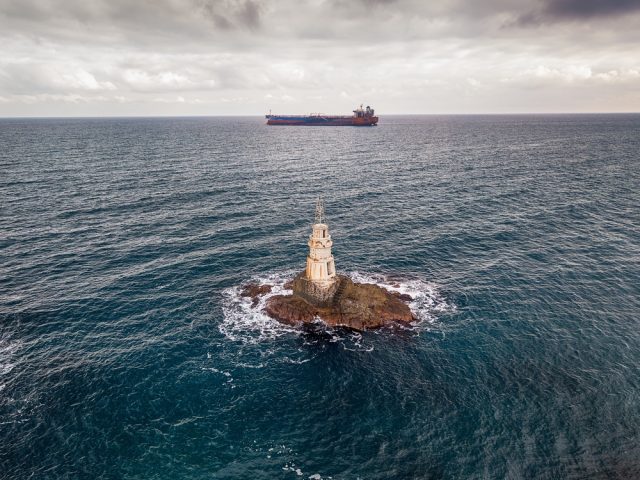
The focal point of the upcoming sanctions offensive (scheduled for late June to early July) will once again be the so-called “shadow fleet”: that opaque network of obsolete tankers with undefined corporate ownership used by Moscow to circumvent the cap on crude oil prices. The Commission’s plans aim to tighten controls and reintroduce a total ban on the provision of maritime services to Russian carriers, a measure historically opposed by nations with strong mercantile traditions such as Greece and Malta.
From the perspective of conservative regional doctrine, this approach highlights three structural weaknesses that directly undermine the defensive architecture of Europe’s borders:
- Externalization of environmental and security risks: The vessels used in illicit trafficking do not comply with any international standards. Banning such vessels from territorial waters without any real military interdiction or escort capability merely pushes these routes to the edge of international waters (as demonstrated by the continuous transits off southern Sweden or in the Gulf of Finland), increasing the risk of catastrophic accidents or provocative actions close to NATO shores.
- The ineffectiveness of paper-based measures against asymmetric flows: To think that one can curb the logistical reach of a nuclear superpower by imposing transaction bans or targeting individual banks and companies in the industrial supply chain is to ignore the porosity of global supply chains. Every restriction imposed by EU law leads to a redirection of trade routes toward Asia and the Middle East, without affecting Russia’s ability to finance its defense budget.
- Instrumental use of ideological sanctions: The fact that the package includes measures against top leaders of the Russian Orthodox Church, such as Patriarch Kirill, highlights the markedly political and domestic propaganda nature of certain decisions, previously held back by the geopolitical realism of then-Hungarian Prime Minister Viktor Orbán. Such measures offer no added value to military deterrence or the protection of critical European assets.
The Washington Factor and European Defense Sovereignty
The European debate takes place against a backdrop of profound uncertainty regarding the United States’ strategic posture. European diplomats view the upcoming U.S. elections and the Trump administration’s complex balancing act—oscillating between statements of appreciation for Kyiv’s military efficiency and sudden revocations of oil sanctions to stabilize domestic prices—with apprehension. The announced diplomatic mission to Kyiv by U.S. mediators Steve Witkoff and Jared Kushner marks the start of a negotiation phase in which Europe risks finding itself in a passive position.
Faced with the risk of marginalization in future international negotiations, some European capitals—coordinated within the “E3” framework (France, Germany, and the United Kingdom)—are struggling to regain strategic centrality, declaring themselves ready to assume greater financial and operational responsibilities. However, the provision of massive credit lines (such as the recent EU allocation of 90 billion euros) cannot compensate for the structural shortcomings of the individual member states’ integrated defense systems.
Conclusions for the conservative scenario
For advocates of a Europe of Nations grounded in the reality of sovereignty and geopolitical pragmatism, Brussels’ regulatory hyperactivity represents a fleeting remedy for a deep-seated problem. The defense of the West and the stability of Europe’s maritime borders cannot be guaranteed by updating corporate sanctions registries or extending trade bans to foodstuffs.
True deterrence is built by reestablishing naval superiority in strategic basins, strengthening national defense manufacturing capabilities, and protecting energy supply channels from external interference. As long as the European Union entrusts its security to costly bureaucratic barriers rather than a serious, coordinated, and autonomous industrial rearmament effort, the shadow fleet will continue to sail our seas, indifferent to the decrees drafted in the halls of Brussels.