





 Subscribe


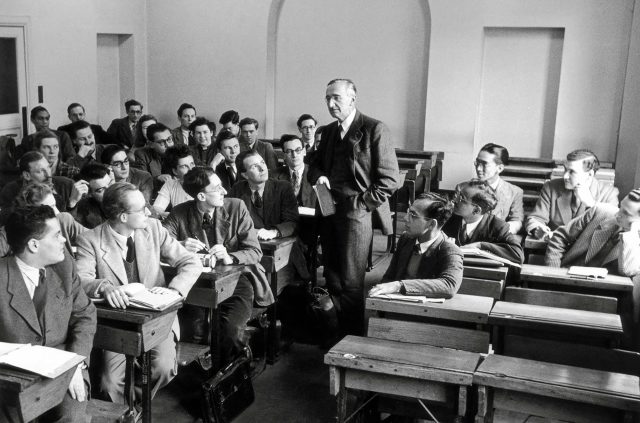
Cass Sunstein is a distinguished legal scholar and a Professor of Law at Harvard University. A registered Democrat, he worked in the White House under Barack Obama. In late 2026, he published a book on my mentor, the Anglo-Austrian philosopher Friedrich A. von Hayek (above), titled Hayek for Our Time. There, he sets out Hayek’s arguments for why liberty works and socialism does not. Briefly, the only way to use the knowledge dispersed among individuals in society is to allow them to apply their special knowledge within protected domains. The basic fact of life is each individual’s inevitable ignorance, which can only be overcome by institutions that transmit the knowledge they need but do not have, particularly the price mechanism of the free market. This implies that central planning is bound to fail: planners can never accumulate all the knowledge they need. Dispersed knowledge requires dispersed power: individual protected domains, liberty under the law.
Uncertainty and Unpredictability
Sunstein considers Hayek one of the most important thinkers of the modern era. I agree. As Sunstein puts it, Hayek is the apostle of ignorance. Sunstein argues that artificial intelligence (AI) cannot overcome this human condition, although it can help us accumulate and process far more data than any planning agency could. Too many undisclosed and ever-changing variables are at play. However sophisticated, computer programmes cannot, even with the help of AI, predict with any certainty whether a film will become a hit or a book a bestseller. I should know: In 1996, I was thinking about writing the biography of an Icelander who, as a young communist in the 1930s, watched Hitler salute a Nazi march on Wilhelmstraße and Stalin wave to the crowd on Red Square. He saw his German girlfriend and their little daughter disappear into the Gulag, and he wrote a doctoral dissertation at Harvard under Joseph Schumpeter, becoming an influential adviser to Icelandic governments. I discussed this with a seasoned publisher. He leant back in his seat and said with a condescending smile: ‘A book about Benjamín Eiríksson will never sell.’ My book became a bestseller.
Interventions Compatible with Planners’ Ignorance?
Sunstein gives many examples that AI cannot solve. Who could foresee sudden shocks, such as a technological breakthrough or a massive terrorist attack? What could explain a romantic love affair, dependent on a series of contingencies and coincidences? Here, much would depend on variables not known in advance. Nevertheless, Sunstein thinks our inevitable ignorance would not rule out moderate government interventions, provided they are based on what rational, well-informed consumers would choose, not on planners’ preferences. These could include nudges, taxes, subsidies, or mandates; for example, public campaigns against smoking, taxes on sugar-sweetened beverages, mandatory seatbelts and motorcycle helmets, and carbon taxes. Sunstein notes that such interventions, however, require careful research. Again, I may add an Icelandic example. The European Union, seeking cleaner technology, charges airlines for carbon dioxide emissions. This is supposed to make trains a more attractive way to travel than aeroplanes. Because Iceland is a member of the EEA, the European Economic Area, Iceland’s national carrier, Icelandair, is also charged. But Iceland has no trains, and most of her energy needs are already met by clean hydroelectric and geothermal power. For Iceland, this tax is inappropriate.
Non-Authoritative Intervention
Iceland also provides an example of what Sunstein would probably accept as a judicious intervention. During the 2007–2009 financial crisis, Iceland adopted the principle that deposits would have priority over other claims on bank estates. The two main arguments for this are that it greatly reduces the risk of bank runs and that depositors cannot be expected to be as alert and well-informed as professional investors. Other countries have now adopted this principle. It is what John Stuart Mill would have called a non-authoritative intervention. I should add that Sunstein’s comparison of Mill’s romantic individualism and Hayek’s liberty without permissiveness is fascinating.