





 Subscribe


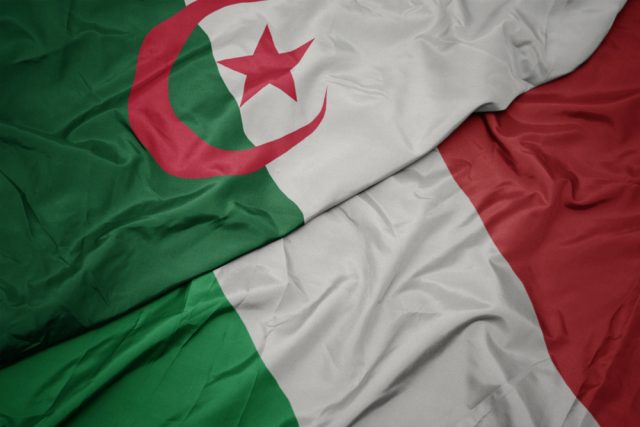
In recent years, relations between Italy and Algeria have significantly strengthened, taking on an increasingly structured and multidimensional form that places them among the most significant examples of bilateral cooperation in the Euro-Mediterranean region. This evolution is not the result of contingent dynamics, but rather the outcome of a long-term process based on converging interests, economic complementarity, and growing strategic interdependence, particularly in the energy and security sectors. Within this framework, the relationship between Rome and Algiers has progressively strengthened to the point of representing a benchmark for relations between Europe and North Africa, contributing to the definition of new regional balances. The recent institutional visit of Italian Prime Minister Giorgia Meloni to Algiers fits perfectly into this evolving trajectory, representing not only a symbolic act of diplomatic continuity but also a moment of revitalization and redefinition of shared priorities. This agreement is of substantial significance as it demonstrates the political will of both parties to further strengthen an already consolidated partnership, expanding its scope of intervention and intensifying cooperation mechanisms. Specifically, the bilateral relationship today encompasses multiple interconnected dimensions, ranging from energy security to economic and industrial cooperation, geopolitical issues, and regional crisis management. In an international context characterized by high volatility and growing systemic tensions, strengthening the relationship between Italy and Algeria therefore takes on strategic importance that transcends the strictly bilateral dimension, contributing to the stability and resilience of the entire Mediterranean region.
THE CONTEXT OF THE INSTITUTIONAL VISIT
The Italian Prime Minister’s mission to the People’s Democratic Republic of Algeria followed a well-established diplomatic protocol, marked by high-level institutional meetings and moments of strong symbolic value. Upon her arrival, Meloni met with Algerian Prime Minister Sifi Ghrieb, thus launching an agenda of discussions that culminated in the bilateral meeting with President Abdelmadjid Tebboune at the Presidential Palace in El Mouradia. Another significant moment was the visit to the Martyrs’ Monument, where the Italian delegation participated in the laying of a wreath, a gesture expressesing respect for Algeria’s historical memory and strengthens the symbolic nature of relations between the two countries.
CONTINUITY AND CENTRALITY OF THE BILATERAL RELATIONSHIP
The visit continues the Prime Minister’s previous official mission to Algeria, which took place in January 2023, a few months after taking office. This choice highlights the priority that Rome places on its relationship with Algeria, which it considers a strategic partner in an international context characterized by growing instability. Relations between the two countries are described as historically solid and based on mutual support in times of difficulty. In recent years, this relationship has further strengthened, reaching unprecedented levels of cooperation and integration. This consolidation is reflected in the shared desire to transform the partnership into a reference model for other international relations.
ECONOMIC AND COMMERCIAL DIMENSION
One of the most significant aspects of the Italian-Algerian relationship concerns the economic dimension. Algeria is currently Italy’s main trading partner on the African continent. The most recent data indicate trade reaching nearly €13 billion in 2025, accompanied by Italian investments of approximately €8.5 billion. Italy is Algeria’s largest customer and its second-largest supplier, with a significant share of Algerian exports directed to the Italian market. These figures highlight a strong complementarity between the two economies, based on a combination of mutual trust and converging interests. Economic cooperation is not limited to trade in goods and services, but extends to numerous productive sectors, including agribusiness, defense, pharmaceuticals, transportation, logistics, infrastructure, and technological innovation. In this context, the intention to establish a bilateral Chamber of Commerce emerges, conceived as a tool to further strengthen relations between the two countries’ productive systems.
THE STRATEGIC ROLE OF ENERGY
The energy sector is at the heart of the partnership between Italy and Algeria. Algeria is currently Italy’s main supplier of natural gas, a collaboration that dates back to the second half of the twentieth century and the construction of the Trans-Med gas pipeline, a key infrastructure directly connecting the two countries. In recent years, this cooperation has taken on even greater importance, especially given Italy’s need to diversify its energy sources following the Russian-Ukrainian conflict. Algeria has played a decisive role in reducing energy dependence on Russia, contributing to Italy’s goal of becoming an energy hub between Africa and Europe. At the same time, the collaboration is expanding to new areas, such as gas exploitation, offshore exploration, and the development of renewable energy. These initiatives are part of a broader vision that conceives energy not only as an economic resource but also as a tool for shared development and regional stability.
THE MATTEI PLAN AND DEVELOPMENT PROJECTS
Another central element of the partnership is the Mattei Plan for Africa, through which Italy promotes a model of cooperation based on equal relationships and mutual growth. Algeria occupies a leading position within this strategy, serving as a key hub for the implementation of several projects. Among the most advanced initiatives is a public-private project aimed at reclaiming over 36,000 hectares of desert land for agricultural production. Despite some bureaucratic difficulties, the project is progressing and anticipates a significant increase in cultivated areas by 2026. Another significant initiative involves the creation of a vocational training center in the agricultural sector in Sidi Bel Abbès, named after Enrico Mattei. This center aims to become a point of reference for the entire African continent, contributing to the development of local skills and the dissemination of innovative agricultural practices.
MIGRATORY COOPERATION AND SECURITY
The collaboration between Italy and Algeria also extends to the management of migration flows, an area in which the two countries have developed a model considered effective at the regional level. The shared goal is to combat criminal networks engaged in human trafficking, a phenomenon that poses a threat to both security and social stability. Bilateral cooperation has contributed to significantly reducing the number of irregular landings and victims in the Mediterranean, demonstrating the importance of a coordinated approach. Algeria also actively participates in international initiatives aimed at addressing the root causes of migration, including the Rome Process.
SHARED GEOPOLITICAL CHALLENGES
During the bilateral meetings, considerable attention was devoted to major international crises. Particular attention was paid to the situation in the Middle East, characterized by persistent tensions and serious humanitarian consequences, especially in the Gaza Strip and Lebanon. The parties also discussed the conflict in Ukraine, emphasizing the need to reach a solution that guarantees lasting peace. Another key issue is the stability of the Sahel region, an area heavily affected by terrorism and jihadism, where Algeria plays a leading role and Italy is engaged through military, diplomatic, and cooperation instruments. Finally, the issue of Western Sahara was addressed, for which Italy supports a negotiated solution in accordance with United Nations principles.
CULTURAL DIMENSION AND FUTURE PROSPECTS
In addition to economic and geopolitical aspects, the partnership between Italy and Algeria is also based on deep cultural and historical ties. This dimension was further enhanced during the visit, also in view of significant international events such as Pope Leo XIV’s upcoming apostolic journey to Africa, which will begin in Algeria. This event takes on symbolic significance, confirming Algeria’s role as a bridge between Europe and the African continent. In this context, the future prospects of the partnership appear oriented toward further deepen relations, including through the organization of new intergovernmental summits.
A MODEL OF EURO-MEDITERRANEAN COOPERATION
The evolution of relations between Italy and Algeria increasingly highlights how a partnership built on converging interests, economic complementarity, and structured and ongoing political dialogue can become a significant paradigm for international cooperation in the Euro-Mediterranean region. This model is distinguished not only by the strength of its institutional ties but also by its ability to adapt to changing global conditions while maintaining long-term strategic coherence. The recent visit of the Italian Prime Minister to Algiers further reaffirmed the centrality of this relationship, highlighting a shared desire to consolidate and expand the scope of collaboration. This orientation translates into a strengthening of existing synergies and a progressive opening to new areas of cooperation, in line with emerging regional and international challenges. In an international system characterized by growing complexity, geopolitical instability, and economic interdependence, the relationship between Italy and Algeria takes on a value that transcends the bilateral dimension, serving as a source of stability across the Mediterranean region. It also presents itself as a privileged laboratory for the development and implementation of shared policies, aimed not only at energy security but also at promoting sustainable development, the coordinated management of migration, and strengthening the resilience of the economies involved. From this perspective, the Italian-Algerian partnership can be interpreted as a virtuous example of multilevel cooperation, capable of integrating economic, political, and social dimensions, thus contributing to the development of a more stable and inclusive regional balance.