





 Subscribe


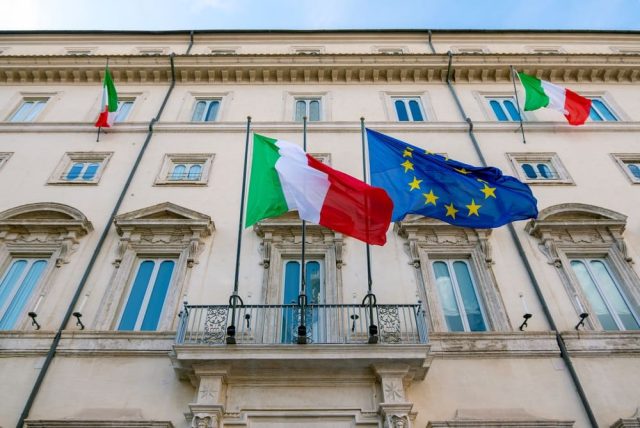
The meeting held on September 15, 2026, at Palazzo Chigi between Italian Prime Minister Giorgia Meloni and European Council President António Costa was part of a tour of the 27 EU member states’ capitals undertaken by Costa to discuss key items on the European and international agenda. The talks focused primarily on negotiations regarding the European Union’s new Multiannual Financial Framework for the 2028–2034 period, which will define the EU’s financial priorities for the upcoming programming cycle. These discussions are of particular importance for Italy, as it must outline its own priorities within a negotiation process that will shape future common policies.
ITALY’S PRIORITIES FOR THE EUROPEAN BUDGET
Italy’s position aims to support a European budget that meets the Union’s key strategic needs. In this context, Rome attaches particular importance to the Common Agricultural Policy and Cohesion Policy—both mandated by the Treaties and considered fundamental to European competitiveness and economic security. Safeguarding these policies is therefore a key Italian objective in the negotiations for the 2028–2034 Multiannual Financial Framework, as the allocation of available resources will determine the Union’s actual capacity to support various strategic sectors. At the same time, Italy advocates for allocating adequate resources to industry and research, which are deemed essential for meeting global competition challenges. The goal is to strengthen Europe’s production and innovation capabilities by incorporating these areas into the priorities of the future budget. Additionally, Italy calls for strengthening partnerships with countries of origin and transit for irregular migration flows, thereby linking European financial planning to the external dimension of migration management.
FUNDING THE NEW MULTIANNUAL FINANCIAL FRAMEWORK
Italy has expressed its willingness to contribute to funding the new Multiannual Financial Framework, while making this conditional on the development of an overall balanced solution. Key objectives include ruling out new forms of European taxation, alongside a call to streamline the Union’s administrative expenditure. Italy’s position thus combines a readiness to provide financial support for the future budget with the need to curb certain costs and establish funding mechanisms deemed sustainable. This approach reflects a desire to influence not only the volume of available resources but also how they are allocated and the methods used to finance the European budget. Consequently, negotiations for the 2028–2034 period represent a key opportunity for Italy to advance its priorities within the European framework.
COMPETITIVENESS AND ENERGY ON THE EUROPEAN AGENDA
Another point of agreement during the meeting concerned António Costa’s proposal to place competitiveness at the top of the agenda for the upcoming European Council. Prime Minister Meloni expressed her support for this approach, linking it primarily to the issue of energy. Indeed, the ongoing rise in energy prices is seen as a factor requiring targeted and timely action at the European level. Italy’s goal is to secure joint action capable of supporting both European businesses and citizens. Competitiveness is thus linked to energy costs and the need to prevent price hikes from undermining business productivity and the economic well-being of the population. In this context, the upcoming European Council is a priority event for bringing the energy issue into the debate on the Union’s economic strategies.
IMMIGRATION AND INTERNATIONAL PARTNERSHIPS
Migration represents another key area of discussion. Meloni welcomed the inclusion of a strategic debate on immigration in the agenda, intended to allow for an assessment of the new European approach to combating irregular migration. Particular attention will need to be paid to innovative solutions and the implementation of the new regulation on returns. For Italy, the European discussion must also focus on strengthening control of the Union’s external borders. This internal dimension is complemented by an international one, involving the consolidation of partnerships with countries of origin and transit for migration flows. Immigration management is thus framed within a perspective that combines European instruments, border control, and cooperation with third countries.
FUTURE ENGAGEMENTS AND ITALY’S STRATEGY
Overall, the dialogue between Meloni and Costa outlines some of the key priorities Italy intends to champion in upcoming European and international forums. Negotiations on the 2028–2034 Multiannual Financial Framework represent the primary arena for discussing Union resources, with Italy placing particular emphasis on the CAP, cohesion policy, industry, research, and partnerships with migrant origin and transit countries. Meanwhile, the next European Council will be a crucial opportunity to discuss competitiveness, energy costs, and migration policies. In both areas, Italy aims to foster greater European capacity for action by supporting measures benefiting businesses and citizens, strengthening external border controls, and consolidating international cooperation. The strategy outlined during the discussion highlights Italy’s intention to play an active role in defining the Union’s future priorities, engaging with both the multiannual financial framework and the key economic, energy, and migration dossiers set to shape the European agenda in the near future.