





 Subscribe


Four recent elections have shocked Europe. On 13 September 2026, the Swedish opposition, led by the Social Democrats, narrowly defeated the minority centre-right government, which had ruled with the support of the Sweden Democrats. In Germany, three state elections, in Saxony-Anhalt on 6 September and in Mecklenburg-Vorpommern and Berlin on 20 September, resulted in large gains for the anti-immigration Alternative for Germany (AfD), huge losses for the Christian Democrats and the Social Democrats, and mixed results for the Left, formerly the Communist Party, which lost votes in Saxony-Anhalt and Mecklenburg-Vorpommern but doubled its support in Berlin, where it became the largest party.
Other Parties Adopted Sweden Democrats Policies
In Sweden, the Social Democrats recorded their worst result in more than a century, although they remain the largest party and have been asked to form a government. However, two far-left parties made gains: the Left, formerly the Communist Party, and the Greens. The Sweden Democrats lost support, while the Moderate Party, the traditionally conservative party, increased its share of the vote. The other smaller non-socialist parties also did well. At first glance, it would appear that the left wing had become more extreme and the right wing less so, but on closer inspection, the Sweden Democrats’ loss was largely because the other non-socialist parties (and even the Social Democrats) adopted their anti-immigration stance, as had happened in Denmark. As consensus shifts, the conception of extremism also changes.
Immigrants Felled the Government
What is shocking is that Muslim immigrants largely felled the government. According to polls, around 80 per cent of Muslims voted for either the Social Democrats or the Left. In districts with large immigrant populations, the Social Democrats and the Left captured almost all the votes: 95 per cent in Rosengård Centrum in Malmö and 94 per cent in Rinkeby in Stockholm. The only force that could stop the transfer of power to the socialists is the Centre Party, formerly the agrarian party but now supporting economic liberalism. It was in opposition during the last parliamentary term, alongside the socialist parties, but it previously formed coalitions with the other non-socialist parties.
Merkel’s Fatal Decisions
The Christian Democratic debacle in Germany is easy to explain. Angela Merkel, Chancellor from 2005 to 2021, made two fatal decisions. The first was to phase out Germany’s nuclear power plants, denying the country a cheap, reliable energy source and making it dependent on Russian oil and gas. The second was to allow more than a million refugees to enter Germany during the Syrian civil war, many of whom were not even Syrians but used the opportunity to move to a prosperous country with generous welfare provisions. Merkel is also responsible for a significant non-decision. She did little to halt the trend towards centralisation in the European Union (EU).
Weidel an Economic Liberal
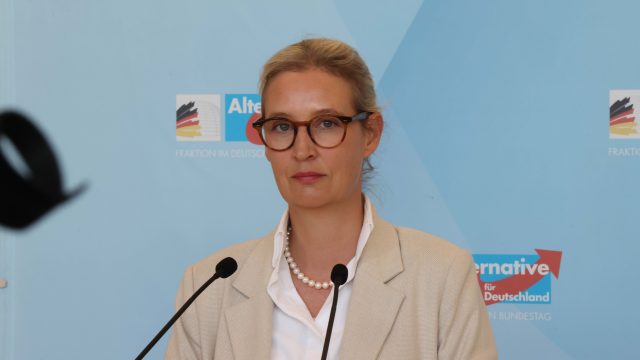
The winner of the German state elections, AfD, was formed in 2013 by former Christian Democrats opposed to Merkel’s EU policies. But as the non-integration of immigrants became a real problem after 2015, it adopted a hard line on immigration. The elites controlling the EU have closed ranks against it, denouncing it as a racist, far-right, pro-Russian movement, citing unfortunate comments by some of its members rather than the party programme. (Incidentally, the AfD leader in Mecklenburg-Vorpommern, Leif-Eirik Holm, is named after Leif Ericson, the Icelander who discovered America.) Its current leader, however, Alice Weidel (above), presents herself as an economic liberal.
Three Lessons
The Christian Democrats have not followed the Danish Social Democrats and the Swedish Conservative Party in addressing voters’ legitimate grievances: mass immigration and economic stagnation. Until they do, voters will keep punishing them. If they do, a protest party like AfD will face challenges. The rise of the Left is far more concerning. They are real extremists. It is extraordinary that it is now the largest party in Berlin, which its forerunners had turned into a prison. The three messages of the Swedish and German elections are: Never allow immigrants on welfare to determine election results; listen to the voters instead of ignoring them; keep alive the memory of the victims of totalitarianism.