





 Subscribe


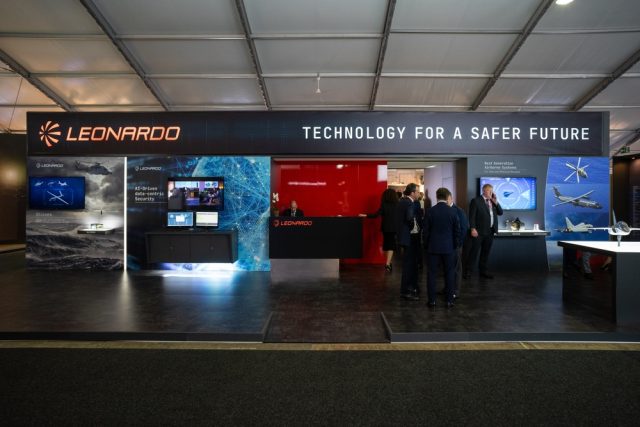
On the one hand, the drive towards technological sovereignty; on the other, the guarantee of safeguarding national security and interests. Leonardo’s entry into the Ukrainian defence market not only marks the start of high-tech international cooperation, but also places Italy and its industry at the centre of a highly sensitive geopolitical landscape. The news of the establishment of Leonardo Ukraine has been met with a flood of questions, comments, debates and reflections. The public is questioning and weighing up the pros and cons – but above all the risks – of the Ministry of Economy and Finance’s subsidiary’s decision to establish a presence in Ukraine. It is certainly not a mere token gesture, but a decision aimed at seizing new opportunities on the ground. However, the strategic importance of the operation does not eliminate the risks. The first factor concerns physical security. Establishing a presence in Kyiv means operating in a country that is technically at war, exposed to daily missile and drone attacks. Offices, laboratories, staff and other company assets are therefore subject to risks that cannot be regarded as purely theoretical. There is also a geopolitical and reputational dimension. The presence of a major European defence group in Ukraine could be interpreted by Moscow as a further sign of the direct involvement of Western and Italian industry in the conflict. This could lead to diplomatic tensions, political pressure and, in the most extreme scenarios, indirect retaliation in the form of cyber-attacks, sabotage or disinformation campaigns targeting the group’s interests, even outside Ukraine. The financial risk is also not to be overlooked. Some analysts who follow Leonardo’s shares on the Milan Stock Exchange have described the deal as a potential ‘leap in the dark’, pointing out that the investment – which is limited for now but has the potential to grow – is being made in a country whose military future and political and economic stability remain uncertain. A change in the theatre of war, an unfavourable ceasefire or a further escalation could alter the strategic value of the initiative.
TECHNOLOGICAL SOVEREIGNTY AND POLITICAL RESPONSIBILITY
Particular attention will need to be paid to technology transfer and intellectual property. The pursuit of Ukrainian know-how in drones, electronic warfare and autonomous systems raises questions regarding the ownership of jointly developed technologies, the management of data from the battlefield, and any imbalances between Leonardo and Ukrainian start-ups that are much smaller in scale. The use of platforms such as Brave1, which also involve external parties such as Palantir, makes data management an even more sensitive issue. Finally, there is an internal Italian political dimension. Leonardo is, in fact, 30.2 per cent owned by the Ministry of Economy and Finance.
AN INDUSTRIAL COMMITMENT FOR ITALY AND UKRAINE
Leonardo Ukraine does not yet constitute a contract and, at present, has no quantifiable impact on the group’s financial results. Its value is primarily strategic. The new company underscores Leonardo’s commitment not merely to observe the rapid transformation of the Ukrainian defence industry from the sidelines, but to establish a direct presence within an ecosystem in which drones, artificial intelligence, electronic warfare, autonomous systems and air defence are being developed through an unprecedented synergy between innovation and operational deployment. For Ukraine, the arrival of a major Italian group could mean gaining access to industrial, design and technological capabilities that could strengthen its defence ecosystem and facilitate its integration with European industry. For Italy, on the other hand, Ukrainian assets represent a source of expertise and operational experience capable of fuelling new avenues of innovation. The real challenge will be to transform this complementarity into a stable partnership, whilst safeguarding security, intellectual property, data sovereignty and industrial interests. The success of the operation will therefore depend on Leonardo’s ability to turn an initial small-scale presence into a lasting competitive advantage. The challenge lies not only in the financial return on investment, but also in the opportunity to build a new model of technological cooperation between Italy and Ukraine. In this sense, Leonardo Ukraine could become much more than just a subsidiary: it could serve as a meeting point between Italian industrial assets and the technological expertise Ukraine has developed in the field, with potential benefits in terms of growth and innovation for both countries.