





 Subscribe


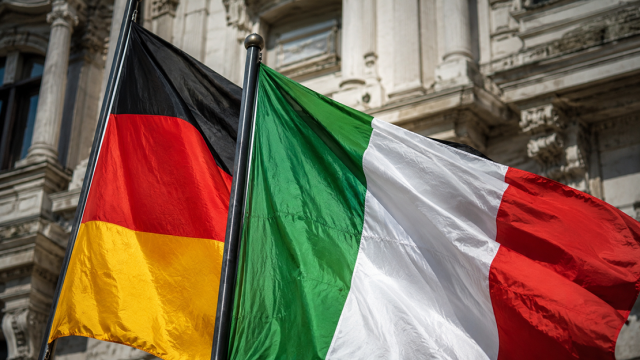
Berlin is pushing for the return of asylum seekers who first entered Europe through Italy, yet the new EU Migration and Asylum Pact also strengthens Rome’s argument that frontline countries cannot be left to shoulder Europe’s migration burden alone
The migration issue is once again moving rapidly to the top of the European political agenda. After the recent tensions between Italy and Spain triggered by the Ceuta crisis, a second front has opened for Giorgia Meloni’s government: Germany and the long-running dispute over the so-called “Dublin returnees”.
At the heart of the disagreement between Rome and Berlin are asylum seekers who originally entered the European Union through Italy but subsequently travelled north, particularly to Germany.
For years, these secondary movements have represented one of the most controversial aspects of European migration policy. Now, with the new EU Pact on Migration and Asylum in force since 12 June, Germany is seeking to revive the issue and make the return of migrants to their country of first entry more effective. Yet the new rules do not necessarily weaken Italy’s position.
On the contrary, they expose more clearly than ever the fundamental imbalance that Prime Minister Giorgia Meloni’s government has repeatedly highlighted: a European migration system cannot be sustainable if countries located on the Union’s external borders are expected to assume disproportionate responsibility simply because geography makes them the first point of arrival.
Germany turns again to the “Dublin” question
The political pressure is particularly strong in Germany.
Secondary migration — the movement of asylum seekers from Mediterranean countries such as Italy towards northern European states — has long been a major concern for Germany’s centre-right. Chancellor Friedrich Merz is now facing additional pressure as the Alternative für Deutschland continues to challenge the traditional parties on migration and security.
The timing makes the dispute particularly sensitive.
Both Meloni and Merz are approaching important electoral tests. Italy is heading towards national elections, while German voters will be called to the polls in Saxony-Anhalt on 6 September and subsequently in Berlin and Mecklenburg-Vorpommern on 20 September.
Migration is therefore no longer merely an administrative issue. It is once again becoming a major political question capable of influencing elections in two of the European Union’s largest countries.
Berlin has found a potentially powerful instrument in the new EU Pact on Migration and Asylum, approved in December 2025 and applicable since 12 June.
At its centre is the Asylum and Migration Management Regulation, or AMMR, which replaces the old Dublin III Regulation while preserving one of its most controversial principles: as a general rule, responsibility for examining an asylum application remains with the country of first entry, unless other criteria apply, including family connections or visas. For Italy, this principle is crucial.
As one of Europe’s principal Mediterranean gateways, Italy has long argued that a system based excessively on the country of first entry inevitably places greater pressure on southern member states than on countries protected by geography from large-scale maritime arrivals.
More responsibility for Italy — but also more solidarity
Some provisions of the new system appear, at first sight, particularly demanding for Rome.
Responsibility linked to irregular entry can now last for 20 months rather than 12. For people arriving following search-and-rescue operations at sea, the period remains 12 months. In certain circumstances involving absconding, transfers can remain possible for as long as three years.
The system for returning asylum seekers to the responsible member state has also been streamlined. Eurodac plays a central role, and the procedures are designed to make transfers faster and more effective.
Germany therefore has a stronger legal framework through which to seek the transfer of people who entered the EU through Italy before moving north. But this is only half of the new European architecture. The other half is solidarity — and it is precisely here that the Italian government has potentially gained an important political instrument.
For years, Rome has insisted that responsibility and solidarity must be inseparable. If Italy is required to register, process and potentially receive back migrants because it represents their first point of entry, other European countries must share the consequences of a phenomenon that is European rather than exclusively Italian. The new Pact moves, at least partially, in that direction.
The €20,000 question
A permanent solidarity mechanism now accompanies the rules on responsibility. The EU framework establishes an annual minimum solidarity pool corresponding to 21,000 relocations or €420 million in financial contributions — effectively €20,000 for each relocation that is not carried out — with contributions distributed among member states according to population and GDP.
Italy, Spain, Greece and Cyprus have been classified this year as countries “under migratory pressure”, making them beneficiaries of the annual solidarity reserve. This distinction matters politically. It amounts to an acknowledgement that Mediterranean countries face structural pressure that cannot simply be treated as an ordinary consequence of the first-entry principle.
And it reinforces one of Meloni’s central arguments in European migration negotiations: protecting the external border is a common European responsibility. Italy cannot simultaneously be expected to function as one of Europe’s principal external borders and to carry indefinitely the administrative and social consequences of irregular arrivals without meaningful participation from its partners.
“Responsibility offsets” could change the equation
Another important innovation could prove particularly relevant in the dispute with Germany: so-called “responsibility offsets”.
Under this mechanism, a member state can fulfil part of its solidarity obligations by assuming responsibility for asylum applications that would otherwise belong to another country. In practical terms, Germany could decide to examine the application of an asylum seeker already present on German territory rather than transferring that person back to Italy. Berlin’s decision to assume responsibility could then count towards its European solidarity contribution. This offers a potentially pragmatic solution.
Instead of mechanically transferring migrants southwards only for European solidarity mechanisms to redistribute responsibilities again, member states can recognise the reality of secondary movements and convert some of those cases into solidarity contributions. For Rome, this is an important point. The objective of the Italian government is not simply to prevent individual transfers. The broader challenge is to change the logic under which Italy’s geographical position automatically translates into an open-ended national responsibility for migration towards Europe.
Rome faces the next European test
There is nevertheless unfinished business. According to the European Commission’s first assessment of 15 July, Spain and Cyprus passed the initial verification under the new system, while Greece remains under monitoring despite progress.
Italy’s position is more complicated because Rome had not restarted transfers and had rejected the first 12 requests. The Italian government suspended the arrival of Dublin returnees in December 2022, with exceptions for certain cases involving the reunification of unaccompanied minors. The relevant Italian circulars have not formally been revoked. The next European assessment is expected by 15 October.
This will inevitably create pressure on the Meloni government, but Rome enters the confrontation with a considerably stronger political argument than it had under the old Dublin system. Italy can legitimately be asked to respect common European rules. What cannot be ignored is that those rules themselves now formally recognise the need for solidarity with countries under migratory pressure. That changes the nature of the debate.
The question is no longer simply whether Italy must take back asylum seekers who travelled to Germany. The question is how Germany and the rest of Europe intend to compensate frontline states for responsibilities created primarily by geography. Meloni’s government has spent years pushing migration policy towards this principle: fewer irregular departures, stronger external borders, agreements with countries of origin and transit, and genuine burden-sharing among EU members.
The new Pact is far from eliminating the disadvantages Italy faces as a country of first arrival. Indeed, extending responsibility for irregular entries from 12 to 20 months could increase them.
But the introduction of permanent solidarity mechanisms and responsibility offsets also demonstrates that the old approach — under which Mediterranean countries were effectively expected to manage arrivals while northern countries concentrated on secondary movements — is no longer politically sustainable. The confrontation with Germany could therefore become another test of Italy’s growing ability to influence the European migration debate.
Berlin has every right to demand that European rules be respected. Rome has an equally strong case for demanding that those rules be applied in their entirety — including the provisions designed to ensure solidarity with the countries protecting Europe’s southern frontier.
That may ultimately be the most important change brought by the new Pact: Europe can no longer talk about responsibility without also talking about solidarity. And for Italy, that is not a concession. It is a principle that the Meloni government has worked consistently to place at the centre of the European migration agenda.
Alessandro Fiorentino