





 Subscribe


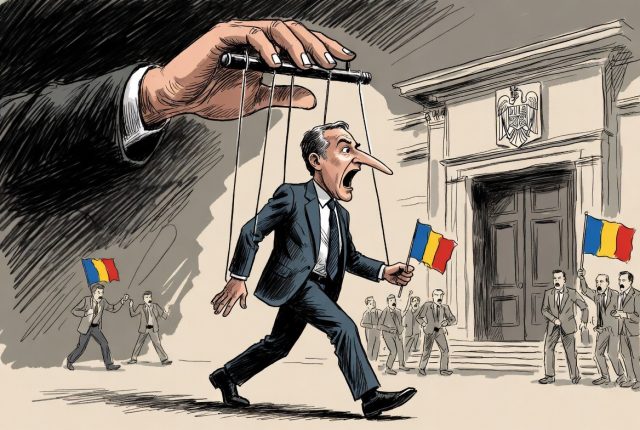
On Sunday morning, with the country still without a working government and Parliament still without a majority, President Nicușor Dan walked up to the microphones at Cotroceni and produced a name almost nobody outside a small circle had expected. Eugen Tomac, the independent he had nominated days earlier, had just handed back his mandate, unable to gather support. Today, the president designated Adrian Veștea, first vice-president of the PNL, as candidate for prime minister. Veștea now has ten days to walk into Parliament with a government. What he does not have is the consent of his own party leader, the trust of the conservative electorate, or, by several accounts, a clean explanation for how he got here.
Start with the procedure, because procedure is where the political games are usually hidden in plain sight. The president nominated Veștea without consulting the parliamentary parties, the very parties whose votes he will need. Former Constitutional Court president Tudorel Toader said openly that Dan should have reopened consultations before naming a new candidate. Other former judges were split. PSD’s leadership said it learned of the choice from television. PNL’s own secretary general, Dan Motreanu, called it a unilateral decision and a dangerous precedent for Romanian democracy. When the people’s representatives find out who might govern them from a news ticker, the phrase “the citizen’s vote matters” starts to sound like a polite fiction.
And here is the part that should sting anyone who believed last year’s election meant something. Veștea does not come from the conservative or sovereigntist wing that millions of Romanians actually voted to be heard. AUR’s president George Simion accused the president of ignoring PNL’s internal bodies entirely and called the designation a screen for Nicușor Dan’s own government. The party demanded early elections and called people into the streets, with the blunt verdict that “Romania does not need traitors.”
Then there is the matter of the company Veștea keeps. For years, local investigative press in Brașov has documented how he sheltered convicted figures inside public institutions. The case most cited is Liviu Cocoș, the former Predeal mayor convicted with a final sentence for abuse of office, who was nonetheless kept plugged into public money through board seats, a directorship at a county-subordinated company, advisory posts and elected PNL Brașov first vice-president just days after that conviction became final. By late 2025, a DNA file dramatically called “bribes for jobs at Compania Apa Brașov” had swept up nearly the entire PNL Brașov leadership into arrests or judicial control. Cocoș was detained. Sources close to the investigation told the press that the threads all run toward Veștea himself, described in some reporting as the suspected head of an “organized criminal group”, though he has not been charged. Around the same time, Veștea was seen lending his presence to the validation of Sinaia mayor Vlad Oprea, who is under DNA investigation for money laundering, influence peddling and abuse of office as Romania’s representative to the Congress of Local and Regional Authorities in Strasbourg.
As a Liberal heavyweight and former development minister, Veștea defended a local tax increase of up to 75 percent by insisting it was a measure “imposed by the European Commission,” a PNRR milestone that should have been adopted two years earlier. He warned that the 2026 national budget would send no money to town halls, they would simply have to survive on what they squeezed from residents. Romania, he complained, likes to take “only the parts that suit us” from the EU, while the painful measures are “imposed.” It is a hypocritical formula: raise the taxes, then point at Brussels so the anger lands somewhere far from home.
So, the man designated to lead Romania out of its political crisis arrives carrying a betrayal his own leader calls hostile, a procedure his own party calls dangerous, a courtroom shadow over his county, and a habit of charging citizens more while blaming the bill on someone else. Whether he survives the next ten days is, for now, a matter of arithmetic. Whether any of it counts as listening to the people who voted is a question the political class, once again, seems determined not to ask.