





 Subscribe


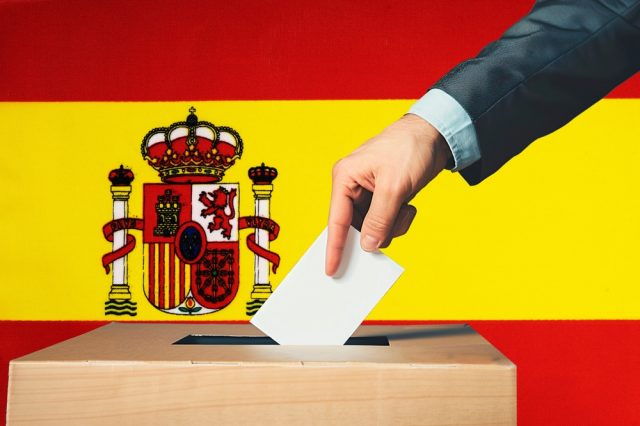
Just a few days from now, on November 29, Spaniards will go to the polls to decide who will rule their country for the next four years. Last month, Spanish Prime Minister Pedro Sánchez announced that he is dissolving the Cortes Generales (Spanish Parliament) and initiating the process to hold early parliamentary elections at the end of November. This announcement made by the President of the Spanish Government, following the failure of two housing decrees in Congress due to opposition from the Partido Popular, Vox, and Junts, sent yet another shockwave through the already turbulent European political waters. You don’t have to be a political scientist to understand that such an election represents much more than just another electoral episode. It is a moment of truth for Spain, a country that – under the socialist-progressive government of Pedro Sánchez – is suffering from experiments and even tragedies that have eroded national cohesion and trust in public institutions, as well as in the state’s ability to effectively address the real problems of its own citizens.
Apart from the social crisis that has brought tensions to a boiling point, the establishment has shown itself to be deeply frightened by the prospect of a “far-right” party, namely Vox, coming to power – “for the first time since the death of Franco” (a phrase mainstream media keeps repeating). Indeed, as most of the polls show, a future governing alliance between the Partido Popular and Vox is an increasingly plausible scenario. This would mean the end of the Sánchez era – marked by institutionalized corruption, reckless public spending, destruction of judicial independence and historical memory, and systematic policies of replacing the Spanish population with third-world immigrants.
Pedro Sánchez has been running the Spanish government since June 2018 – that is, for nearly eight and a half years – standing at the very top of a power pyramid that does not hesitate to betray its own people and destroy their future in exchange for votes and to remain in power at any cost. In fact, Sánchez’s fame has long since spread far beyond his country’s borders due to his terrible initiative to legalize the status of hundreds of thousands of migrants. Sánchez and his associates have negotiated and made concessions to those who challenge the very existence of Spain as a unitary state. The result has been a government that has prioritized political survival over the public interest. When Parliament rejected the proposed housing measures, Sánchez decided to dissolve the Congress of Deputies and the Senate – the two chambers of the Spanish Parliament -and called for snap elections. It had become clear to the Socialist prime minister that the majority on which he relied was no longer sufficient for his government to continue. This is undoubtedly a critical moment.
The housing affordability crisis is a very pressing public issue – and it’s not new at all. The crisis did not erupt overnight, and it certainly will not be solved overnight, even if Sánchez is ousted. It is well known that the spark that ignited this “fire” was the eviction of an 87-year-old woman from her apartment in Madrid because the cost of living there increased way too much. From this point on it was only a short step to massive street protests, hundreds of thousands of people across Spain taking part.
Huge housing prices aren’t just a topic that political parties are exploiting for obvious reasons; they represent a problem that has deepened and brought Spanish society to a critical juncture. Rents have risen to absurdly high levels, and in major cities, more and more citizens are facing significant difficulties. However, the causes are not limited to “real estate speculation” or the “elites” that the Socialists are quick to denounce. Demand for housing has been amplified by substantial demographic flows, policies aimed at attracting foreign labor, and regulations that, rather than stimulating the construction of new housing, have effectively discouraged it through bureaucratic constraints. The pseudo-solutions proposed by the government were rejected outright by political parties outside the governing coalition. This refusal demonstrates not only that the problem runs very deep, but also the limitations of a flawed model that treats housing exclusively as an abstract right while completely ignoring market realities and demographics.
Criticism of Sánchez and his allies is not limited to their catastrophic handling of the housing crisis. The socialist-progressive government was in power during a period in which Spain, like other countries in Western Europe, has experienced growing tensions related to the integration – or rather, the lack of it – of migrants, enormous pressure on public services, and what seems to be a cynical resignation in the face of existential demographic changes. In enclaves such as Ceuta, the issue of migration is far from solved, and the local situation remains critical. At the same time, official rhetoric uses abstract concepts such as “rights” and “solidarity,” deliberately avoiding any discussion of the real costs to social cohesion. Alliances with separatist groups have shown that national unity is a negotiable issue when the price is “right.” For those who believe that a nation exists first and foremost as the political expression of a historical, cultural, and linguistic community, this approach is not only deeply troubling but also fundamentally flawed and dangerous.
Looking at the polls, most recent data confirm a clear trend. Alberto Núñez Feijóo’s Partido Popular remains the first party, with almost 30% of Spaniards’ votes; PSOE follows closely behind, polling at approximately 27%, while Abascal’s Vox is rapidly approaching 20%. Most projections indicate that the PP and Vox together could secure a majority of seats in the Spanish Parliament. Such an outcome would create a center-right government that would not be subject to blackmail or pressure from separatist parties. From the national sovereignty perspective, this configuration is essential. A PP-Vox government will not solve the housing crisis overnight, nor will it be able to reverse all the disastrous consequences of the decisions made by previous leftists governments. But there is one thing it must absolutely achieve: to reestablish this fundamental principle – to act in the interest of Spanish citizens, not in the interest of short-term alliances that undermine the state and destroy the entire social fabric.
On November 29, Spanish voters will have the chance to decide whether to continue down the path of a corrupt, insane and anti-national left – which has caused instability and anger, and which has prioritized everything but the interests and well-being of its own people – or whether to choose an alternative that, however imperfect, places national unity, internal order, and normality at the forefront.
In the broader European context, we can consider Spain’s early parliamentary elections to mark the beginning of the 2027 election year – a crucial year not only for France, Poland, and Italy, but also for all of Europe and its citizens. The forces that value and fight for sovereignty, border control, common sense and the preservation of national identity – born as a reaction to decades of catastrophic policies that have undermined societies from within and brought Europe to the brink of self-destruction – are increasingly close to victories. If this happens, our civilization and our children’s future will not be doomed. Spain, with its centuries-old tradition of a unitary state consolidated after the Reconquista, has the resources necessary to withstand this infernal pressure and to regain the values that the left wants to destroy.