





 Subscribe


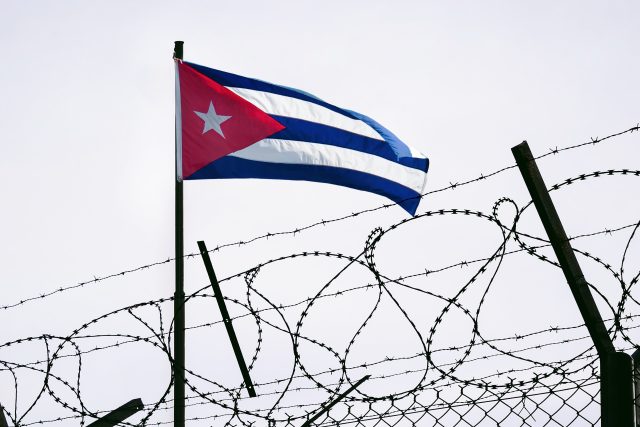
As the communist regime in Cuba now seems likely to collapse, it should be recalled how it has oppressed and impoverished the Cuban nation for almost seventy years. Cuba was the richest Caribbean country in 1959, when the communists ousted the corrupt dictator Fulgencio Batista; now it is the second-poorest, after Haiti. More than 15 per cent of the population have ‘voted with their oars’ and fled, not least well-educated middle-class people such as doctors, engineers, and teachers. That was an example of life imitating art, because two years before the communist takeover, Ayn Rand had published Atlas Shrugged, a novel about what would happen to a country if the most productive part of the population left. Cuba is also a striking refutation of the Leninist thesis that underdeveloped countries are exploited through trade with capitalist countries: if that thesis were true, the Americans had done the Cubans a favour by their embargo. I spent a week in Havana some years ago. It was an eerie experience. The stately buildings in the city centre were dilapidated; the few old cars on the streets were falling apart. I observed that if you had dollars, everything was for sale. The ultimate irony of the Cuban Revolution was that it was supposed to overthrow the almighty dollar. Instead, the dollar became almighty among the people.
Elections? What For?
Immediately after Fidel Castro and his gang seized power in January 1959, they conducted mass executions inside Havana’s main prisons, La Cabaña and Santa Clara. They postponed free elections indefinitely. ‘Elections? What for?’ Castro asked. He also suspended the liberal constitution of 1940, which had guaranteed basic human rights (although Batista had certainly not respected them). He confiscated land, expropriated enterprises, and introduced censorship. Dismayed, liberal democrats in his government resigned one after another. In 1961, Castro closed all religious colleges and confiscated their buildings, and forced hundreds of priests to leave the country. He also persecuted writers, including the distinguished poet Herberto Padilla. A rebellion in the Escambray Mountains in the early 1960s was mercilessly suppressed: more than 1,000 ‘counter-revolutionaries’ were shot in La Loma de los Coches prison. Castro established a secret police which kept an eye on the population and ran prisons and the many labour camps set up by the government.
The Revolution Devours its Children
If Castro’s former comrades-in-arms criticised his regime, however mildly, they were immediately arrested. After a noisy show trial over Huber Matos, the former governor of Camagüey Province, he was sentenced to twenty years in prison. Humberto Sorin Marin, Castro’s former minister of agriculture, was arrested, court-martialed, and sentenced to death. His mother begged Castro to spare his life. Castro promised to do so, but a few days later, he was shot. Dr. Martha Frayde, who had been Castro’s friend and Cuba’s representative at UNESCO, was imprisoned in Havana’s Nuevo Amanecer (New Dawn) prison in Havana, where in her small cell, twenty-three women slept on bunk beds of two or three layers, and dreadful sanitation.
Neighbourhood Squads
In the 1960s, up to 10,000 people were killed by the Cuban communists and around 30,000 imprisoned for political reasons. The poet Jorge Valls described the terrible conditions in Castro’s prisons in his Twenty Years and Forty Days: Life in a Cuban Prison. In another example of life imitating art, this time the hate weeks of Orwell’s Nineteen Eighty-Four, neighbourhood squads conducted actos de repudio (repudiation acts), gathering in front of houses of supposed regime opponents, throwing stones at them, writing insults on the walls, chanting slogans, and attacking the inhabitants. Cuba also started insurrections in several Latin American countries and dispatched military forces to assist Angolan communists. Over the years, the regime has retreated somewhat, but only because it lacked the means, not the will. Today, while the regime is tottering, it still keeps about 1,200 political prisoners.