





 Subscribe


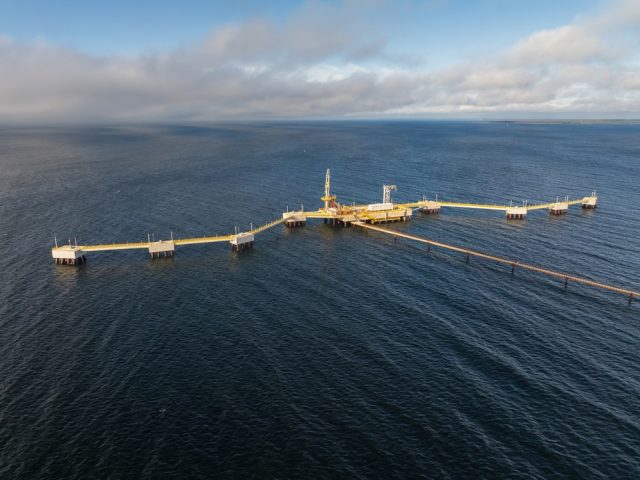
The European Union has launched an ambitious investment program to strengthen its capacity for observing and monitoring marine environments, allocating €92 million. The initiative, promoted by the European Commission, is part of a broader strategy aimed at consolidating Europe’s role in the ocean sector by 2035, integrating scientific, economic, and geopolitical objectives. Presented by European Commissioner for Fisheries and Oceans Costa Kadis, together with Commissioner for Research Ekaterina Zaharieva, the project represents a significant shift from traditional marine research models. The approach adopted is not limited to the passive collection of environmental data, but aims to build an advanced surveillance and analysis system capable of supporting strategic security and the protection of critical infrastructure.
TECHNOLOGY AND COMPETITIVENESS IN THE GLOBAL MARKET
One of the initiative’s central objectives is to strengthen European competitiveness in the international market for ocean observation and marine infrastructure technologies. The European Commission aims to achieve a 35% share of the global market in this sector by promoting the development of innovative tools and high-tech solutions. In this context, innovation is the main driver of the European strategy. The use of autonomous systems, advanced digital technologies, and artificial intelligence-based applications will enable the collection and processing of large amounts of maritime data in real time. This approach should improve the ability to understand ocean dynamics and support faster and more effective operational and strategic decisions.
PROTECTING UNDERWATER INFRASTRUCTURE
A particularly important aspect of the program concerns the security of seabed infrastructure. Among these, submarine telecommunications cables play a key role, carrying approximately 95% of global internet traffic. The growing dependence of modern economies on these networks has made their protection a priority for European institutions. According to the Commission’s assessment, these infrastructures are exposed to increasingly significant risks, both from potential sabotage and hybrid threats. Particular attention is paid to areas of high geopolitical sensitivity, such as the Baltic Sea, where the vulnerability of underwater networks is a key strategic issue. To strengthen monitoring and prevention capabilities, the project envisions the use of autonomous underwater vehicles, marine drones, mobile monitoring platforms, widespread sensor networks, and predictive analytics systems based on artificial intelligence. The integration of these technologies will enable more comprehensive surveillance of maritime spaces and a greater ability to promptly identify risky situations.
TOWARDS AN INTEGRATED EUROPEAN MARITIME DATA PLATFORM
The European strategy is also based on the need to overcome the current fragmentation in ocean information management among Member States. For this reason, the program envisions the creation of a centralized system for collecting and sharing marine data. The goal is to create an advanced digital platform capable of integrating information from various sources, including environmental, meteorological, and geopolitical data. This information infrastructure should enable a more complete and coherent view of marine ecosystems and ocean activities. An innovative element of the proposal also involves the development of digital ocean simulation tools. Advanced models will enable forecasting scenarios, assessing the evolution of complex phenomena, and improving the ability to respond to environmental emergencies or incidents involving strategic infrastructure.
THE REGULATORY FRAMEWORK AND FUTURE PROSPECTS
In support of the entire project, the European Commission has announced its intention to present a specific legislative proposal by the end of the year to regulate maritime data sharing and define new common technical standards. This regulatory intervention will be essential to ensure interoperability, security, and reliability of the information collected. Future provisions could also have a significant impact on public procurement and on the ways in which international technology providers can access the European market. In this context, particular attention will be paid to the security of supply chains, considered crucial for the protection of strategic infrastructure and the technological autonomy of the Union. The strategy outlined by the Commission, also supported by President Ursula von der Leyen as a priority for Europe’s future, therefore represents a vision in which scientific research, the blue economy, technological innovation, and geopolitical security converge in a single long-term project. The goal is to build an advanced ocean intelligence network capable of strengthening Europe’s role on the global stage and more effectively addressing the environmental, economic, and strategic challenges of the 21st century.