





 Subscribe


Quentin Deranque has been portrayed by far too many headlines as if he were a “monster” to be erased in advance: “far-right,” “extremist,” “fanatic”—as though a label were enough to make acceptable the idea that a 23-year-old can be beaten in the street until he dies. But Quentin, before being an ideological category, was a person: a mathematics student, a young man with clear political convictions—arguable, if you like, like any convictions once they enter the arena—but still convictions. And above all he was a young man who, for those ideas, was killed. That is the red line a democracy cannot afford to blur: you can contest, jeer, politically isolate, even despise. You cannot kill.
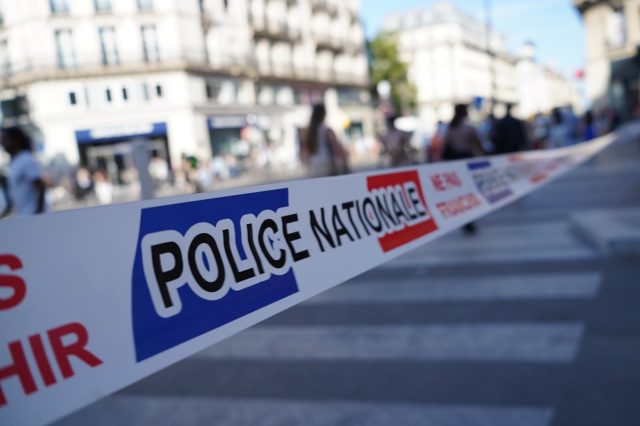
The story erupts in Lyon on 12 February 2026, on the margins of an event at Sciences Po Lyon featuring the LFI-linked MEP Rima Hassan. Outside, the identitarian collective Némésis gathers to protest. The setting, in France, has become familiar: high-tension streets, militant micro-worlds that seek each other out and collide, a warlike vocabulary that precedes violence and then “explains” it after the fact. Quentin is attacked by several hooded individuals; according to reconstructions reported by multiple outlets, he is beaten with extreme brutality, possibly with bars or similar objects. Two days later, 14 February, he dies in hospital from catastrophic head trauma.
That is when the second death begins—the symbolic one: the narrative machine. Part of the press and of “respectable” opinion tries to seal the case inside a morally convenient formula: if he was “far-right,” then he is not really a victim, or he is “less” of one; then it is not a civic tragedy, but merely an episode of “clashes between extremes.” It is a Pavlovian reflex: instead of looking at the killing, people look at the mental membership card they assign. But democracy does not work that way. Democracy lives precisely on the distinction between opinion and violence: ideas are fought with words, votes, dissent, mobilisation; violence is the end of the game, not a legitimate move within it.
This is the knot that has set French politics alight: the investigation did not stop at arresting generic “suspects.” Direct links emerged to the milieu orbiting Raphaël Arnault, an LFI MP and a figure associated with the militant ecosystem of the Jeune Garde (an antifascist group dissolved by the authorities).
Two staffers linked to Arnault are among those arrested in the homicide investigation: Jacques-Elie Favrot and Robin Chalendard (also cited as “Robin Michel” in his capacity as an assistant).
This must be said plainly—because it is a non-negotiable principle—that they are innocent until a final conviction. But it must be said just as plainly what makes their judicial involvement politically explosive: it is not “gossip,” it is the fact that multiple testimonies and video material (as reported in several journalistic reconstructions) would place them among those present, or otherwise call them out in the chain of events that night. The presumption of innocence remains intact; the public question, however, is unavoidable: what were people linked to an LFI MP doing there, in a context where a young man ends up beaten to death?
At that point, La France Insoumise does not choose the path a responsible political force should take when violence brushes against its environment: clarity, rupture, a clean break with any militant ambiguity. Instead, LFI raises a defensive wall. You can see it in the sequence of reactions: generic condemnations of violence, yes—but accompanied by tribal closure, refusal of any political responsibility, and the idea that it is all “instrumentalisation.”
And then Jean-Luc Mélenchon enters with a familiar manoeuvre: minimise and invert. On one side he distances himself; on the other he tries to shift the axis of the story: in recent times, he argues, LFI itself has been repeatedly targeted by attacks and protests; he cites Némésis as one of the groups that would have confronted them, seeking to build a context of “siege” that makes the degeneration feel morally less scandalous. The line, in substance, is: look, we are the ones being attacked.
But here we must be uncompromising: until proven otherwise, holding a banner and protesting is part of the democratic game. Killing is not.
Protest—even harsh, even provocative—is democratic physiology. If a university event is contested, you can debate whether it is appropriate, tasteful, or politically hostile—but it remains politics, not violence. The qualitative leap happens when, from that friction, one moves to pack logic: isolate, strike, destroy. No “antifascist” rhetoric can legitimise that leap.
That is precisely why the political question did not stay confined to Mélenchon’s opponents. The French government, through its spokesperson Maud Brégeon, spoke of LFI’s “moral responsibility” in the “climate of violence” in political debate, accusing the party of having fuelled over the years a brutalisation of confrontation. It is a heavy, institutional indictment—a watershed: no longer “incidents,” but an environment that produces consequences.
Meanwhile, inside LFI, some interventions became even more revealing because they were not merely defence—they were defiance. The demand by LFI parliamentary leader Mathilde Panot to keep Némésis “out” of LFI-linked events is not a condemnation of the killing as an absolute fact; it is yet another attempt to drag everything back to “us versus them,” as if the problem were the presence of the protester and not the violence of the attacker.
On the other side, the French right—and the movements involved—reacted as a country reacts when a threshold has been crossed. Jordan Bardella and other figures accused LFI of moral complicity and demanded a clean break with violent groups; Némésis claimed Quentin’s presence was to “protect” its activists, while other reconstructions—including that of the family’s lawyer—tended to describe him as not formally affiliated and holding non-violent beliefs. The accounts differ; what does not differ is the outcome: Quentin is dead, and he did not die “by accident.”
The case then spills beyond France and becomes European news. Giorgia Meloni intervenes publicly: she speaks of a climate of ideological hatred and of extremism that kills. The implicit reference is to violence “legitimised” by part of the radical left when it calls itself antifascist and claims moral immunity. In France, the Élysée’s reaction is immediate. From New Delhi, Emmanuel Macron replies with irritation and sarcasm, telling the Italian prime minister to “stay at home” and using a line that went viral, about “sheep” being better guarded if everyone minded their own business.
As reportage, the sequence is straightforward: Meloni comments on a political killing that shocks France; Macron reads that comment as interference and responds sharply, as if to close the matter with a quip. Politically, however, the quip is a mistake. Because this is not about “sticking one’s nose” into France’s internal affairs: it is about recognising that ideological violence is a European problem, and that the narrative that justifies it—especially when disguised as “antifascism”—crosses borders, universities, movements, and militant networks.
Defending Meloni here is not “picking sides.” It is defending a principle of responsibility: if a European head of government cannot say that a climate of political hatred—whatever its origin—leads to deaths, then Europe is only a market, not a political community. And above all: if the Élysée demands silence when blood is spilled, then it is not asking for respect—it is asking for diplomatic omertà.
Ultimately, Quentin Deranque became the perfect target of a short circuit: on one side, the label that dehumanises (“he had it coming because he was X”); on the other, the flag that absolves (“if ‘antifa’ hits him, it’s less serious”). Yet the democratic truth is simpler, harsher, and universal: a young man was killed for political reasons, on a European street, in 2026. And a significant part of the cultural apparatus that should be shouting scandal has preferred to argue over definitions.
And so the question remains—one no press conference, no statement, no hall of mirrors can erase: when attackers gravitate around environments that speak to each other, recognise each other, cover for each other, and share a common lexicon; when violence always finds a ready-made justification (“antifascism,” “self-defence,” “reaction”); when a parliamentary party closes ranks and the government itself speaks of moral responsibility… are we really looking at isolated episodes?
Or does there exist—if not by statute, then by practice—an antifascist international, a network of moral and militant protections that crosses borders and that, when violence reaches the point of killing, does not blush, does not stop, and above all never truly holds itself to account?