





 Subscribe


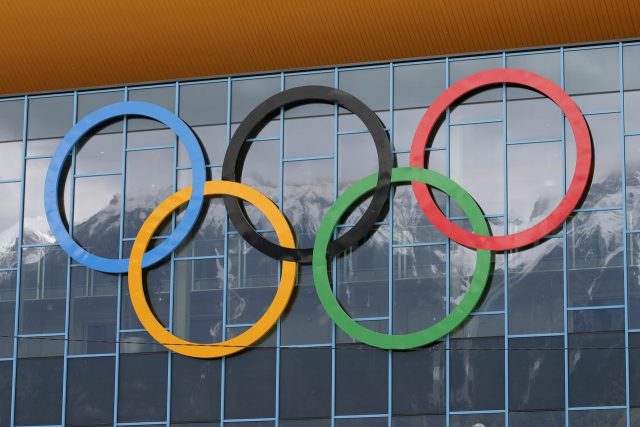
Milan-Cortina 2026 Proves the Strength, Vision, and Credibility of the Italian Government
For over a century, sport has often been instrumentalized as a vehicle of propaganda—first by authoritarian regimes, then by rival superpowers divided by the Cold War. Yet at the foot of the Alps, during the Winter Games of Milan-Cortina 2026 Winter Olympics, sport delivered a different kind of message: not propaganda, but proof. Proof that competence, vision, and national cohesion can overcome cynicism. Proof that Italy, under its current government, can illuminate the world rather than confirm the predictions of its detractors.
In the months leading up to the Games, a chorus of pessimism echoed across parts of the Italian political spectrum. The left had framed the Olympics as a looming organizational disaster—an inevitable showcase of incompetence by a right-wing government allegedly unfit to manage such a complex global event. Delays were foretold, scandals presumed, international embarrassment anticipated. So persistent were these prophecies of doom that many Italians began to expect failure as a foregone conclusion.
Reality, however, had other plans.
Italy concluded the Games with a record-breaking haul of 30 medals, confirming not only athletic excellence but also the effectiveness of institutional support for sport. The opening ceremony was widely praised for its elegance, cultural depth, and refined storytelling—a celebration of Italian heritage that resonated far beyond national borders. From Ottawa to Seoul, Milan was portrayed as vibrant, dynamic, and capable. Far from a communications disaster, the event became a triumph of image and substance.
Even the decentralized “diffused Games” model—initially criticized as chaotic—was hailed as a forward-looking blueprint. Kirsty Coventry, President of the International Olympic Committee, described the event as “a success beyond expectations” and “a model for future sustainability.” Such recognition from the highest Olympic authority underscores the credibility Italy has earned on the global stage.
The success of Milan-Cortina is not accidental. It reflects a government that chose courage over caution, action over paralysis. The Games, once painted as a breeding ground for corruption and waste, have instead become a powerful engine for Made in Italy—boosting tourism, investment, and international prestige. Concerns about runaway costs have not materialized in the catastrophic fashion predicted by critics. While expenditures reached significant levels, analyses indicate they remain below those of Expo 2015—an event that ultimately transformed Milan into one of Europe’s most attractive hubs for business and tourism. The long-term economic returns projected by independent observers suggest that the investment will pay dividends for years to come.
The political lesson is clear. Leadership requires risk. It requires vision. And it requires the ability to distinguish between healthy oversight and reflexive obstructionism.
A powerful metaphor emerged from Italy’s short-track team, where champions such as Arianna Fontana and Pietro Sighel—despite well-known personal tensions—managed to compete together for the sake of a higher objective. They demonstrated that even rivals can unite in pursuit of national success. Politics, unfortunately, did not always follow their example. Portions of the opposition chose to boycott official events, dismiss the Games as “right-wing,” and amplify controversies that proved either exaggerated or unfounded. In doing so, they revealed not strategic acumen but a narrow partisanship that underestimated the intelligence of the Italian public.
By rejecting nearly every aspect of the Olympics, critics inadvertently handed the political dividends to those who supported them from the start: the Prime Minister and the regional administrations that worked tirelessly to bring the project to fruition. It was an act of ideological self-sabotage. Just as an athlete cannot win by refusing to compete, a political force cannot claim leadership while standing aside from national achievements.
There is also a lesson for Italian public opinion, often susceptible to skepticism born of past scandals. Healthy vigilance is essential in a democracy, but when suspicion becomes reflexive, it risks paralyzing ambition. Italy has too often hesitated before major projects—high-speed rail, energy infrastructure, and urban redevelopment—out of fear of mismanagement. Yet progress demands participation. To refuse opportunities because they carry risk is to exclude oneself from global competition.
The Milan-Cortina Olympics reaffirm a simple, profoundly Olympic truth: the important thing is not merely to participate, but to participate with excellence. The current government chose engagement over retreat, confidence over fear. The result was an event that enhanced Italy’s reputation, energized its economy, and united its citizens in pride.
Those who once predicted humiliation now confront a different reality: Italy did not falter. It excelled. And in doing so, it offered a broader lesson in governance—one grounded in responsibility, courage, and belief in the nation’s capacity to succeed.
From “memento mori” to “memento audere semper”: remember to dare, always.
Alessandro Fiorentino