





 Subscribe


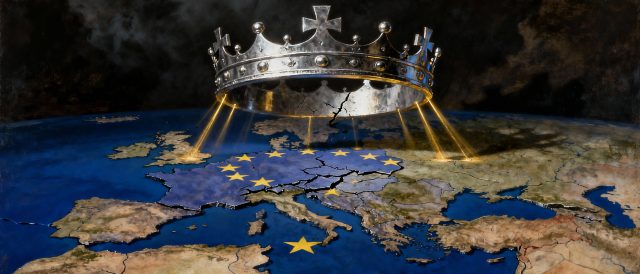
There is no conservative movement in Ireland. I don’t mean it’s small or struggling or in need of reform. I mean it does not exist. There are conservative people, obviously — about a third of the electorate, if you take the Eighth Amendment referendum as a rough census, more than that on questions of immigration and housing and who exactly should be paying for what. But a movement requires organisation, and organisation requires that people be willing to stand in a room together and be counted, and this is the precise thing that Ireland’s conservative-minded politicians have shown themselves constitutionally incapable of doing.
The 2025 presidential race made this embarrassingly clear. Twenty Oireachtas signatures to get on the ballot. A hundred and sixty TDs in the Dáil, plus the Seanad. Maria Steen couldn’t get twenty. Fianna Fáil picked a football manager who withdrew over a debt story that basic vetting would have caught on day one. The field closed with a Fine Gael technocrat and a progressive backed by every left-wing party in the chamber. That was it. October 24 came and went and a third of the country had nobody to vote for.
But I’m less interested in what happened than in what happens next. Because the conditions that produced that fiasco are not temporary, and the forces acting on Irish politics from outside are not going away, and the gap between what is happening in Dublin and what is happening everywhere else in the Western world is becoming very difficult to explain as anything other than a structural failure.
So here is the question nobody in Leinster House seems to want to ask: what does Ireland look like in ten years if nothing changes?
I think you get something like managed decline. Not economic decline — the multinationals will keep the lights on for a while yet, and the corporation tax receipts will keep flowing until they don’t, and Dublin will continue to build hotels nobody can afford to stay in. I mean political decline. The narrowing of the range of things it is possible to say in public life until the window is so tight that elections become a choice between flavours of the same ice cream.
This is already happening. Fine Gael and Fianna Fáil are, for all practical purposes, the same party operating under two names for historical reasons that nobody under forty understands or cares about. They govern together now. They will govern together again. Their policy platforms differ on questions of emphasis, not direction. Both support the EU’s climate framework without serious qualification. Both have adopted progressive positions on social legislation that would have been unthinkable in either party twenty years ago. Both treat scepticism about immigration levels as something to be managed rather than represented.
The Greens provide a conscience. Labour provides a history. The Social Democrats provide an aesthetic. Sinn Féin provides an opposition, though on cultural questions they are further left than the coalition they oppose, which narrows the actual policy distance between government and opposition to arguments about housing supply and the price of childcare. Important arguments, certainly. But not the only ones a functioning democracy ought to be having.
What you don’t get, anywhere in this arrangement, is someone willing to say that maybe the EU’s climate targets are unrealistic for a small agricultural economy, or that the national broadcaster’s coverage of social issues operates within assumptions so uniform they’ve become invisible, or that the state’s relationship with the NGO sector has produced a class of permanently funded advocacy organisations that exist in a strange space between civil society and government. You can think these things. You can say them at the kitchen table. You cannot say them in the Dáil without being coded as something dangerous, and most TDs have decided the hassle isn’t worth it.
Now look at what is happening outside Ireland. Giorgia Meloni governs Italy. The National Rally took a third of the French European Parliament vote. The AfD forced the CDU to change its migration policy. Reform UK went from nothing to five seats and fourteen percent in a single election. Trump is back in the White House with bigger congressional margins than his first term. The Swedish Democrats sit in a support arrangement with the government. Vox became Spain’s third party from a standing start. The Freedom Party topped the polls in Austria.
None of this happened by accident. Every one of those movements spent years doing organisational work that nobody in Ireland has attempted. National Rally didn’t become electable by having better arguments. They became electable because Marine Le Pen spent a decade building local branches, training candidates, purging extremists, and showing up to places the mainstream parties had abandoned. It was boring, expensive, unglamorous work and it paid off. The Swedish Democrats did the same thing. So did Brothers of Italy, which was a fringe party polling at four percent before Meloni rebuilt it from the ground up.
Ireland has no equivalent process underway. None. Aontú has one TD and good intentions. Independent Ireland has rural energy and no national structure. The independents have numbers — there are more of them in the current Dáil than at any point in living memory — but the Irish independent tradition is local to its bones. A Kerry independent will cooperate with a Roscommon independent on the price of silage but not on a shared platform for anything else. Getting them into the same room is an achievement. Getting them to agree on a joint statement is a miracle. Getting them to form a party is science fiction.
So where does this go? I can see three scenarios, and I don’t think any of them are good.
The first is that nothing changes. The centre holds, Fine Gael and Fianna Fáil continue to converge, the conservative third of the electorate continues to have no representation, and Irish politics drifts further into a consensus so comfortable that nobody notices the people it excludes. This is the most likely outcome because it requires nobody to do anything, and nobody doing anything is what Ireland’s centre-right does best.
The problem with this scenario is that it stores energy. A third of the electorate ignored for long enough doesn’t stay passive forever. The question is what form the eventual expression takes. In countries where the mainstream right absorbed conservative concerns early — where it bent before it broke — the transition was managed. In countries where it didn’t, you got Trump, or you got the Freedom Party, or you got the Five Star Movement’s first chaotic term in Italian government. The managed version is better for everyone. Ireland is not currently on track for the managed version.
The second scenario is that someone builds. An actual organisation with a policy programme, a media operation, local candidates, and the patience to spend five to eight years doing the groundwork before expecting electoral results. This is what worked everywhere else. It requires money — not vast amounts by political standards, but more than any individual is currently spending. It requires a core of perhaps a dozen people willing to be publicly associated with the project from the start, which in the current Irish media climate means accepting two or three years of hostile coverage before the work starts to pay off. And it requires that whoever leads it understands that the initial goal is not to win elections but to shift what it is acceptable to say.
I’ve seen no sign that this is happening. Which doesn’t mean it couldn’t. The infrastructure costs for a new political movement in 2025 are a fraction of what they were in 1990. You don’t need a printing press or a network of local offices. You need a website, a podcast, a legal structure, and four or five people who can write. The barrier is not resources. It is initiative, and specifically the willingness of people with comfortable careers to risk those careers on an enterprise that the Irish Times will describe as far-right before it publishes its first policy paper. Comfortable people are very bad at this. It is the central problem.
The third scenario is the one that should worry people most, because it is the one that happens when the first two persist for too long. Someone comes along who doesn’t do the groundwork. Who doesn’t build local structures or train candidates or publish policy papers. Who just shows up with a microphone and a grievance and a social media following and channels all that stored energy in whatever direction serves them personally. This is the populist default, and every country that ignored its conservative constituency for long enough eventually got one. Sometimes the populist is talented and the outcome is merely chaotic. Sometimes they are not talented and the outcome is worse.
Ireland’s political class — and I include the media in this, because in Ireland the two are less distinct than either likes to admit — believes it is inoculated against this. The proportional representation system makes it hard for outsiders to break through. The nomination rules for the presidency, as we have just seen, function as a gatekeeping mechanism. The cultural cringe about being seen as backward or American or populist keeps most people who might start something from starting it.
But these are barriers, not walls. PR-STV makes it hard to win a lot of seats quickly, but it also means you only need a quota in a five-seater to get your first TD, and one TD with media savvy and a talent for the performative can dominate the national conversation for a full Dáil term. We’ve seen this before with various independents. What we haven’t seen is one who explicitly claims the conservative space, and that’s only because nobody with the ability has decided it’s worth doing yet.
I want to be precise about what I mean by conservative here, because the word does different work in different countries and the Irish instinct is to hear it as American. I don’t mean the Republican Party’s platform. I don’t mean libertarian economics or the culture war as it plays out in the United States. I mean something more specific and more local: the position that the pace of social and cultural change in Ireland over the past fifteen years has outrun the preferences of a significant portion of the population, that the state has actively funded the advocacy that drove that change while providing no equivalent support for the contrary view, and that the political system’s failure to represent this constituency is a democratic deficit regardless of whether you agree with them.
This isn’t a fringe position. When you poll the specific questions rather than the tribal labels — views on immigration levels, on the appropriate role of the state in family life, on whether Ireland’s EU membership involves too many concessions of sovereignty, on the funding of NGOs that lobby for policy positions — you consistently find numbers that should, in any functioning political market, produce at least one viable party. They haven’t. The product doesn’t exist despite the demand, and this is the kind of market failure that eventually corrects itself, usually at an inconvenient time and in an inconvenient way.
The presidency was a symptom. The disease is that Ireland’s political system has decided, without ever consciously making the decision, that one third of the electorate does not require representation. The European experience of the last ten years suggests this is not a stable equilibrium. Something will fill the gap. The question is whether it will be built carefully by people who understand the responsibility that comes with representing frustrated voters, or whether it will arrive fully formed and angry, built by someone who understands only that the frustration is there to be exploited.
Twenty signatures. Nobody could find twenty.
If that doesn’t concentrate minds, what follows will.