





 Subscribe


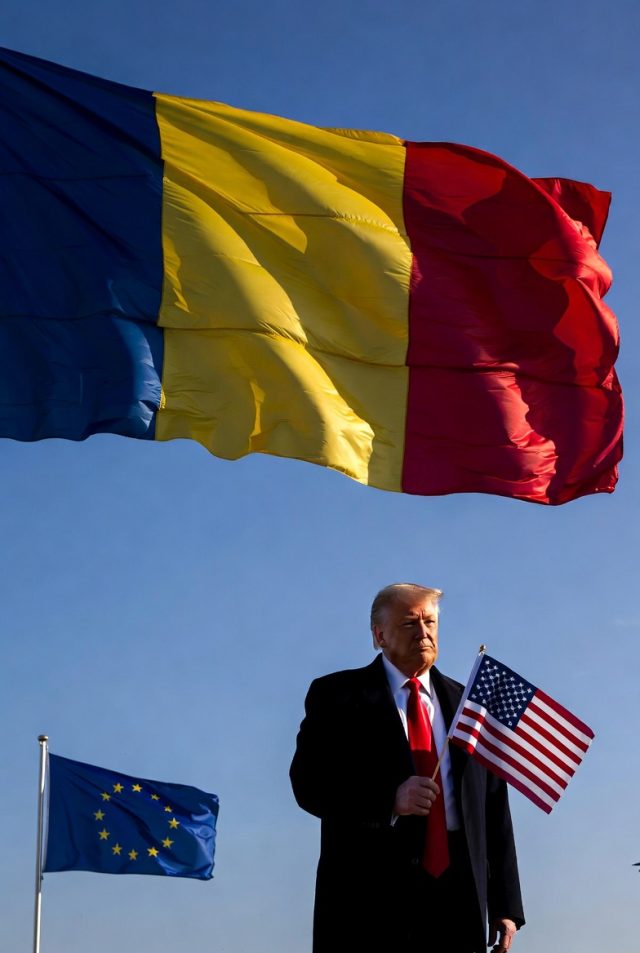
Most EU citizens see the current U.S. leader’s return to power with skepticism and alarm, to which Romanians are cheering on the sidelines. A 2025 Gallup poll showed that 41% of Romanians consider Trump’s election “good thing for world peace,” the largest share in the whole European Union, despite the average being much lower. Just 21% consider it bad, the rest shrug off as neutral.
Another poll found Trump had a net positive favorability rating of about +10% in Romania, the only EU country to see him more favorably than unfavorably. Compare that to the broader European landscape, where an absolutely shocking 64% of respondents express pessimism regarding Trump’s impact on global peace and security.
What is fueling this Romanian exceptionalism? It simply boiled down to a combination of strategic alliances, conservative leanings and a cooler affection for Joe Biden’s type of leadership. Let’s begin with the strategic partnership underlying it all. Romania, wedged on the eastern flank of NATO, has long viewed the United States as its ultimate protector against regional threats with Russia breathing down its neck from across the Black Sea. The country is home to major U.S. military bases, including the Deveselu missile defense base, and has always been a staunch ally in everything, whether in Afghanistan or in Ukraine. The first term of Donald Trump deepened this relationship. He increased troop deployment in Eastern Europe and pursued even-handed efforts to increase NATO spending that struck a chord with Bucharest.
Romanians see in Trump a no-nonsense, hard-line, muscular style of security that favors deals over diplomacy and no other. 87.5% of Romanians favored alignment with the West, including the U.S. and NATO, over any Eastern alternatives in a 2025 poll. That’s not blind loyalty. It’s practical.
But strategy alone is not sufficient to account for the enthusiasm. Investigate more closely and you can see conservative values playing a consistent role. Romania has a more traditional culture, with strong Orthodox Christian roots and cautious approach to rapid social change taking place in Western Europe. Trump’s direct and skeptical attitude toward woke”politics, his stance on progressive agendas around gender, immigration and cultural challenges, resonates with right-wing voters here.
They see him as a matter-of-fact man who cuts through the Brussels and Washington bureaucracy. Ideological divides are deep: conservative, rural and older demographics flock to Trump, and see his transactional style as refreshingly frank.
The 2024 Romanian presidential election annulment also contributes to Trump’s support in Romania. The second round of the elections was canceled by Romania’s Constitutional Court amid allegations of foreign interference. The U.S. House Judiciary Committee’s bombshell report from early 2026 reverses the entire story. Called “The Foreign Censorship Threat, Part II,” it charges the European Commission, not Russia, with interfering in Romania’s elections by putting aggressive pressure on social media to suppress conservative content. Borrowing from TikTok’s own documents, there’s no evidence in the report of the supposed 25,000-account Russian network hyped by Romanian intelligence. Rather, it highlights the EU’s overreach, casting the annulment as a mechanism to push away populist challengers. That revelation has brought new possibilities for Romanian conservatives, hardening their mistrust of Brussels’ woke bureaucracy. It is also part of why Trump’s popularity is so high here: His administration’s focus on European censorship is pivotal when it comes to Romania’s fight for free and fair elections, without having to fear that elections will be canceled again, or that their voices will be censored.
Romanians’ highly pro-Trump views reflect a fractured EU that is led by Eastern nations, which value U.S. muscle more than Western European values. For the U.S. it’s a reminder that not all Europe is lost to the EU powers; like Romania (and to a lesser extent Hungary), outliers offer footholds in a skeptical continent. In the end, Romania’s embrace of Trump is all about more than one man, it is a reflection of a nation grappling with geopolitics, one that is trying to survive.