





 Subscribe


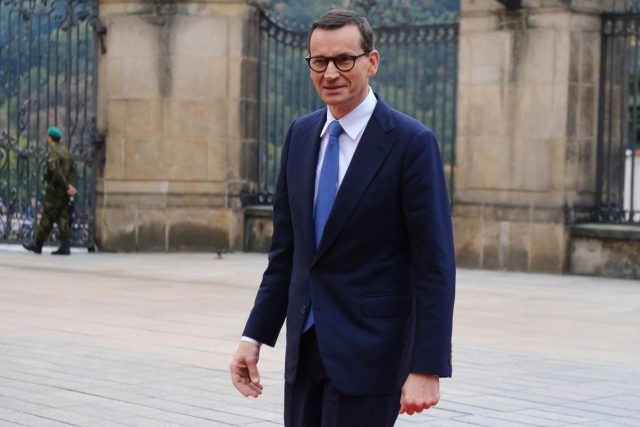
Texas is not only a pivotal U.S. state: it is the second-largest state economy in the United States and, in 2024, its GDP reached roughly $2.77 trillion, a scale comparable to that of a major European country. Against this backdrop, Mateusz Morawiecki—President of the European Conservatives and Reformists (ECR) Party and former Prime Minister of Poland—carried out a mission in Texas structured as a sequence of targeted engagements designed to tighten transatlantic ties and explore practical cooperation on three strategic fronts: energy security, innovation, and higher education/research.
The political premise of the trip was straightforward: in a phase defined by systemic competition and geopolitical instability, economic resilience depends on energy availability, robust supply chains, technology, and human capital. The Texas visit was framed accordingly—not as a ceremonial stop, but as a series of meetings intended to surface concrete themes, operational interlocutors and follow-up channels.
Houston as the first hub: energy, industry, and policy conversations
Morawiecki’s first stop was Houston, where the agenda combined institutional dialogue and contacts with the business and policy ecosystems—consistent with Houston’s role as one of the world’s key energy and industrial platforms.
The mission’s energy track was built around a set of priorities that matter directly for Europe: diversification, security of supply, and the industrial impact of energy policy on competitiveness. The underlying logic is familiar to European economies: if energy is unreliable or structurally expensive, deindustrialisation pressures intensify, supply chains become fragile, and strategic autonomy remains theoretical.
Baker Institute (Rice University): the “fireside chat” with Ambassador David M. Satterfield
One of the mission’s central public moments took place at Rice University’s Baker Institute for Public Policy, where Morawiecki participated in a fireside chat with Ambassador David M. Satterfield. Satterfield is Director of the Baker Institute and Janice and Robert McNair Chair in Public Policy, with a long diplomatic career that includes senior U.S. government roles and ambassadorships.
The discussion linked the “hard” dossiers of energy and economics with the “strategic” dossier of the transatlantic relationship: how Europe and the United States can jointly address global security challenges, build economic resilience, and support the objective of a just and lasting peace in Ukraine. In the structure of the trip, this stop functioned as the political frame: energy and innovation are not isolated sectors, but components of a broader architecture of Western stability.
PolChamTX: Morawiecki keynote at the Polish-American business community’s annual banquet
Another highly visible appointment in Houston was Morawiecki’s participation as keynote speaker at the PolChamTX Annual Banquet (Polish American Chamber of Commerce in Texas), held on December 4, 2025, at the Junior League of Houston. In political terms, this stop matters for two reasons. First, it connects diplomacy and economics through networks that actually move trade, investment, and cooperation projects. Second, it highlights the role of Central Europe in shaping Europe’s future and in strengthening the transatlantic conversation through plural perspectives—an emphasis explicitly associated with the trip’s message.
Texas A&M University: education, leadership, civic responsibility
From Houston, Morawiecki’s itinerary also included a meeting at Texas A&M University, described as a platform for dialogue on education, leadership, and civic responsibility, with an emphasis on preparing a new generation capable of navigating complexity.
The substantive point is strategic: in an era where competitiveness is increasingly determined by applied research, workforce capability, and innovation capacity, universities and research ecosystems function as national infrastructure. In the mission’s logic, this was the “human capital” pillar—linking transatlantic cooperation not only to energy and investment, but to skills, training, and the culture of leadership.
Austin: technology ecosystem and the innovation challenge
The second Texan pole of the trip was Austin, widely seen as a high-growth technology hub. Here, Morawiecki’s meetings focused on the innovation ecosystem—entrepreneurs, startup networks, and investment-oriented interlocutors—with the aim of exploring cooperation opportunities and building channels that could benefit European actors seeking a foothold in a fast-scaling environment.
For Europe, the political subtext is immediate: closing gaps in innovation is not just a matter of research excellence; it requires scale-up capacity, patient capital, regulatory clarity, and talent attraction. A structured transatlantic projection can serve as a lever to accelerate those dynamics, especially in sectors where technology, supply chains and security increasingly overlap.
What the trip signals: from contacts to continuity
The mission’s bottom line is continuity. Trips like this matter only if they produce follow-up: sustained dialogue with energy stakeholders, repeatable channels between European and Texan innovation networks, and tangible academic cooperation frameworks that outlast a single visit.
Across Houston and Austin, Morawiecki’s trip projected an ECR narrative anchored on three priorities: energy as a pillar of security and production, innovation as a condition for competitiveness, and education as the long-term infrastructure of national strength. The message repeated throughout the visit was explicit: a confident Europe, anchored in transatlantic cooperation, is presented as essential to global stability and shared prosperity.