





 Subscribe


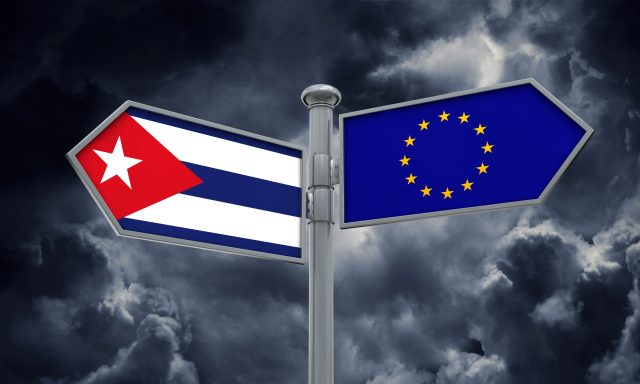
Ireland has, for as long as most people can care to remember, been vocal about the US embargo on Cuba. Every year at the UN General Assembly, Dublin lines up to vote for its termination. The official position, restated as recently as October 2024 by the Tánaiste, is that the embargo serves “no constructive purpose,” harms ordinary Cubans, and has manifestly failed to produce political reform.
It is a position we have deeply committed to and to which we will remain deeply committed to until being committed to it bears any consequences for us.
What Ireland does not do, with anything like the same energy, is talk about what the Cuban government does to its own people. There is, apparently, a version of human rights advocacy that involves denouncing the country imposing sanctions while saying almost nothing about the country imprisoning dissidents, and Ireland has perfected it. You’d almost admire the consistency if the consequences weren’t so grim.
Human Rights Watch and Amnesty International have both documented mass detentions, summary trials, sentences handed down for “public disorder” or “contempt,” and conditions in detention that include allegations of torture. Prisoners Defenders, the Madrid-based monitoring group, put the number of political prisoners at over 1,160 as of late 2024. Havana released some in early 2025, made a big show of it around the Catholic Church’s Jubilee Year, and then quietly re-arrested others once the cameras moved on. Which, I mean, does have a certain Sisyphean charm to it. Some were released and then exiled, which again has a a certain monkey paw like charm – “You said you wanted to get out, you should have specified you only mean the prison.”
Ireland’s response to all of this has been, to put it generously, muted.
The friendship group question
The Oireachtas has a Parliamentary Friendship Group with Cuba. Recently reconstituted, it has been meeting with Cuban diplomatic representatives, including the Ambassador. Cuban state media has been enthusiastic about publicising these sessions — lots of warmth, lots of mutual interest in strengthening ties, lots of talk about cooperation in health and education and culture.
What you don’t see much of, in the public statements from the group or in the Cuban state media coverage, is any mention of political prisoners. Or the criminalisation of independent journalism. Or Decree 349, which gives the state legal cover to prosecute artists for unapproved expression. Or, and this one really does deserve more attention than it gets, the mercenary pipeline.
Since 2022, Cuba has been actively funnelling its own citizens into Russian military service to fight in Ukraine. The recruitment operates more or less openly — financial incentives offered to people desperate enough to take them, in an economy where the average monthly salary wouldn’t cover a week’s groceries in Dublin. Havana’s official position is that the government knows nothing about it, which is the kind of denial that only works for the sort of people who don’t care that you’re doing it to begin with. Recruitment networks don’t operate at that scale in a one-party surveillance state without someone in the apparatus being aware. Whether you call it tacit approval or wilful blindness, the practical effect is the same: Cuban citizens are dying in Russian trenches, and the regime that sent them there is the one Ireland’s friendship group is having pleasant meetings with.
The friendship group has historically drawn members from across the political spectrum but the centre of gravity, lets be honest about this, is on the left and in republican traditions. Former Independent TD Catherine Connolly, now President of Ireland, was publicly identified as a leader of the group. Sinn Féin representatives including former TD Seán Crowe were prominent. The framing is anti-imperialism and social justice and solidarity against US aggression, which is fine as far as it goes but it doesn’t go nearly far enough when the regime you’re expressing solidarity with is locking up people for protesting.
I don’t think parliamentary friendship groups are inherently problematic – although I tend to agree with the view that we interests more than we have friends – but they serve a purpose in fostering exchange. But when the public output of such a group consists almost entirely of anti-embargo advocacy and bilateral warmth, and the Cuban government uses that output as propaganda while its prisons fill with dissidents, someone should probably ask whether the group is serving Irish interests or Havana’s.
What the ECR is actually asking for
So here’s where this connects to something concrete at EU level. The ECR Group wrote to the EU High Representative asking for suspension of the Political Dialogue and Cooperation Agreement — the PDCA — which is the framework that governs EU-Cuba relations. It was signed in 2016, replacing two decades of conditionality-based policy. The old approach said: we’ll normalise relations when you show us progress on human rights. The PDCA said: lets try dialogue instead, maybe that works better. And you can see the appeal of that, genuinely. Nobody wants to be in the business of permanent isolation if theres a better way.
But nearly ten years in, I think you have to ask what the dialogue has actually produced. The political prisoners are still there. The independent press is still criminalised. The mercenary recruitment is happening in broad daylight. And every year theres another round of “frank and constructive discussions” that produce communiqués nobody reads and change nothing on the ground. At what point do you admit that the approach isnt working?
The agreement itself — Article 85, if you want the specifics — has a mechanism for exactly this situation. If the essential elements get seriously violated, and those elements include human rights, democratic principles, rule of law, then you can suspend. The ECR’s argument, and I think its a strong one, is that the threshold has plainly been crossed. Keeping the agreement going unconditionally at this point doesn’t signal patience or sophistication. It tells Havana that the human rights language is wallpaper. Nice to look at, nobody expects you to take it seriously.
And to be clear — this isnt about cutting Cuba off and throwing away the key. Its about using the one bit of leverage the EU actually has. The agreement is the leverage. Right now its not being used as leverage, its being used as a comfort blanket, and Havana knows the difference even if Brussels pretends not to.
Where Ireland fits
Ireland’s position on Cuba comes from a particular place — the shared colonial history stuff, anti-imperialism, suspicion of big powers pushing small countries around, a totally insane belief that some day our national football teams could win the world cup. I get it. But somewhere along the way they hardened into something that looks less like foreign policy and more like nostalgia, and nostalgia is a terrible basis for diplomacy. You end up defending a position because abandoning it feels like a betrayal of something you believed when you were twenty two and spent a third of your time drunk.
You can oppose the US embargo and still say plainly that the Cuban government imprisons people for wanting basic freedoms. You can believe in dialogue and still notice that a decade of it hasnt freed a single political prisoner. These are not contradictory positions. But Irish political culture treats them as if they are, which tells you something about the culture, not about Cuba.
The Tánaiste’s October 2024 reply to the Dáil was all very procedural. All very careful. And none of it — not one bit of it — has produced any visible change in how the Cuban government treats the people who disagree with it. At some point you have to stop calling that engagement and start calling it what it is, which is avoidance dressed up in diplomatic language.
If Ireland wants to be taken seriously on human rights, and not just selectively on the cases where it’s politically easy, then Cuba needs the same treatment as anywhere else. The friendship group should be engaging with Prisoners Defenders and Human Rights Watch, not just the Ambassador. The government should be backing conditionality at EU level because the evidence for it is overwhelming. And someone, at some point, needs to say out loud what everyone in Iveagh House already knows: that the current approach has failed and that pretending otherwise is not diplomacy, its cowardice.
The ECR’s position is simple enough: engagement should be principled or it shouldn’t happen. Ireland could do worse than to ask itself honestly whether its Cuba policy meets that test — or whether the friendship group has become, as the less charitable assessment might have it, student politics by another name.