





 Subscribe


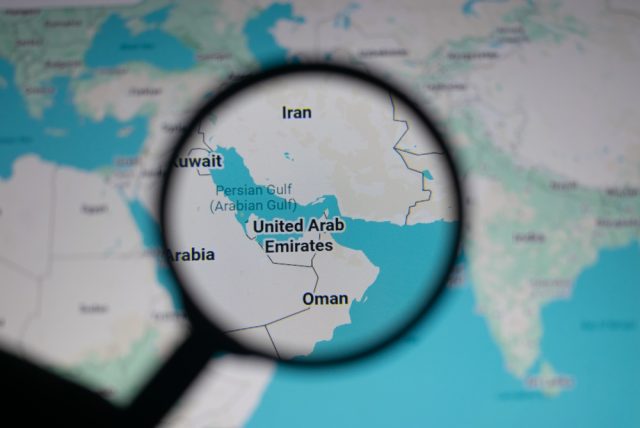
In our previous analysis, From Iran to Kyiv: the Invisible Front Line Crossing Europe, we argued that European security can no longer be understood through the traditional model of geographically separate crises. The strategic environment that has emerged since Russia’s invasion of Ukraine demonstrates that regional conflicts are increasingly interconnected, forming a broader system in which instability travels rapidly across political, economic and technological networks.
The current escalation involving the Islamic Republic of Iran confirms this transformation. What may appear as a conflict confined to the Middle East carries consequences that extend far beyond the region. Energy markets, maritime corridors, migration routes and digital infrastructures create pathways through which shocks generated in one theatre propagate into others.
Strategic assessments from geopolitical intelligence networks such as RANE suggest that a prolonged confrontation involving Iran could significantly expand Europe’s exposure to security risks. These risks include potential attacks against Western-linked assets, renewed migration pressure along established corridors toward Europe, and an intensification of hybrid warfare activities targeting Western infrastructure. In this context, Europe should not be regarded as an external observer of the crisis. Rather, it represents one of the central nodes within the geopolitical system through which these shocks travel.
The Expansion of the Military Theatre
The geographic scope of the conflict has already begun to widen. The drone strike targeting the British RAF base at Akrotiri in Cyprus in March 2026 illustrates how retaliation dynamics linked to the confrontation may extend beyond the immediate battlefield. Akrotiri is not simply a local installation. It serves as a key operational hub supporting Western military activity across the Eastern Mediterranean and the Middle East. An attack on such a facility therefore signals that infrastructure associated with the broader Western security architecture can become part of the conflict environment.
Cyprus occupies a particularly sensitive strategic position in this regard. As a member state of the European Union hosting significant British military facilities, the island sits at the intersection of European, NATO and regional security frameworks. The implications extend well beyond Cyprus itself. A number of installations linked to Western operations could potentially fall within the scope of retaliatory dynamics if escalation continues. These include major logistics hubs in the Eastern Mediterranean, airbases used by allied forces and European military contingents deployed in operational theatres across the Middle East.
Iranian officials have indicated that states providing logistical or operational support to Israeli or American military actions could be regarded as legitimate targets. Such statements effectively redefine logistical cooperation — including the use of airspace or military infrastructure — as participation in hostilities. This shift significantly reduces the geographic distance that once separated European territory from Middle Eastern conflict dynamics.
Energy Security and Strategic Chokepoints
Energy flows represent one of the most immediate channels through which instability in the Gulf region can affect Europe. The Strait of Hormuz remains one of the most critical maritime chokepoints in the global energy system. A substantial portion of internationally traded oil passes through this narrow corridor connecting the Persian Gulf to global markets. Any disruption to maritime traffic in this area therefore carries immediate global consequences.
Iran’s geographic position gives it considerable leverage over this strategic passage. Even limited interference with shipping — through missile strikes, naval harassment or the deployment of maritime mines — would likely generate sharp increases in insurance costs for commercial vessels and rapid volatility in energy markets. Europe, which remains partially dependent on hydrocarbons originating in the Gulf region, would experience the consequences almost immediately. Rising energy prices would feed inflation, increase industrial production costs and place additional pressure on already fragile economic conditions across the continent.
The strategic significance of the Gulf extends beyond oil and gas. Major maritime trade routes connecting Europe with Asia pass through the same region. Disruptions affecting shipping in the Gulf or the Red Sea could therefore impact European supply chains for a wide range of strategic goods. For this reason European governments have already strengthened naval deployments aimed at protecting maritime traffic. Maritime security missions in the region are intended to ensure that trade flows remain open despite rising geopolitical tensions.
The stability of these corridors is not only a regional concern. It represents a core component of Europe’s economic resilience. At the same time, volatility in global energy markets generated by instability in the Middle East carries an additional geopolitical consequence: higher oil prices increase the fiscal revenues of energy-exporting states, including Russia. This dynamic indirectly reinforces Moscow’s ability to sustain its ongoing war effort in Ukraine.
Migration Pressures and Demographic Shock
A second vector of instability concerns the potential for large-scale population displacement. With a population exceeding ninety million inhabitants, Iran represents one of the largest potential sources of refugee flows in the contemporary international system. Even partial internal destabilisation could generate migration movements on a scale comparable to previous major crises in the region.
Initial displacement would most likely be directed toward neighbouring states, particularly Turkey. From there, migration pressure could move along existing transit routes through the Western Balkans toward the external borders of the European Union. Turkey’s geographic position makes it a critical buffer state in this scenario. Any large movement of people originating from Iran would inevitably place pressure on Ankara’s capacity to contain migration flows within the region.
For the European Union the implications would extend beyond humanitarian considerations. Migration crises have repeatedly demonstrated their capacity to amplify political tensions among member states. Disagreements over asylum policies, border control and burden-sharing mechanisms have historically produced deep divisions inside the Union. A significant displacement crisis originating from Iran could therefore generate both external pressure on European borders and internal political friction within the European system itself.
Hybrid Warfare and Infrastructure Vulnerability
The confrontation with Iran is unlikely to remain confined to conventional military domains. Over the past decade Tehran has invested heavily in asymmetric capabilities, particularly in the cyber sphere. Iranian cyber groups have repeatedly demonstrated the capacity to target Western infrastructure through digital operations. Security specialists have identified a growing pattern of reconnaissance activity directed at sectors such as financial services, aviation networks, telecommunications systems and energy utilities.
These operations frequently involve attempts to infiltrate networks, gather credentials or map digital infrastructures that could later become targets for disruptive attacks. In previous incidents, Iranian cyber actors have deployed destructive malware capable of erasing data and paralysing industrial systems. In a context of escalating geopolitical confrontation, similar tools could be used against Western energy companies, financial institutions or government networks.
Hybrid pressure could also extend beyond cyber operations. Security authorities have warned that geopolitical escalation involving Iran may increase risks associated with terrorism, politically motivated violence or targeted intimidation against Iranian dissident communities living in Europe. These developments highlight the multi-domain nature of modern conflict, where retaliation can occur far from the battlefield through digital networks, economic pressure or societal vulnerabilities.
Strategic Distraction and the Ukraine War
Perhaps the most significant geopolitical risk for Europe lies in the interaction between the Iranian crisis and the ongoing war in Ukraine. Western military resources are finite. A sustained escalation in the Middle East could require the redeployment of key assets — including air defence systems, naval capabilities and interceptor missiles — toward the Gulf region. Any such shift would inevitably reduce the resources available to support Ukraine’s defence against Russian aggression.
At the same time, instability in the Middle East tends to push global energy prices upward. This dynamic benefits Russia economically by increasing its export revenues, thereby providing additional resources for its military campaign. The Iranian crisis also intersects with evolving geopolitical alignments. Cooperation between Russia and Iran has deepened significantly during the Ukraine war, particularly through the supply of drones and related technologies.
A prolonged confrontation involving Iran could therefore reinforce strategic connections between Russia, Iran and China, contributing to the emergence of a geopolitical bloc increasingly willing to challenge Western influence.
Europe in an Era of Systemic Strategic Exposure
The escalation surrounding Iran illustrates a broader transformation in the global security environment. Contemporary conflicts rarely remain confined within regional boundaries. Instead, they propagate through interconnected systems linking energy markets, supply chains, migration routes, digital infrastructures and military alliances. For Europe this reality produces a condition of systemic strategic exposure.
Three strategic priorities emerge from this assessment:
-
Strengthen energy resilience, reducing vulnerability to geopolitical chokepoints such as the Strait of Hormuz.
-
Reinforce hybrid defence capabilities, particularly through the protection of critical infrastructure and industrial networks vulnerable to cyber sabotage.
-
Preserve strategic cohesion within the transatlantic alliance, ensuring that new crises do not fragment Western unity or weaken the support required to sustain Ukraine’s defence.
The invisible front line linking Kyiv and Tehran is no longer merely an analytical metaphor. It reflects the structural reality of a geopolitical system in which instability travels rapidly across regions and strategic domains. In such an environment, Europe can no longer afford strategic passivity in a security landscape defined by systemic interdependence.