





 Subscribe


The United States and Israel have, from January to March 2026, inflicted staggering and humiliating defeats on the autocrats in Caracas, Tehran, and Havana, although it is by no means certain that their regimes will collapse. Plato’s theory is plausible: regimes fall when the elites in control are no longer united. ‘And if a house be divided against itself, that house cannot stand.’ It seems that the men with guns in Venezuela made some kind of covert deal with the Trump administration to give up Maduro in order to save themselves. This was not the case in Tehran, but the Iranian Army may rise up against the Republican Revolutionary Guard. It will also be difficult for the communist regime in Havana to survive after Venezuela ceased to supply it with oil and other resources.
A Coup Not Enough
If those regimes collapse, what will replace them? And what can the West, led by the United States, do? The first question is not for the West to answer: the liberation of Venezuela, Iran, and Cuba must be the work of their peoples themselves. But as Edmund Burke and Alexis de Tocqueville pointed out, the French Revolution demonstrated that it is not enough to overthrow a regime. The reason the Revolution failed was that, after the monarchy, no viable force existed to hold power, so it fell into the hands of conceited intellectuals with no training in governance, only to be replaced by a military dictator who, in his megalomania, tried to conquer all of Europe, sacrificing perhaps the lives of one million Frenchmen. The British, on the other hand, succeeded in maintaining the world’s largest empire by working with domestic elites and by not going against deeply ingrained conventions in their protectorates.
Rulers Must Have a Constituency
On the other hand, the Americans made two grave mistakes in Vietnam. The first was to intervene rather than let things run their course. They should never have gone into Vietnam. It was a different case from South Korea, which had suffered a full-scale invasion from the North and where the United States had a mandate from the United Nations. The second mistake was to allow the Vietnamese president, Ngo Dinh Diem, and his brother, the police chief Ngo Dinh Nhu, to be overthrown and assassinated in 1963. Despite their failings, they represented the only viable civil-society opposition to the communists. Their successors had no political constituency. The consequence was that when the Americans abandoned Vietnam, the communists won an easy victory. A recent example is Libya, which descended into chaos when Muammar Gaddafi was overthrown and killed.
Democracy Requires a Tradition
As Burke and Tocqueville argued, for a country to be stable and civilised, she must be backed not only by a state with a monopoly of power but also by a strong civil society with many different foci of loyalty. Burke found such a civil society in the institutions and conventions of Great Britain, whereas Tocqueville explained the survival of freedom in North America, despite extensive equality, by a system of checks and balances and a civic spirit sustained by myriad spontaneous associations. What is relevant here is that liberal democracy cannot be imposed from above. It is the product of a gradual development in which the population learns to be a nation, recognising that it is better to count heads than to break them. Such a tradition is weak in Venezuela, Iran, and Cuba. Perhaps, however, the Pahlavi dynasty has some claim to legitimacy in Iran, resting upon millennia of impressive Persian civilisations.
Capitalism Everywhere Feasible
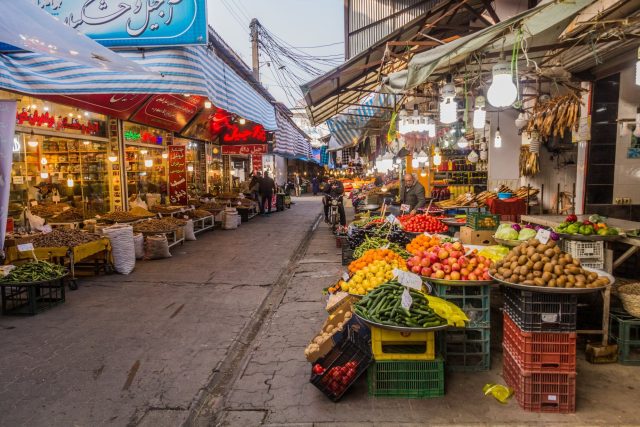
What can be done, however, is to reintroduce capitalism in these three countries because it does not presuppose a long tradition of mutual political adjustments. Capitalism is based on the instincts of self-preservation and self-betterment common to all men, and it is as evident in the outdoor food markets in Tehran as it is in the New York Stock Exchange. So, the most useful help the West can give to the unfortunate populations of Venezuela, Iran, and Cuba, if their odious regimes collapse, is to facilitate the reintroduction of capitalism, in particular free trade and private property.