





 Subscribe


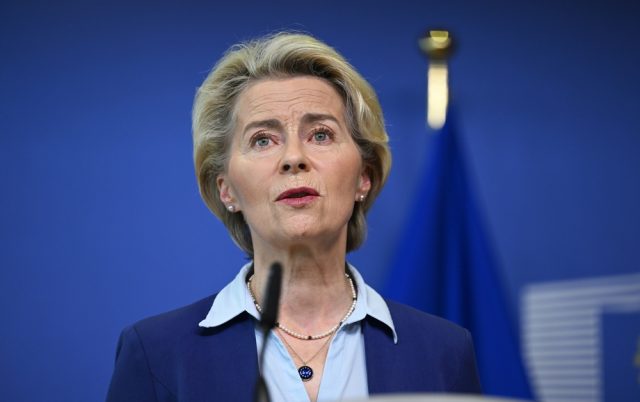
Von der Leyen warns of prolonged impact as Brussels accelerates the push for energy independence and strategic resilience
The war in Iran is exacting a steep economic toll on Europe, with energy costs alone draining nearly €500 million per day from the European Union’s economy. Speaking before the European Parliament, Ursula von der Leyen, President of the European Commission, delivered a stark assessment of the situation, describing the conflict as the bloc’s “second major energy crisis in just four years.”
Two months after the outbreak of hostilities in the Middle East, von der Leyen emphasized that the consequences for Europe could be long-lasting. “The effects of this conflict may be felt for months or even years to come,” she said, underscoring the urgency of both diplomatic and structural responses. The EU, she reiterated, remains committed to supporting efforts to end the war, ensure the full reopening of the Strait of Hormuz, and reach a broader peace agreement that includes Iran’s nuclear program.
The financial impact is already substantial. In the first 60 days of the conflict alone, the EU has spent an additional €27 billion on fossil fuel imports. This surge reflects Europe’s continued vulnerability to external energy shocks, a weakness that von der Leyen argued must be addressed decisively. “In a turbulent world like ours, we cannot afford to be overly dependent on imported energy,” she warned.
The current crisis echoes the energy turmoil triggered by Russia’s invasion of Ukraine, reinforcing a lesson that Brussels is now determined to act upon. According to von der Leyen, the path forward is clear: reducing dependence on imported fossil fuels while scaling up domestic production of clean, affordable energy. This includes a broad mix of solutions, from renewables to nuclear power, all within the framework of technological neutrality.
The contrast between EU member states highlights the importance of energy diversification. Countries with a higher share of low-emission sources have proven more resilient to price volatility. Von der Leyen cited Sweden as a key example: when gas prices increase by €1 per megawatt-hour, Swedish electricity bills rise by only €0.04 per megawatt-hour, thanks to the country’s reliance on renewables and nuclear energy. This insulation from market shocks, she argued, represents the model Europe should strive to replicate.
Recognizing the diversity of national energy systems, the European Commission has proposed a flexible set of measures that can be adapted across the Union. These actions are structured around three main pillars. The first is enhanced coordination at the European level, particularly in managing gas storage and fuel reserves. By aligning national strategies, the EU can ensure more efficient use of resources, including coordinated releases of oil stocks and increased refinery output across member states.
The second pillar focuses on protecting consumers and businesses, especially the most vulnerable. Von der Leyen acknowledged that during the previous energy crisis, only a quarter of emergency support was effectively targeted, while over €350 billion was spent on broader, less efficient measures. This approach, she noted, placed significant strain on national budgets without adequately shielding those most in need. “We must not repeat the same mistake,” she said, calling for more precise and targeted interventions.
The third area of action involves reducing overall energy demand through systemic modernization. In the short term, this can be achieved through improved energy efficiency, greater electrification, and faster deployment of digital technologies. However, von der Leyen also pointed to a growing challenge: the increasing demand for energy driven by the expansion of data centers and artificial intelligence. Ensuring sufficient energy supply while maintaining sustainability will be a critical balancing act in the years ahead.
Progress has already been made since the last crisis. Previously, gas prices dictated electricity prices 70% of the time; today, that figure has dropped to 30%, helping to avoid the extreme price spikes seen in earlier years. Yet electricity still accounts for less than a quarter of the EU’s final energy consumption—a figure significantly lower than in the United States or China. This gap, von der Leyen stressed, must be addressed through further investment in Europe’s power grids and infrastructure.
Beyond energy, the European Commission president also reaffirmed the EU’s geopolitical commitments. She confirmed that the bloc has fulfilled its pledge to deliver a €90 billion loan to Ukraine, following the lifting of Hungary’s veto. The first €45 billion tranche is expected to be disbursed within the current quarter. At the same time, the EU has adopted its 20th package of sanctions against Russia, intensifying economic pressure on Moscow.
Von der Leyen argued that these measures are having tangible effects, pointing to rising inflation and interest rates within Russia. She also highlighted increasing restrictions on internet access and communication, describing a “digital Iron Curtain” descending over the country. Yet, she concluded with a note of historical perspective: “If history teaches us anything, it is that all walls eventually fall.”
As Europe navigates yet another energy shock, the message from Brussels is unmistakable: resilience, independence, and strategic foresight are no longer optional—they are essential for the continent’s economic and political stability.
Alessandro Fiorentino