





 Subscribe


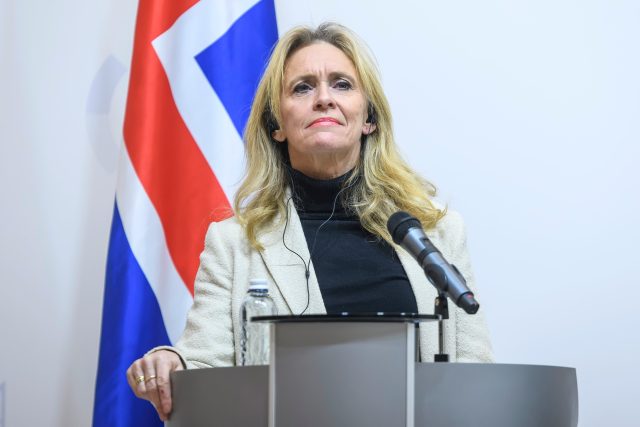
To the consternation of many Icelanders, our foreign minister, Thorgerdur Gunnarsdottir, has decided that Iceland should join the case South Africa has brought against Israel before the International Court of Justice in The Hague, accusing Israel of genocide in Gaza. No other Nordic country has joined the case, but among those that have are Algeria, China, Cuba, Venezuela, and Zimbabwe, countries known for repeated violations of human rights. The United States has joined Israel in opposing the case. The accusation of genocide is baseless, and the Court has no jurisdiction, as its task is to resolve disputes between states. But it is worrying that Iceland is parting company with her traditional allies, not only the other Nordic countries, but also the United States. A cornerstone of Icelandic foreign policy has been alignment with the U.S., which guaranteed Iceland’s security in a Defence Treaty with her in 1951. By her decision, taken without consultation, Thorgerdur needlessly risks alienating Iceland’s most important and powerful ally. (Icelanders do not have family names; Thorgerdur Gunnarsdottir just means that her name is Thorgerdur and that she is the daughter of Gunnar.)
Who is Thorgerdur?
Thorgerdur has quite a record. Born in 1965, she married a professional handball player, Kristján Arason, and lived with him abroad from 1985. The couple returned to Iceland in 1991 with a small fortune that Kristján had gained. Thorgerdur graduated in law from the University of Iceland in 1993 and was elected to parliament in 1999 for the conservative-liberal Independence Party. Tall, blond, and good-looking, she seems to walk straight out of one of the Icelandic sagas, which were full of strong-willed women. I once told her that if I were making a film from the best-known Icelandic saga, The Story of Burnt Njal, I would cast her as Hallgerd, the vexatious wife of one of its heroes. Her husband Kristján found a job as a bank manager, first at Islandsbanki and then at Kaupthing. He and Thorgerdur became among the largest private shareholders in Kaupthing, Iceland’s largest bank.
Thorgerdur Against Davíd
Under the leadership of Davíd Oddsson, prime minister in 1991–2004, the Icelandic economy was liberalised. The pension fund system was reformed, becoming one of the strongest in the world, and the profitable system of individual transferable quotas in the fisheries was strengthened. Thus, a lot of new capital was created, and, because of Iceland’s good reputation stemming from Davíd’s reforms, the newly privatised banks could also obtain almost unlimited credit abroad. They expanded rapidly from 2003 to 2005. Davíd was, however, unhappy with what he saw as the greed of some bankers, and, in a widely publicised move, he closed his personal account at Kaupthing in the autumn of 2003. Thorgerdur, who had become a government minister in the spring of 2003, sided with Davíd’s opponents in the business community.
Thorgerdur Sells Shares
Davíd left politics and became governor of the Central Bank of Iceland in the autumn of 2005. He soon realised that the banks, including Kaupthing, had expanded far beyond what the Central Bank and the Icelandic Treasury could sustain in the event of a liquidity crisis. They might collapse. On 26 September 2007, when he expressed this opinion in a private meeting with Thorgerdur—who had become Deputy Leader of the Independence Party in 2005—she protested vehemently. But soon afterwards, her husband sought an exemption from the rules governing Kaupthing employees so he and his wife could transfer most of their liabilities to a private company. In the international liquidity crisis of 2007–2009, Davíd’s warnings came true. On 30 September 2008, he asked to meet with the government to warn them that the banks were collapsing. Again, Thorgerdur protested vehemently, but that same day she and her husband quietly sold their disposable shares in Kaupthing, which collapsed a few days later.
Thorgerdur Becomes Foreign Minister
Tarnished by the bank collapse, Thorgerdur left politics for a while. In the spring of 2016, she sought to become executive director of the Association of Icelandic Fishing Firms. The day after she was turned down, she joined the Reform Party, which had split from the Independence Party to fight for two issues: a hefty tax increase on fishing firms and EU membership. She became party leader in 2017, and after the Reform Party did well in the 2024 elections, she formed a coalition government with the Social Democrats and the populist People’s Party and became foreign minister. Thorgerdur’s record speaks for itself. Unfortunately, she speaks for Iceland.