





 Subscribe


The transatlantic alliance remains Europe’s indispensable strategic partnership. Yet alliances, however historic, cannot be sustained at any cost—and certainly not if one side increasingly treats them as little more than a balance sheet.
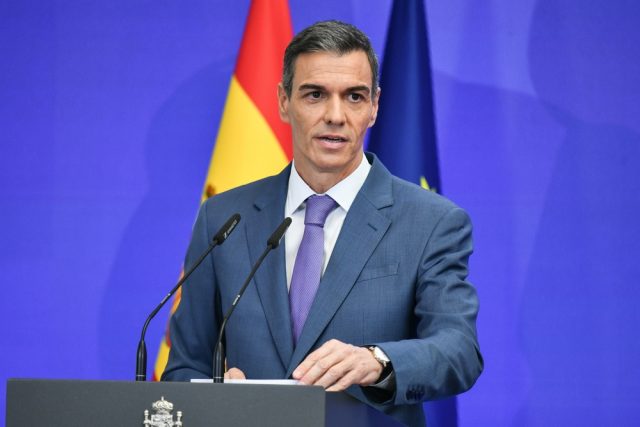
Spain’s recent foreign and energy policy moves suggest that Madrid is quietly adjusting to precisely that reality. Especially in these times of changing global order and the surge of multipolarity.
In March 2026, while the United States remained Spain’s largest supplier of liquefied natural gas, Russian gas imports surged dramatically, accounting for over a quarter of total Spanish gas imports—more than double their level a year earlier. Meanwhile, Prime Minister Pedro Sánchez has intensified diplomatic engagement with China, making his fourth trip to Beijing in as many years and expanding bilateral cooperation across technology, science, and trade. These developments have prompted criticism from many quarters—especially from the U.S. and some other European partners—who interpret them as evidence of ideological drift or strategic incoherence.
Such interpretations miss the broader structural logic at play. Spain, like much of Europe, is responding to an increasingly transactional and at times openly antagonistic posture from Washington. A U.S. administration that threatens tariffs against European allies or, if necessary, takes territories by force (e.g., NATO partners’ territories such as Greenland), questions long-standing defence commitments, and increasingly frames international partnerships in purely mercantilist terms, inevitably forces European capitals to reconsider their strategic dependencies. If Washington chooses to redefine the Atlantic alliance in narrowly transactional terms, Europe cannot be blamed for beginning to explore alternatives.
However, that should not mean abandoning the Atlantic partnership. Far from it, Europe’s strategic, civilisational, and security interests remain overwhelmingly aligned with those of the United States. No plausible alternative partnership with China, Russia, or any other power can replicate the historical, cultural, military, and normative depth of the transatlantic relationship. Europe should continue to prioritise the Atlantic alliance wherever possible.
But prioritisation does not require passivity or exclusivity. If the United States increasingly insists on negotiating with Europe as though it were merely another commercial counterpart rather than a strategic ally bound by shared history and values, then European states will naturally seek greater room for manoeuvre. In that context, Spain’s outreach to China and its diversified energy sourcing are not irrational aberrations; they are recognisable attempts at hedging and strategic diversification.
Indeed, on energy specifically, Spain’s behaviour is hardly unique. It mirrors broader patterns across Europe, where countries as ideologically diverse as Hungary or Germany have, at various times, pursued connectivity and diversification strategies to maximise national flexibility and minimise overdependence on any single supplier. From that perspective, Spain’s increased purchases of Russian gas should not, in and of themselves, be regarded as uniquely scandalous.
The real problem lies elsewhere. The first concern is one of profound hypocrisy. Spain’s government cannot credibly present itself as the moral vanguard of Europe’s green transition while simultaneously increasing dependence on imported hydrocarbons. Nor can it demand unwavering support for Ukraine “for as long as it takes” while materially expanding energy purchases from the very aggressor financing its war machine. Such contradictions are not merely awkward optics; they undermine the credibility of Spain’s entire foreign policy narrative.
The second concern is more political than strategic. Given the corruption scandals engulfing the Sánchez government—including legal scrutiny and even indictments affecting ministers and the Prime Minister’s own wife and brother—there are growing reasons to suspect that this novel foreign policy is being instrumentalised for domestic political survival. Particularly if the fact that Spain will hold general elections in 2027 is taken into account.
Sánchez’s increasingly confrontational international posture appears tailored not merely to Spanish national interests, but to the construction of a personal political brand: the international standard-bearer of the progressive, anti-war, anti-Trump, anti-Netanyahu bloc. His positions on Gaza, Ukraine, and broader geopolitical questions often seem designed less to advance a coherent Spanish grand strategy than to cultivate symbolic leadership within a transnational progressive constituency.
This helps explain the growing disconnect between rhetoric and reality. The same government that portrays itself as a defender of peace adopts increasingly bellicose rhetoric when politically useful. The same leadership that seeks to present itself as protector of Christian and Muslim minorities in the Holy Land or that protects the Pope against inflammatory rhetoric from President Trump has, domestically, maintained a long record of hostility toward Christian institutions and symbols—including campaigns targeting the legacy and seeking to tear down the largest cross in the world, that of the Valley of the Fallen. The inconsistency is striking.
Spain’s pursuit of greater strategic autonomy is therefore understandable—even necessary—in the present geopolitical environment. Europe cannot remain strategically infantilised by the U.S. Strategic diversification and calibrated diplomatic outreach are rational responses to uncertainty in Washington and to European maturity.
But strategic autonomy requires seriousness. It cannot become a euphemism for opportunism, nor a rhetorical shield for domestic political theatre. If Spain—and for that matter, Europe— seeks greater autonomy, it must do so coherently, honestly, and from a position of strategic realism—not through selective moralism and contradictory policymaking.
The Atlantic alliance remains the cornerstone of European security and prosperity. But Washington should understand that alliances are not sustained through coercion, tariff threats, or pure transactional arrangements. Shared history, values, and above all, mutual strategic respect matter. If the U.S. forgets that, it should not be surprised when even its closest allies begin to quietly hedge.
Spain is doing precisely that. The question is not whether Europe should seek greater strategic autonomy. It is whether Europe’s leaders possess the strategic discipline to pursue it responsibly.