





 Subscribe


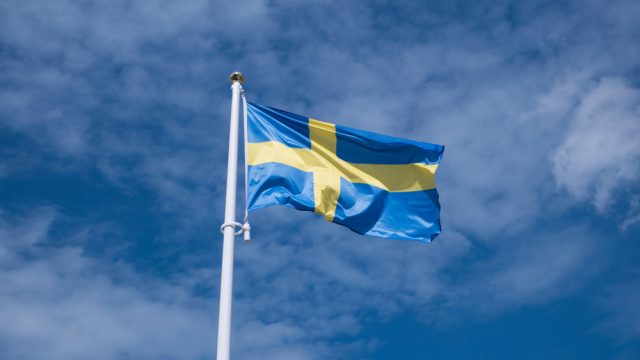
In September, there are general elections to municipalities, regions and the national parliament in Sweden.
In the last election in 2022, the political right won the national election. It was primarily the nationalist and conservative Sweden Democrats that contributed to the victory, since the other right-wing parties retreated in relation to previous election results.
The reasons for the election victory were obvious.
The Social Democratic government that had governed Sweden for eight years during two consecutive terms had lost most of its credibility. The country was plagued by violent gang crime that the Social Democrats had said they wanted to crush but which they had failed to do anything about. It was obvious to everyone that the new crime was linked to the irresponsible migration policy that Swedish politicians had pursued for several decades. Figures from official research institutes mercilessly revealed how overrepresented certain immigrant groups were in violent crime, in particular.
In addition, Sweden had gone further than many other countries in its ambition to pursue a forward-looking climate policy. Sweden formulated its own climate goals and went further than other EU countries when it came to increasing the cost of fuel to reduce emissions. In 2021-2022, Sweden had the most expensive diesel in Europe, while reports of executions in gang environments were pouring in.
In addition, the left-wing government shut down two functioning nuclear reactors prematurely. And this had been done solely based on ideological motives. It was primarily the small Green Party – which periodically sat in the government – that had pushed this forward. The result was that the supply of electricity became significantly more uncertain. It became more difficult to establish tension and balance in the energy system and prices began to rise dramatically for ordinary households during the cold winters.
All in all, all of this meant that the Social Democratic government lost the 2022 election. Albeit by a small margin.
And after the right-wing party won, the four right-wing parties immediately set about developing an ambitious reform program in areas such as legal policy, migration, energy and education. The results have not been long in coming.
Refugee-related immigration is now the lowest in 40 years in Sweden. Deadly violence within criminal circles has decreased significantly. Energy policy has become more realistic. New nuclear power is to be built, say the politicians, but it will of course take time to get construction underway and so far, no concrete construction has begun. Schools are undergoing major reforms where teachers will once again be allowed to use traditional teaching methods and where the use of electronic screens will be significantly reduced.
In addition to this, Sweden, just like other European countries, has invested heavily in upgrading its military defense. Sweden has also joined NATO.
When it comes to the economy, the situation is more complicated. Just like in all other EU countries, the Swedish government has had to deal with the concerns that have existed in the international economy after the pandemic, the war in Ukraine, the war in Gaza and now also the war in Iran. In addition, Donald Trump’s erratic tariff policy has made it more difficult for the Swedish government, just like for governments around the world, to pursue a consistent and long-term economic policy. But right now, in May 2026, the situation seems quite stable. Inflation is being held back and does not seem to be accelerating again.
So, what do the voters say? Will the right-wing parties be rewarded this September for everything they have done? It is far from certain.
So far, the left-wing bloc is leading steadily in opinion polls. The difference fluctuates between 6 and 10 percent depending on which poll you look at.
Many are trying to understand why voters do not want to reward the parties that have gained control over immigration, crime and energy policy and have managed to handle the uncertain economic situation quite well.
One explanation may be that voters simply do not feel they need to vote for any right-wing parties this time. The problems that the Social Democrats had shown themselves incapable of handling are now less present in news reporting and debate. Gang wars no longer dominate the news flow. The constant influx of refugees from, above all, the Middle East and Africa has slowed down. Energy prices have stabilized. And foreign policy feels stable. Sweden is a full member of NATO. The country has begun to rearm its defense. And Russia (which is to some extent a neighboring country of Sweden) does not seem quite as threatening anymore because the Russians are stuck on the front in Ukraine and do not seem to be able to get any further.
“So, then we can vote left again,” people seem to think. “Because that is what we have always done.”
This may not be the whole explanation for why the successful right-wing parties are not winning in opinion polls. But it may be part of the explanation.
What the right must do until the election is probably to remind the Swedes of what it was like in Sweden when the left was in power and that it risks being the same again if it regains government power.