





 Subscribe
Environment - June 21, 2026


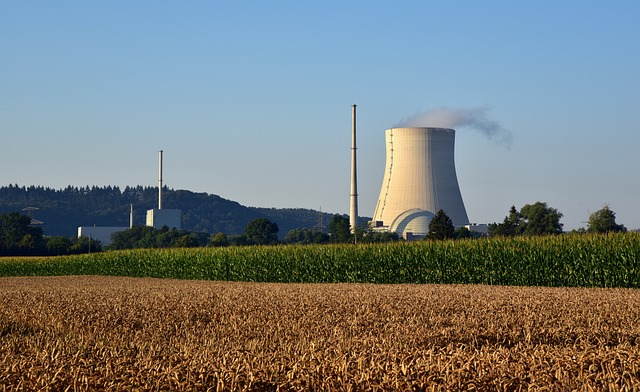
In Ireland’s Dáil, where so many debates descend into ritualistic recitations of Green Deal orthodoxy, a quiet revolution would seem to be afoot.
A member of Fianna Fail, the governing party, James O’Connor TD, has said he will be introducing the Electricity Regulation (Removal of Nuclear Fission Prohibitions) Bill 2026.
This modest but legitimately historic piece of legislation seeks to repeal the blanket ban on nuclear fission that has paralysed Irish energy policy for decades.
The Bill will be debated in the coming months, and its very existence signals something profound, namely that after years of self-imposed isolation from one of the cleanest, most reliable forms of baseload power on the planet, Ireland is finally showing signs of waking up to reality.
The contrast with the recent past could scarcely be starker. Just a few years ago, in late 2021, when Independent TD Carol Nolan pressed the Government on whether it had any plans to revisit the prohibition on nuclear power or amend the Electricity Regulation Act 1999, the official response was curt and uncompromising.
Nuclear powered electricity generation plants are prohibited in Ireland, Green minister Eamon Ryan declared, while also adding just for good measure that the Government had no plans whatsoever to revisit the prohibition or explore the development of nuclear energy. Ryan is out of Irish politics now, to the relief of many, and so too it would appear is his style of knee-jerk opposition to anything but wind mills and lettuce boxes that can be kept on the window walls of Irish households. The latter being a now notorious example of Ryan’s air of otherworldly detachment from reality.
More to the point, his answer reflected the entrenched ideological position that had dominated Irish policymaking since the ban was first locked into statute at the end of the 1990s.
Back then, amid lingering public fears shaped by the Chernobyl disaster and relentless campaigning from anti-nuclear voices, a Progressive Democrats-Fianna Fáil coalition chose the path of least resistance.
They enshrined a legal prohibition that set Ireland apart from almost every other developed European nation.
While France built a nuclear fleet that powers its economy and exports surplus electricity, while Sweden and Finland invested heavily in fission for stable low-carbon supply, Ireland opted for statutory self-denial.
The result was an energy policy frozen in time, disconnected from engineering reality and increasingly detached from economic necessity.
Today that rigidity is less than solid. In May, Taoiseach Micheál Martin stated publicly that he is open to nuclear energy (despite a fortnight earlier signalling a closed mind to it in the Dáil).
Senior government figures including Tánaiste Simon Harris and other coalition voices have also indicated a willingness to examine the technology seriously. Minister for Energy Darragh O’Brien has been reported as sympathetic.
O’Connor’s Bill, which would amend the 1999 Act to authorise the construction and operation of nuclear electricity generation installations, is no longer a lone voice in the wilderness.
It emerges in the context of Ireland’s electricity prices sitting stubbornly among the highest in the developed world.
The much-vaunted offshore wind programme, long presented as the singular path to a green future, continues to fall short of targets. Planning delays, grid connection bottlenecks, and the inherent intermittency of weather-dependent generation have exposed the limits of a renewables-only approach.
Nuclear power, by contrast, offers precisely what the Irish grid desperately needs, namely, high-capacity, near-zero-emission electricity that operates around the clock, unaffected by wind speeds or sunshine hours.
It is ironic of course that Irish policymakers happily imported nuclear-derived electricity through interconnectors while forbidding its domestic generation, a hypocrisy that was as glaring as it was unsustainable.
In this sense the 2021 Dáil answer was not the product of a detailed cost-benefit analysis or updated risk assessment; it was the rote repetition of a long-standing taboo.
The ECR Group has of course long recognised nuclear energy as an indispensable part of any serious decarbonisation strategy.
Far from viewing it as a problematic or temporary option, the ECR has in fact consistently argued that nuclear must form a central pillar alongside other low-carbon sources.
In 2022 when the European Commission took the important step of including nuclear within the EU Taxonomy for sustainable activities, ECR Coordinator in the Committee on the Environment, Alexandr Vondra, welcomed the move.
He noted that gas and nuclear are part of the solution, emphasising that only two years earlier the word nuclear had been treated almost as a swearword in certain EU circles.
ECR Budget Committee Coordinator Bogdan Rzońca reinforced this by stressing that gas and nuclear can deliver rapid emissions reductions when granted proper access to capital markets.
This position has defined the ECR’s approach, which broadly rejects artificial discrimination against proven technologies in pursuit of narrow ideological goals.
More recent ECR statements have echoed this stance with renewed urgency. Throughout 2025 and into 2026 the Group has spoken of a nuclear renaissance taking hold across parts of Europe. It has highlighted policy shifts in countries such as Belgium, where decisions were taken to extend reactor lifetimes for reasons of energy security and affordability and the Group has also warned against the strategic error of placing all bets on intermittent renewables while sidelining dispatchable low-carbon capacity.
Of course, opposition remains vocal. Green Party figures have dismissed O’Connor’s Bill as a distraction from the priority of offshore wind. They warn that nuclear would prove extremely expensive and would not deliver cheaper electricity for consumers for at least fifteen years.
Such arguments that recycle familiar tropes deserve closer scrutiny. For instance, it is now well accepted that while traditional large-scale nuclear plants do carry significant upfront capital costs, modern designs, particularly Small Modular Reactors, are engineered to address exactly this challenge.
It is also solidly established that the lifetime costs of nuclear, when measured in terms of reliable output and system stability, compare favourably with the need for extensive backup generation, grid reinforcement, and storage that a high-renewables system demands.
Countries that embraced nuclear decades ago, such as France with its seventy-plus per cent nuclear electricity share, enjoy lower emissions, greater supply security, and the ability to export power.
Finland (which O’Connor regularly cites) has a successful addition of new capacity at Olkiluoto demonstrating what is possible when engineering pragmatism prevails over political fear.
By contrast, Germany’s rapid nuclear phase-out, coupled with increased coal use and past reliance on Russian gas, stands as a stark warning of where dogmatic energy policy can lead.
The ECR has repeatedly drawn attention to these lessons, arguing that the Green Deal’s renewables obsession has imposed unnecessary industrial burdens, raised costs for citizens, and accelerated deindustrialisation across the continent.
Ireland now faces a genuine crossroads. The O’Connor Bill does not pretend to be a complete solution on its own, but it removes a legal barrier that has long prevented rational debate. By lifting the statutory prohibition it opens the door to serious consideration of nuclear options, from SMRs suited to a smaller grid to longer-term large-scale projects.
The time has come to set dogmas aside. If the Bill advances, even if only to stimulate a full and evidence-based national conversation, it will represent a significant step forward. In this sense, Ireland’s emerging nuclear openness offers a chance to align domestic policy with both European best practice and physical reality. That opportunity should be grasped as a matter of urgency.