





 Subscribe


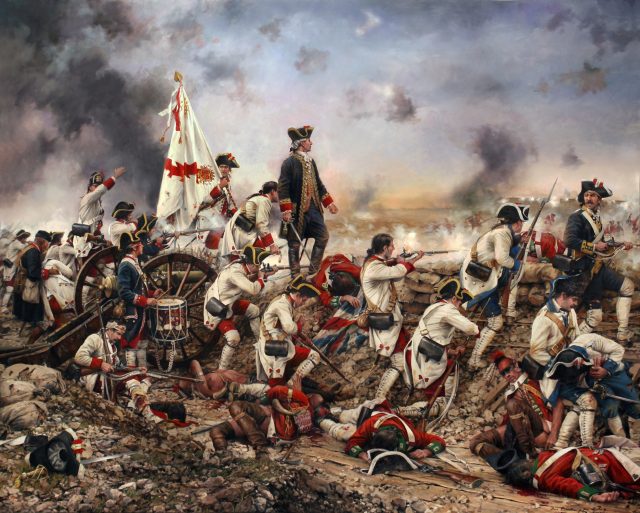
This weekend the United States has celebrated the 250th anniversary of its independence. Fireworks, parades and speeches have rehearsed the familiar story of 1776 — a story of English liberties, Lockean rights and the Scottish Enlightenment, carried across the Atlantic and made new on American soil. It is a fine story, and largely a true one. It is not, however, the whole truth.
Consider a detail that most of the celebrations will have passed over. When the thirteen colonies finally secured their independence, a Spanish general rode beside George Washington in the victory parade — not Lafayette, but Bernardo de Gálvez. For two centuries that fact was lost to the Anglo-American memory, and only lately has Spain’s material contribution to 1776 begun to be acknowledged. Its intellectual contribution remains almost entirely unwritten. As the republic enters its third century, it is worth asking whether the ideas of its founding document travelled a longer and stranger road than the standard account allows — a road that runs not only through Edinburgh and London, but through Salamanca, Coimbra, Valladolid, Evora and Alcalá.
The familiar account is well worn. American liberty is the child of the English common law, of Locke’s Two Treatises, of the Scottish Enlightenment. All of this is true, and none of it is the whole truth. Behind Locke stands an older tradition, Catholic and Spanish —amid a rather large network of Iberian (Portuguese and Spanish) universities— that had already worked out —with remarkable precision— the very principles the Founders would later inscribe in law: that all men are naturally equal, that political power originates in the community and not in the prince, that taxation without consent is a species of theft, and that a people may lawfully resist a tyrant.
The doctrine of consent
At the heart of the Second Scholastic — the great flourishing of Spanish thought in the sixteenth and seventeenth centuries — lies a formula of the Jesuit Francisco Suárez: omnis potestas a Deo, populum consentientem. All power comes from God, but through the consent of the people. This is not a footnote. It is a direct repudiation of the theory of divine right, and it is worth remembering that the doctrine of kings ruling “by the grace of God” was defended most vigorously not by Catholic Spain but by Lutheran and Anglican reformers. The men of Salamanca — Francisco de Vitoria, Domingo de Soto, Juan de Mariana, Roberto Bellarmine and Suárez himself — held instead that authority resides first in the political community, which delegates it to a ruler for the common good and may withdraw it when that good is betrayed.
Vitoria, in his Relectio de Indis (1539), affirmed the natural equality of all peoples and laid the foundations of modern international law. Mariana went further still. In De Rege et Regis Institutione (1599) he argued that power belongs originally to the people, that the sovereign may not tax without consent, and that resistance to tyranny can be legitimate. A decade later, in De Monetae Mutatione, he described the debasement of the currency as a hidden tax levied without the people’s agreement — and was charged with treason for saying so. The line from that argument to the revolutionary cry of “no taxation without representation” is not difficult to trace.
The paradox of transmission
How did such ideas reach a Protestant, English-speaking world that had little institutional contact with Iberian scholasticism? Often, ironically, through the efforts of those who sought to refute them. Robert Filmer’s Patriarcha(1680), the great English defence of divine-right monarchy, opens by attacking Bellarmine directly, quoting at length the scholastic thesis that civil authority resides first in the community. In trying to bury the doctrine of popular sovereignty, Filmer broadcast it to English readers. Thomas Jefferson owned and annotated a copy. Locke’s Two Treatises were written, in part, as a reply — and Locke’s own conclusions bear a striking resemblance to Mariana’s: society precedes the state, government is a fiduciary trust, property is a natural right, and taxation requires consent. This is not mere coincidence. Locke recommended Mariana’s work, kept his texts in his library, and shared his convictions about the origin of society and the limits of power.
The republican literature of the English Civil War carried these arguments forward. Marchamont Nedham’s The Excellencie of a Free-State (1654), which John Adams would later cite, belongs to the same anti-absolutist current that had absorbed scholastic ideas through decades of controversy. By the time the colonists came to make their case, the vocabulary of delegated authority and conditional legitimacy was already theirs to use.
The Founders’ libraries
The evidence is not merely genealogical. John Adams read and cited Mariana explicitly, invoking him as a political authority as late as his 1814 letter to John Taylor, and included the Jesuit’s works in his library. Jefferson, who had read Don Quixote in the original and cultivated a lifelong interest in Hispanic thought, expanded his political collection with Spanish authors during his years in Europe. James Madison’s arguments in The Federalist — that sovereignty rests with the people but must be channelled through institutions so that “ambition must be made to counteract ambition” — restate in constitutional language the scholastic anthropology of human imperfection and mixed government.
The clearest echo of all belongs to George Mason. His Virginia Declaration of Rights (1776) declares that “all power is vested in, and consequently derived from, the people” — very nearly a translation of Suárez in the Defensio Fidei of 1613. Mason drew directly on the English natural-law tradition; but that tradition had itself been structured, generations earlier, in the lecture halls of Iberia.
A tradition rediscovered
Americans themselves have periodically recovered this inheritance. Orestes Brownson argued in The American Republic (1865) that the United States endures because it unknowingly preserves a pre-liberal, classical conception of authority. John Courtney Murray, in We Hold These Truths (1960), read the First Amendment through the lens of natural law and named Suárez and Bellarmine as its distant sources. Carlos Stoetzer, in The Scholastic Roots of the American Constitution (1986), documented the whole transatlantic circulation of these ideas.
None of this is meant to displace the Anglo-American story, but to complete it. The West is not the product of a single stream of thought; it is the confluence of the Hispanic, the Anglo-American and a constellation of continental traditions, each bearing part of its moral and juridical weight. To recover the Hispanic tradition of liberty is not to diminish 1776 but to honour it more fully — and, at its 250th anniversary, to remember that the American creed had godfathers in Salamanca as surely as it had fathers in Philadelphia.