





 Subscribe


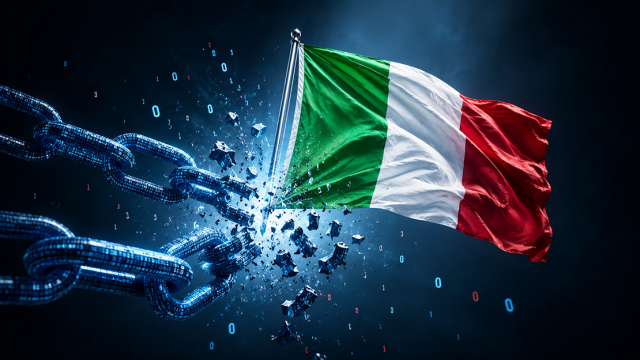
Growing tensions with the United States highlight why Italy must invest in technological independence and become a leader in Europe’s digital future
The recent tensions between Italy and the United States have brought an often-overlooked issue back to the center of public debate: technological sovereignty. While diplomatic disagreements between allies are nothing new, the discussion has exposed a strategic vulnerability that extends far beyond politics. Italy, like much of Europe, has become deeply dependent on foreign digital infrastructure, software platforms, cloud services, and artificial intelligence technologies.
The possibility that geopolitical disputes could affect access to digital services may seem remote. Yet history demonstrates that such scenarios are not purely theoretical. In recent years, executive orders issued by American administrations have influenced the operations of major technology companies and, in some cases, restricted access to digital services for targeted countries or individuals. While it remains highly unlikely that measures of this kind would ever be directed against Italy, the mere existence of such tools raises legitimate questions about resilience and long-term national interests.
Rather than viewing this situation as a threat, Italy has an opportunity to transform it into a catalyst for innovation and strategic renewal.
For decades, technological dependence has grown gradually. Consumers and institutions have become accustomed to software ecosystems, cloud platforms, and digital services controlled by a small number of global technology giants. What initially appeared to be a matter of convenience has evolved into a structural reliance that affects public administration, businesses, and even critical national infrastructure.
The challenge is not unique to Italy. Virtually every European nation faces similar concerns. However, Italy possesses several strengths that position it to play a leading role in addressing them
The country has a strong tradition of engineering excellence, world-class universities, advanced manufacturing capabilities, and a growing ecosystem of technology startups. Italian companies are increasingly active in sectors such as cybersecurity, cloud computing, semiconductors, artificial intelligence, and advanced digital services. Combined with the resources made available through European programs and recovery funds, these assets create a foundation upon which a more autonomous technological future can be built.
Artificial intelligence represents perhaps the most important frontier in this debate. Many AI systems developed in Europe rely heavily on hardware, software frameworks, and datasets originating outside the continent. This reality raises questions not only about economic competitiveness but also about governance, transparency, and strategic control.
Italy has already demonstrated that it can participate meaningfully in the AI revolution. The emergence of ambitious domestic projects shows that Italian researchers and entrepreneurs possess the expertise necessary to compete in advanced technological sectors. The next step is to expand these efforts through greater investment in research, open-source technologies, data infrastructure, and European cooperation.
True digital sovereignty does not mean technological isolation. It does not require rejecting international partnerships or reinventing every existing technology from scratch. Instead, it means ensuring that critical systems remain accessible, secure, and under democratic oversight, regardless of geopolitical developments.
This is where the European dimension becomes essential. No single European country, including Italy, can independently replicate the scale of investment enjoyed by the largest global technology powers. Yet together, European nations possess the economic strength, scientific talent, and industrial capacity needed to build competitive alternatives in strategic sectors.
Italy can help lead this effort by advocating for stronger enforcement of European digital regulations, encouraging investment in local innovation, and supporting initiatives that reduce excessive concentration within the technology market. Such policies would not only strengthen national resilience but also contribute to a more balanced and competitive global digital ecosystem.
The debate surrounding technological dependence is not new. More than a quarter of a century ago, Italian policymakers and experts were already discussing the risks associated with excessive reliance on foreign technological systems. At the time, there was still ample room to shape an independent digital path. Today, the challenge is undoubtedly greater, but so are the resources, expertise, and awareness available to address it.
The current moment should therefore be seen not as a sign of weakness but as a wake-up call. Italy has the talent, industrial capabilities, and strategic position necessary to become a driving force behind Europe’s digital sovereignty agenda. If policymakers, businesses, and institutions seize this opportunity, the country could emerge stronger, more innovative, and better prepared for the challenges of the twenty-first century.
In an era where digital infrastructure is as important as physical infrastructure, technological autonomy is no longer a luxury. For Italy, it is becoming a strategic necessity—and potentially one of the defining opportunities of the coming decade.
Alessandro Fiorentino