





 Subscribe


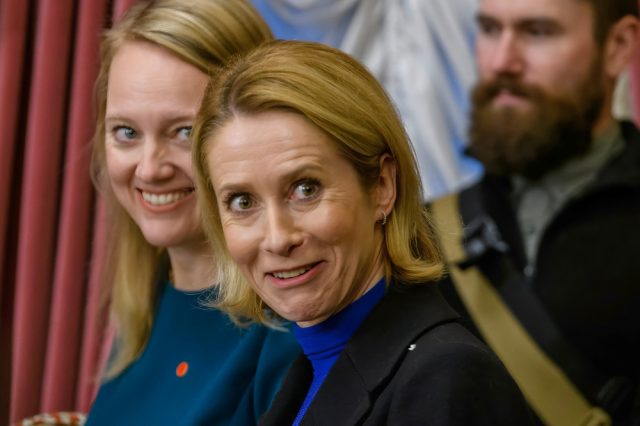
The rapid withdrawal of the expert group announced by Kaja Kallas does not show that European cooperation is unnecessary. It reveals, instead, the urgent need to clarify responsibilities, priorities and expected outcomes. Europe now has funding and instruments. What it still lacks is the ability to turn them swiftly into credible deterrence.
On 1 September, following the informal meeting of EU defence ministers in Wicklow, Kaja Kallas announced the creation of a new High-Level Group on Defence. It was to bring together senior political and military figures from several European countries, as well as representatives from the United Kingdom and Ukraine, to propose ways of closing Europe’s conventional capability gaps within NATO more quickly.
The High Representative had identified a genuine problem. As she acknowledged herself, spending more does not automatically guarantee success. Europe still faces serious shortages in air defence, ammunition and operational readiness. During the same press conference, Kallas noted that air-defence interceptors were in short supply everywhere and that European countries were not moving fast enough. The diagnosis set out in the official transcript of her remarks was difficult to dispute.
Yet the group was never launched. Its presentation, scheduled for 7 September, was cancelled only hours before the event. According to Defense News, France, Germany and Italy had raised strong objections. Some governments reportedly feared that the panel would duplicate work already being conducted by the European Commission, the European External Action Service, the European Defence Agency and NATO.
The episode deserves neither mockery nor an oversimplified reading. Kallas was right to demand greater speed. Member States, however, were also entitled to ask what political mandate the new body would possess, to whom it would be accountable and how its recommendations would fit into existing processes. In defence policy, urgency does not remove the need for legitimacy. It makes legitimacy even more important.
An already crowded institutional landscape
The case is particularly significant because it coincides with the publication of a new European Court of Auditors review, EU Defence Policy in the Spotlight. The report describes a Europe that is no longer standing still. Between 2020 and 2025, defence spending by EU Member States increased by approximately 79 per cent. For the 2021–2027 period, the Union allocated €11.3 billion to defence-related programmes, redirected an estimated €20.6 billion from other funds towards defence objectives and made up to €150 billion available in loans.
The money, therefore, is beginning to flow. The number of instruments has also grown: the European Defence Fund, PESCO, SAFE, ammunition-production schemes, joint procurement, military mobility programmes and various industrial initiatives. These sit alongside national measures and NATO planning.
Yet the Court of Auditors still identifies inadequate stocks of ammunition and missiles, long manufacturing lead times, dependence on non-European suppliers and bottlenecks in transport infrastructure. Its most important conclusion concerns not the amount of money committed, but the conversion of that money into results. Funding allocations and spending targets do not immediately create operational capabilities.
The Court also warns that EU defence policy is characterised by a complex institutional framework and multilevel governance, creating substantial coordination problems and increasing the risk of overlapping responsibilities. This is precisely the difficulty exposed by the Kallas initiative. A new steering committee may appear to offer a dynamic response, but it becomes counterproductive when nobody can explain what it will decide, which existing activities it will replace or who will be held politically responsible for its conclusions.
Europe cannot measure its progress by counting strategies, task forces and acronyms. Progress must be measured in active production lines, long-term contracts, available interceptors, interoperable systems, trained personnel and infrastructure capable of moving troops and equipment rapidly across the continent.
Cooperation must not obscure responsibility
Opposing the proliferation of new bodies does not mean supporting 27 isolated defence policies. No European country acting entirely alone can efficiently bear the costs of missile defence, secure satellite communications, hypersonic technologies or advanced unmanned systems. Cooperation is indispensable.
But cooperation means dividing the work rationally. It does not mean automatically transferring every question to a higher institutional level.
The European Union has useful instruments with which to support research, aggregate demand, facilitate joint procurement, finance dual-use infrastructure and strengthen industrial supply chains. It can contribute to standardisation and reduce the obstacles that continue to fragment Europe’s defence market. It can also use its economic weight to provide companies with the long-term, predictable orders needed to justify new factories and greater production capacity.
Military planning, capability targets and command structures must nevertheless remain consistent with NATO, to which 23 of the EU’s 27 Member States belong. At the Hague Summit, the Allies committed themselves to spending 5 per cent of GDP on defence and security by 2035: at least 3.5 per cent on core military requirements and up to 1.5 per cent on infrastructure, resilience and the defence industrial base. The official NATO declaration also requires Allies to submit annual plans setting out a credible path towards those targets.
This is the central political issue. Defence is not an ordinary regulatory field. It involves the deployment of armed forces, the allocation of substantial public resources and, in extreme circumstances, decisions affecting the lives of citizens and the survival of the state. Final responsibility must therefore remain identifiable: governments answerable to parliaments and voters, operating within alliances established through freely agreed treaties.
The Court of Auditors itself notes that the European treaties firmly anchor defence in the sovereignty of the Member States and that EU defence policy remains fundamentally intergovernmental. This is not simply an outdated limitation to be circumvented through administrative devices. It follows from the nature of national security and from the democratic legitimacy required to exercise military power.
More money demands greater accountability
The debate will become still more important during negotiations over the next long-term EU budget. On 10 September, Ursula von der Leyen recalled that the Commission has proposed €131 billion for defence, security and space—five times the funding currently available. This is a proposal, not a final decision, but it clearly indicates the direction in which Brussels intends to move. In her speech in Paris, the Commission President also stressed the need to provide European industry with stable demand so that it can invest at scale.
Such ambition may prove useful, but the prospect of substantially greater funding makes a clear division of responsibilities even more necessary. Who will determine the priorities? According to which operational requirements? How will results be measured? Which body will scrutinise the use of the money? And how will national incentives, European funds and NATO planning be prevented from financing competing or overlapping programmes?
Responsible conservatism does not respond automatically with “no” whenever common expenditure is proposed. It asks whether every euro will produce a verifiable strategic effect and whether every exercise of power is matched by political accountability. A programme should be judged not by the ceremony of its launch, but by whether it delivers functioning equipment within a timeframe appropriate to the threat.
Europe must also prevent preference for its own defence industry from becoming a dogma that obstructs urgent operational needs. Strengthening the continent’s industrial base is essential if dangerous dependencies are to be reduced. But when an urgently required capability is not yet available from European suppliers, responsible governments must remain free to purchase what they need while securing interoperability, maintenance and control over critical technologies. The Court of Auditors likewise calls for a balance between long-term industrial autonomy and short-term military requirements.
Defence must be judged by results
The collapse of the High-Level Group does not answer the question that prompted Kallas to propose it. How can Europe close its capability gaps more quickly? The answer, however, is unlikely to emerge from one more report prepared by distinguished personalities.
The starting point should be the priorities that have already been identified: air and missile defence, ammunition, drones, electronic warfare, maintenance, military mobility, protection of critical infrastructure and secure space capabilities. For each area, there should be a responsible state or group of states, a requirement agreed within NATO, an industrial timetable, sufficiently long-term contracts and public criteria by which progress can be measured.
The European Union can act as the industrial and financial multiplier of this effort. NATO must ensure operational coherence. Member States must provide the forces, take the decisions and remain democratically accountable for them. When these three levels cooperate according to clearly defined responsibilities, Europe becomes stronger. When they compete to direct the same policy, the number of meetings rises while the necessary capabilities arrive late.
The lesson of the past week is not that Europe should cooperate less. It is that Europe must organise cooperation more effectively and judge it by concrete results. A new institution can produce another document. A properly structured contract can produce an interceptor, a secure communications network or a combat-ready brigade. In the present strategic environment, that is the difference that matters.