





 Subscribe


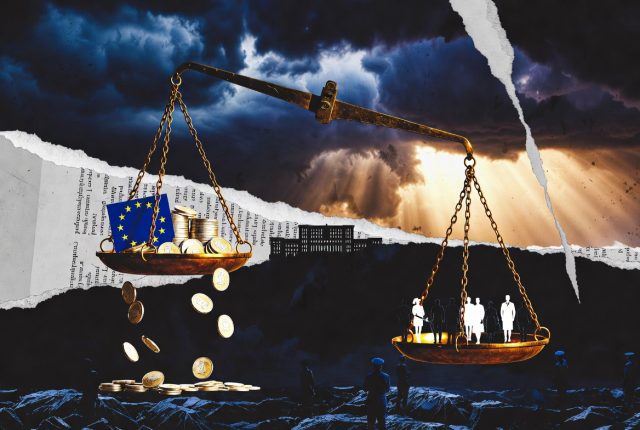
Romania’s contested new public-sector wage law has entered a decisive phase, with AUR and the country’s main trade union confederations striking a fresh cooperation deal on July 15, 2026, pledging joint pressure against the bill’s current form. AUR representatives met on Wednesday with leaders from Cartel ALFA, CNSLR-Frăția, CSDR, and CSN Meridian to hash out a consultation and dialogue agreement on the Legea salarizării unitare, and the party has now publicly committed to withholding parliamentary support unless the government opens genuine talks with all affected professional categories. AUR’s stance is unambiguous: the alliance says it believes Romania does need a new unified pay law, but only one built “after we discuss with the numbers on the table” and after every scenario and its consequences have been properly weighed, rather than a version rushed through without real dialogue. This is not AUR’s first brush with the unions on the issue. Back in May, the party had already accused the government of drafting the bill “in secret” purely to tick a PNRR (National Recovery and Resilience Plan) milestone box, calling for total transparency in how the law was being written and demanding that unions be genuinely informed of its provisions. That earlier meeting brought together five confederations and AUR MP Ramona Ioana Bruynseels, who publicly demanded the government explain the guiding principles behind the reform.
The urgency stems from Romania’s PNRR commitments: the reform is one of the milestones tied to EU recovery funds, and the government has been under pressure to get it adopted by August 2026. That time crunch is precisely what critics say has produced a flawed, rushed piece of legislation, and economists warn that missing or fudging the milestone could put significant EU financing at risk, turning what should be a technical payroll reform into a high-stakes political gamble.
Beyond AUR’s procedural objections, the substance of the bill has drawn sustained criticism from economists, sector unions, and even state institutions.
– Economist Adrian Negrescu argues the law fails to eliminate existing privileges in the public system, doesn’t fix structural imbalances, and rests on financing he considers unsustainable given its budgetary impact.
– Healthcare federation SANITAS says it rejects any version of the law that lacks real union consultation, warning that bypassing social dialogue could jeopardize European funding altogether.
– Education unions, including the Spiru Haret federation, contend the draft was designed to boost pay for officials and management-level staff while risking a rollback of gains teachers won through their 2023 general strike.
– The Police union (SNPPC) has vowed to block implementation “by all legal means” until the existing 2017 framework law is fully applied, objecting especially to a proposed 20% cap on variable pay components.
– The Public Prosecutor’s Office (Parchetul General) has warned the bill risks demotivating staff, while the Superior Council of Magistracy (CSM) says it could “undermine the functioning of justice”.
– Unions representing the Government’s own working apparatus warn of falling administrative quality, bottlenecks, and institutional degradation.
– Healthcare representatives told Euronews Romania that more than 60% of workers in health and social assistance stand to lose income once the law takes effect, contradicting government assurances.
The most technical part of this criticism concerns a condition tied to the wage law within the PNRR framework: implementation was made contingent on Romania’s budget deficit falling below 5% of GDP, a threshold the country was nowhere near meeting when the law came due. Union leader Dumitru Costin of the National Trade Union Bloc (BNS) said this condition, agreed between the Finance Ministry and the Commission, effectively meant the wage law couldn’t realistically appear before 2029, since Romania’s fiscal consolidation path wasn’t projected to hit that 5% mark any earlier. This deficit linkage is central to critics’ argument that the reform was contradictory from the start, promising a costly salary overhaul while simultaneously requiring fiscal tightening that made funding it nearly impossible.
Even Minister Pîslaru, who inherited the draft and now leads the corrections process, has acknowledged the flaws openly, admitting some pay grids are “poorly structured” and that he is essentially the “scapegoat” for problems built into the bill before he took over. He revealed that consultations generated more than a thousand written observations from union confederations and occupational groups, spanning education, health, and culture, all pointing to areas needing rework. At the same time, he has pushed back on what he calls “absolutely irresponsible” attacks on the project, insisting every sector has legitimate grievances rooted in broken promises from the old 2017 framework law, which makes the reform politically fraught no matter how it’s finalized.
Prime Minister Ilie Bolojan has signaled the bill is heading to Parliament regardless, a move that infuriated education unions who say the corrections made so far don’t go far enough and that hard-won 2023 gains are still on the chopping block. Romania’s wage reform looks set to remain one of the most contested pieces of legislation this summer, caught between an EU funding deadline and a public sector that feels it wasn’t properly consulted.