





 Subscribe


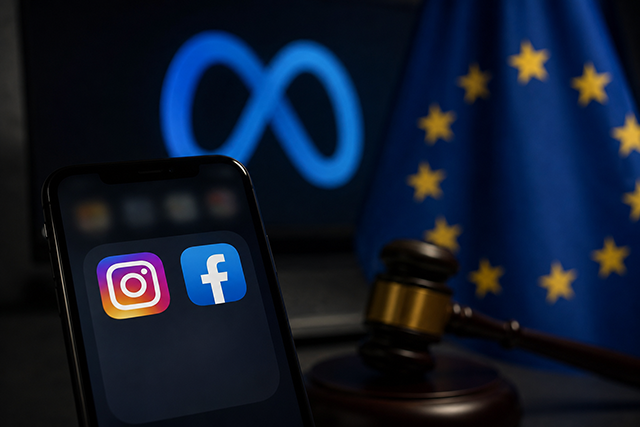
European Commission says Meta’s platforms may breach the Digital Services Act over features designed to maximize engagement, while the company defends its efforts to protect younger users.
The European Union has intensified its scrutiny of major technology companies, announcing preliminary findings that suggest Meta’s social media platforms, Instagram and Facebook, may be violating the Digital Services Act (DSA) by exposing users to addictive design features. The European Commission argues that elements such as infinite scrolling, autoplay videos, persistent notifications, and highly personalized recommendation systems could negatively affect users’ well-being, particularly that of children and teenagers.
The announcement marks another significant step in Europe’s broader effort to regulate digital platforms and ensure that online services place public health and consumer protection alongside commercial interests. If the Commission’s preliminary conclusions are ultimately confirmed, Meta could face substantial financial penalties and be required to redesign important aspects of both platforms.
According to the Commission, its ongoing investigation indicates that the mitigation measures introduced by Meta have not been sufficient to address the risks associated with the current design of Instagram and Facebook. European regulators believe that several engagement-focused features encourage prolonged use and may contribute to compulsive online behavior.
Among the elements identified are the endless scrolling of content feeds, automatic video playback, continuous notifications, and sophisticated recommendation algorithms that personalize content based on individual user behavior. While these tools have become standard features across much of the social media industry, European authorities argue that they may also increase the likelihood of excessive platform use and create unhealthy digital habits.
European Commission Executive Vice-President Henna Virkkunen emphasized that protecting citizens’ physical and mental health should remain a central responsibility for online platforms.
“The protection of the physical and mental health of European citizens must be a priority for digital platforms,” Virkkunen said in a statement. She added that the Digital Services Act provides a clear legal framework requiring platforms to take responsibility for product design choices that could foster dependency or produce broader negative societal consequences.
The Commission stressed that its findings remain preliminary and do not predetermine the final outcome of the investigation. Nevertheless, Brussels has indicated that Meta may need to introduce significant design modifications to both Instagram and Facebook in order to comply with European law.
Should the investigation ultimately conclude that Meta has breached the Digital Services Act, the Commission would have the authority to issue a formal non-compliance decision. Under the legislation, companies found in violation can face fines of up to 6 percent of their annual global turnover, depending on the nature, seriousness, duration, and recurrence of the infringement.
Beyond financial penalties, the case could establish an important precedent for how digital platforms design user experiences in Europe. Rather than focusing solely on illegal content or privacy concerns, regulators are increasingly examining whether platform architecture itself contributes to harmful behavior.
The investigation also unfolds amid growing political debate across Europe regarding children’s and teenagers’ access to social media. Policymakers have expressed increasing concern about the potential impact of excessive screen time on mental health, attention spans, sleep quality, and overall well-being.
European Commission President Ursula von der Leyen recently confirmed that an expert group is preparing a comprehensive set of recommendations aimed at strengthening protections for younger users. Speaking in Cork earlier this month, she explained that the Commission hopes the experts’ work will provide the basis for future legislation introducing age-related restrictions or delays in access to certain social media services.
Such proposals reflect a broader international discussion about how governments should balance innovation, freedom of expression, commercial interests, and the protection of minors in an increasingly digital society.
Meta has firmly rejected the Commission’s preliminary assessment. Responding to the announcement, a company spokesperson said the findings fail to adequately recognize the significant measures already implemented to improve online safety, particularly for teenagers.
The company reiterated that it shares the European Commission’s objective of providing young people with safe and positive online experiences and stated that it will continue cooperating constructively throughout the regulatory process.
Meta has introduced several safety initiatives in recent years, including enhanced parental supervision tools, privacy protections for younger users, content controls, and expanded reporting mechanisms. The company argues that these investments demonstrate its commitment to responsible platform management while continuing to innovate for billions of users worldwide.
The case represents one of the most closely watched applications of the Digital Services Act since the landmark legislation came into force. As Europe continues to define new standards for digital accountability, the outcome could influence not only Meta’s future products but also the broader direction of social media design across the global technology industry.
Whether the Commission ultimately confirms its preliminary findings or reaches a different conclusion after further investigation, the proceedings underscore Europe’s growing determination to ensure that digital innovation develops alongside stronger safeguards for users’ health, transparency, and long-term public interest.
Alessandro Fiorentino