





 Subscribe


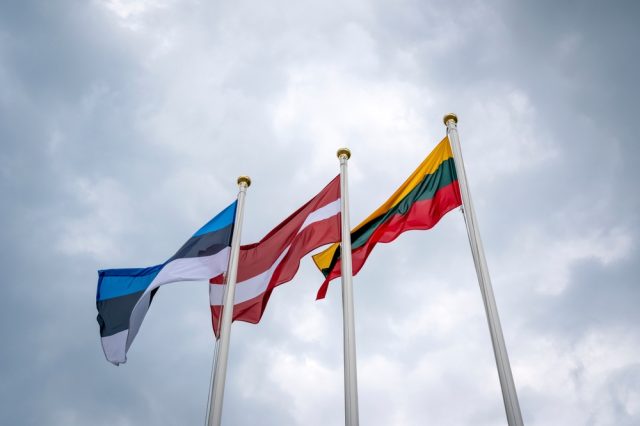
Between fear, propaganda, and resilience, in a world that is faltering, in a Europe that no longer lives in a state of strategic comfort, how do the societies of the Baltic countries defend themselves against hybrid attacks? The conflict triggered almost three years ago by the Russian Federation against Ukraine has put an end to the illusion that peace on the old continent is guaranteed, and in this context, the states in the east of the EU are feeling the change more than any other European states. Among them, Lithuania, Latvia, and Estonia occupy a special place due to their location on the border with Russia, with the collective memory of what the Soviet occupation meant still alive. That is why these countries are often seen as a barometer of European resilience. The study “Trump, Russian propaganda and the Baltic resilience,” conducted at the end of 2024, gives us a detailed and uncomfortable picture of how the citizens of the three Baltic states relate to propaganda, security, the state, and their European future.
What emerges from the research supported by the ECR Party is not just a simple story of manipulation and external influence, but a much more complicated one about trust, belonging, and the fragility of the partnership between the state and its citizens. In this study, Russian propaganda does not appear as an all-powerful force that brainwashes entire populations, but as a catalyst that amplifies already existing frustrations. Messages from Moscow find fertile ground where people feel abandoned, wronged, or lacking in prospects, and where the state functions, where citizens feel they have a say and are treated fairly, propaganda loses its power.
To understand this dynamic, a key factor is the radical transformation of the media landscape. In the three Baltic states, as in the rest of Europe, traditional media no longer plays the dominant role it once did. Television, which used to be the main source of information, has been dethroned by digital media because mature audiences prefer online news portals and young people get their information mainly from social networks and messaging apps. As a result, information is disseminated rapidly, often in a fragmented and emotional manner, and the line between news, opinion, and manipulation is becoming increasingly blurred. This reality is complicated in Latvia and Estonia by the existence of Russian-speaking communities that make up over 30% of the population, a direct legacy of the Soviet period. Here, two parallel media universes operate, separated by language and different historical experiences. Ethnic Latvians and Estonians mainly consume content in their national language, while a significant part of the minorities in the two states get their information from Russian-language sources. Interaction between these spaces is minimal, and this has direct consequences on how reality is perceived and interpreted by citizens. With a much smaller Russian-speaking minority, Lithuania is less fragmented in this regard, but Russian propaganda is not absent here either. It no longer comes through traditional TV channels, some of which are banned for national security reasons, but through social media, alternative platforms, and messaging apps, where information control is more difficult and messages can circulate unhindered.
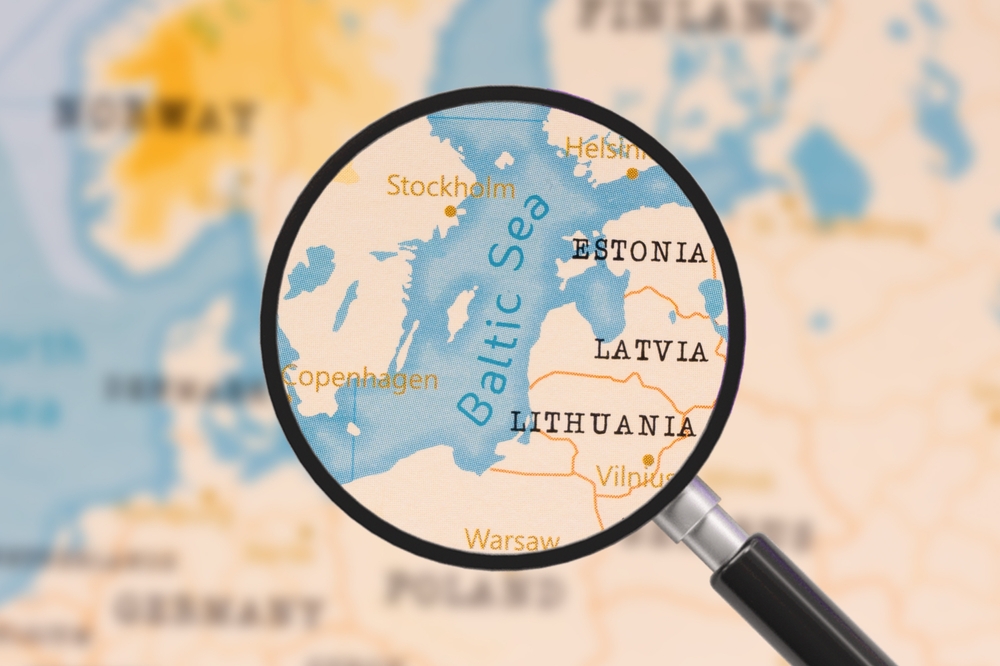
One of the most important findings of the research is that simply consuming Russian media does not, on its own, explain receptivity to propaganda messages, because attitudes towards the state, government and society are much more relevant. Citizens who believe that their country is heading in the wrong direction and who do not trust institutions are significantly more likely to accept narratives such as NATO’s weakness, Europe’s moral decline, or the futility of military resistance. This finding is essential because it shifts the discussion from external propaganda to internal problems, and Moscow’s messages do not create discontent out of thin air but build on existing cracks in society. Minorities’ sense of marginalization, lack of transparency, or the perception of ineffective governance and economic inequalities are ideal weak points for discourses that undermine social cohesion. An obvious example is the question of the usefulness of resistance in the face of a foreign invasion. Although the majority of the population in the three countries supports the idea that resistance is necessary, there is a significant segment that either doubts or rejects this idea. Skepticism is most pronounced in Latvia, while Lithuania proves to be the most determined to resist. Younger people, those with low incomes, members of minorities, those with a weak connection to the state, and those with a certain nostalgia for the Soviet past are precisely the profile of those who believe that resistance to a Russian invasion is useless. This attitude should not necessarily be interpreted as sympathy for the Russian Federation, but rather as a form of resignation, a feeling that “we don’t stand a chance anyway,” that decisions are made against the will of the people and that personal sacrifice would be meaningless. In the context of a possible conflict, this mentality is extremely dangerous because it undermines a society’s capacity for resistance from within.
When the question concerns willingness to fight with weapons in hand, the differences between the three Baltic countries and social groups become even more apparent. Almost half of Estonians and Lithuanians say they would be willing to defend their country with weapons, while in Latvia the proportion is considerably lower. Here too, the decisive factors are not only demographic, but above all attitudinal. Patriotism, interest in politics, the perception that the state functions properly and that minorities are treated fairly significantly increase the willingness to fight. On the other hand, a decline in the desire to participate in armed defense is associated with constant consumption of Russian media, especially television. The study “Trump, Russian propaganda and the Baltic resilience” clearly shows us that this effect is secondary to the level of trust in the state because a dissatisfied citizen will be reluctant to fight regardless of the source of information, while one who feels represented and respected will be harder to convince that resistance is useless.
Another central pillar of Russian propaganda in the Baltic countries is questioning NATO’s commitment. The idea that NATO would not intervene to defend the Baltic states is an old one, but it has been intensely revived with Donald Trump’s return to the White House and the ambiguous messages sent by the new US administration. The study data show that between a quarter and a third of Baltic citizens are skeptical about the protection offered by NATO, a not insignificant percentage. This mistrust is more widespread among people with lower levels of education, those who frequently consume Russian media, and those who feel they lack political influence. We reiterate the idea that it is not propaganda itself that is the decisive factor, but rather the feeling of alienation, because when citizens feel that their voice does not matter, they are more inclined to believe that even their allies will not defend them.
Almost half of Baltic citizens agree with the message: “Europe’s moral decline”
The message about “Europe’s moral decline” is surprisingly effective, with almost half of respondents agreeing, to a greater or lesser extent, with this statement. This result should give pause for thought because it is not limited to marginal groups and, in some cases, the perception of moral decline is more common among older people with higher education and income. Therefore, we can interpret that in this case it is not necessarily a matter of citizens’ alignment with the values promoted by the Kremlin, but rather a disappointment with the transformations of European society, the loss of traditional landmarks, and the general feeling of instability. Going beyond opinions and perceptions, the study also analyzes the actual level of fear felt by the population. In this regard, Lithuania stands out as the most concerned of the three countries, with less than half of Lithuanians considering their country to be safe, and the feeling of insecurity being even more pronounced at the personal level (among young people, women, and people with low incomes). In contrast, Estonia, with over 80% of citizens believing that their country is safe, appears to be the most confident.
Interestingly, when citizens were asked how they perceived the evolution of security over the last three years, the answers were relatively similar in all three countries. Approximately one-third of respondents perceive a deterioration in security, and only one-third believe that the situation has improved. This perception suggests that, beyond national differences, there is a widespread sense of uncertainty, fueled by international tensions and economic instability linked to the conflict in Ukraine.
The specific sources of this fear differ from country to country. The military threat and the global situation clearly dominate the concerns of Lithuanian citizens. In the other two countries (Latvia and Estonia), the economic situation and social issues are perceived by citizens as equally threatening, if not more so. Although present in European public discourse, environmental issues are considered secondary compared to the immediate risks related to security and daily life.
However, fear does not remain merely abstract, because one of the most interesting aspects of the research is the analysis of adaptation and preparedness behaviors. A significant portion of the population in the Baltic countries has taken concrete measures over the past three years to cope with potential crises. Many citizens have increased their cash savings, postponed large purchases, stockpiled food and medicine, or learned useful skills for emergency situations. In this regard, Estonia stands out as having the highest level of individual preparedness, while Lithuania stands out for its greater involvement of civic organizations. Analyzing these behaviors of citizens shows us a form of practical resilience, but also a certain distrust of the population in the state’s ability to manage a major crisis on its own, and this is demonstrated by the fact that people are preparing for the worst, but prefer to do so on their own.
A possible military invasion of the Baltic states between solidarity and fear
An extreme scenario, that of a Russian military invasion, brings out both solidarity and fear. Almost half of respondents say they would help the army in a non-military way (logistics, civilian support, or other forms of resistance). About a quarter would be willing to fight with weapons, and a similar percentage would consider emigrating. This contradicts alarmist narratives about widespread sympathy for the Russian Federation, as only a very small minority would support Russian forces. Emigration is an option seriously considered by a quarter of the population, which raises serious questions given that those most willing to leave are young people and those with higher incomes, and this would be a huge potential loss of human capital, just when the country needs it most.
The shadow of American politics looms over all these fears, and Donald Trump’s return to the US presidency is perceived by most respondents as a factor weakening American commitment to the European Union. A significant proportion of them expect NATO to weaken and US involvement in the continent’s security to decline, which would lead to a deterioration in security in the Baltic states. These expectations only amplify the feeling of insecurity and reinforce the idea that Europe must rely more on its own forces. The war in Ukraine is viewed by the Baltics through the lens of uncertainty, as few believe in a clear and favorable outcome for the Ukrainian people. The majority of those interviewed believe that Ukraine will lose territory at the end of the conflict, while young people and members of ethnic minorities have somewhat more optimistic expectations. This partial resignation on the part of citizens reflects, on the one hand, fatigue from a prolonged conflict and, on the other, fear that the precedent set could affect the entire region.
The conclusion of the study, “Trump, Russian propaganda and the Baltic resilience” sends a clear and perhaps uncomfortable message to policymakers. Resilience cannot be built through media bans and sanctions or by combating propaganda with counter-propaganda. Resilience is built through good governance, social inclusion, and trust. A society in which citizens feel represented, protected, and respected is much more difficult to destabilize, regardless of external pressures. In recent decades, the three Baltic states have made considerable progress, but the study’s data show that there are cracks, and these cracks can be exploited. In a Europe where the line between war and peace is becoming increasingly blurred, the strongest line of defense remains internal cohesion, which is not imposed by force but is earned day by day through policies that make people believe that it is worth defending their country because the country, in turn, takes care of its citizens.