





 Subscribe


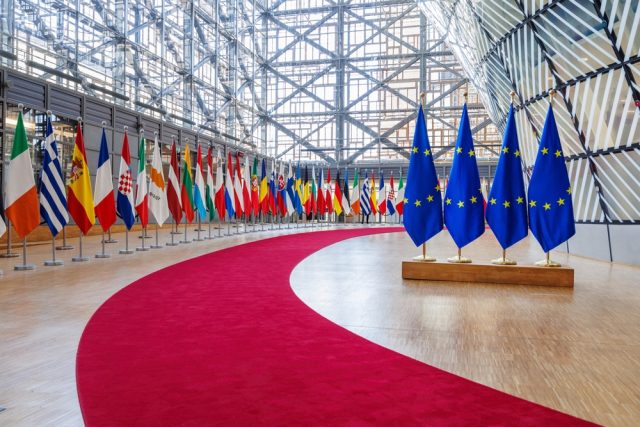
The enlargement of the European Union represents one of the most significant processes, not only for its institutional implications but also for its economic and geopolitical impact. Today, the experience of the countries that joined the Union in 2004 and the years immediately following serves as an important point of reference for assessing the prospects of new candidates. In this context, the events of Moldova and Ukraine take on particular relevance, as their accession journey unfolds during a historical period characterized by profound geopolitical tensions and a growing focus on European security.
THE ECONOMIC RESULTS OF THE 2004 ENLARGEMENT
The experience of the countries that have joined the EU in 2004 demonstrates how integration can generate significant economic benefits. A Eurobarometer survey conducted in early 2025 showed that 74 percent of citizens of the countries that joined the Union that year believe that accession has had positive effects. This is the highest level of approval recorded since the survey began in 1983. Respondents identify economic growth and new job opportunities as the main benefits of EU membership. Economic data confirm this perception. The Czech Republic saw its GDP per capita rise from €9,490 in 2004 to €29,940 in 2024, increasing from 45 to 74 percent of the European average. Similarly, Lithuania’s GDP per capita rose from €4,960 to €27,350, approaching the EU average from 26 to 68 percent. Between 2004 and 2024, the average GDP per capita in the European Union grew by 88 percent, from 100 to 188. However, growth in the thirteen new Member States was significantly higher. These results demonstrate how European integration has contributed to generating a broadly favorable economic balance, strengthening competitiveness and accelerating convergence with the most advanced economies in the Union.
MOLDOVA AND UKRAINE IN THE ACCESSION PROCESS
In light of these precedents, the accession process of Moldova and Ukraine takes on particular importance. Since the beginning of the Russian invasion of Ukraine, the two countries have been considered by the European Union as closely associated candidates, both politically and procedurally. This choice responded to the need to avoid differential treatment that could be interpreted as signs of inequality at an extremely delicate geopolitical stage. Recently, however, the European Union has begun to consider the possibility of separating their respective negotiating tracks. The debate intensified after overcoming the Hungarian veto, which had hindered progress in the process for two years, and after the opening of the first negotiating cluster, called “Fundamentals,” dedicated to issues such as the rule of law, human rights, and the fight against corruption. The accession negotiations comprise a total of thirty-three chapters organized into six thematic clusters. Both Moldova and Ukraine are considered technically ready to proceed with all of the clusters, but so far only the first has been formally opened.
THE POSSIBLE SEPARATION OF NEGOTIATION PATHS
During institutional meetings held in Brussels, the possibility that the two candidates could advance at different speeds became clearer. According to the European Commission, once the first cluster is opened, each country is evaluated based on its reform performance and compliance with the required criteria. From this perspective, responsibility for progress lies primarily with the individual candidate states. Particular attention has been paid to Moldova, which in recent months has demonstrated remarkable speed in implementing the reforms required by the Union. The progress made has raised the possibility that the country could also open the other negotiating clusters relatively quickly. Ukrainian President Volodymyr Zelensky also reiterated the strategic importance of European membership for Kyiv, considering it a future guarantee of security and supporting the need to proceed rapidly with negotiations.
THE POLITICAL CHALLENGES OF FUTURE ENLARGEMENT
Despite the growing belief that a differentiation of pathways is destined to become a reality, the issue continues to have significant political implications. On the one hand, it is believed that keeping Moldova and Ukraine rigidly linked risks creating a false equivalence between a country involved in an armed conflict and one operating under conditions of peace. On the other, there is the fear that separation could be interpreted as weakening European support for Ukraine or negatively impact public opinion. The EU therefore faces the need to balance technical criteria and political considerations. This balance is particularly delicate because the enlargement decision-making mechanism continues to allow a single Member State to block the entire process through the exercise of a veto.
THE ECONOMIC DIMENSIONS OF THE CANDIDATE COUNTRIES
Ultimately, the official candidates for accession include the Western Balkan countries, Ukraine, Moldova, Georgia, and Turkey, while Kosovo maintains its potential candidate status. From an economic perspective, most of these economies are relatively small. In 2024, the European Union’s total GDP reached approximately €18 trillion. The ten candidate countries produced a total of €1.63 trillion, of which approximately €1.25 trillion was attributable to Turkey alone. Excluding Turkey, the combined GDP of the remaining candidate countries drops to €381 billion. Excluding Ukraine and Serbia, the total value drops further to €130 billion. These data highlight how future enlargement, despite its strong geopolitical significance, would have a relatively limited economic impact on the overall size of the European economy. At the same time, they confirm the transformative potential that integration can have on the economies of the candidate countries, as demonstrated by the positive experience of the states that joined the Union since 2004.