





 Subscribe


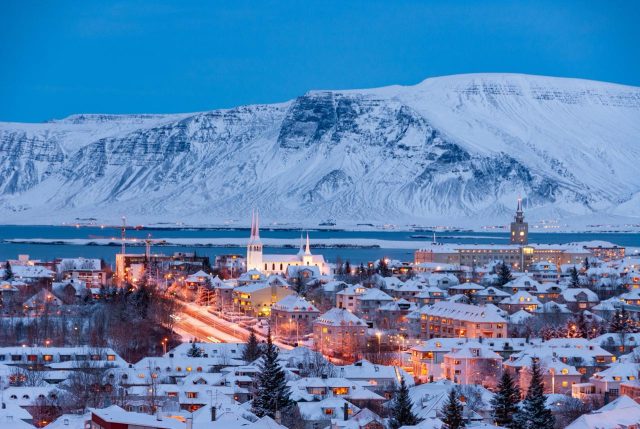
Britain divorced the European Union; Iceland declined the engagement. On 29 August, Icelanders were asked only whether accession negotiations suspended more than a decade ago should resume. Some 52.8 per cent voted no, against 47.2 per cent in favour, on a turnout of 82.5 per cent. It was not a landslide, but it was clear.
It would be a mistake to dismiss that vote as the selfish reaction of a prosperous country retreating into itself. Iceland already belongs to the European Economic Area, participates in the single market and is part of Schengen. It enjoys economic integration while retaining autonomy in areas it regards as vital.
The first is fishing. Seafood accounts for roughly 40 per cent of Iceland’s goods exports and sustains communities far from the capital. It is economics, identity and national memory. EU membership would mean joining the Common Fisheries Policy. Reykjavik might negotiate special conditions, but ultimate authority over quotas and waters would no longer be exclusively national. That concerns fishermen and coastal communities.
Commercial whaling, although economically marginal, carries symbolic weight. The EU bans it, while Iceland continues to authorise it within quotas. The practice may be cruel, anachronistic or destined to disappear. But who should decide: Icelanders or Brussels? Even a controversial tradition raises a larger question: how much of its collective life is a nation still free to govern?
Similar concerns apply to agriculture. In an extreme climate, local producers fear continental imports and dependence on Common Agricultural Policy subsidies. The same rule can have very different effects on a French plain and near the Arctic Circle.
Then there is the economy. The Yes campaign presented membership and the euro as answers to inflation, high interest rates and the volatile króna. The opposing camp argued that Brussels cannot solve domestic structural problems, while an independent currency helps a small economy absorb shocks. Iceland is wealthy and already has single-market access. It therefore feels none of the urgency that makes membership more attractive elsewhere.
It is no coincidence that the Yes side prevailed only in central Reykjavik, while the suburbs and rural districts, more closely tied to fishing and agriculture, voted No.
This reveals a European paradox. To the East, countries patronisingly described as poorer or less advanced are knocking on the Union’s door. Ukraine and Moldova are pursuing accession despite the war in Ukraine, Russian pressure and painful reforms. In the Baltic states, Poland and much of Central and Eastern Europe, even governments critical of Brussels want to change the Union, not abandon it.
Those nations know what it means to live under an empire that never sought their consent. Some were incorporated into the Soviet Union; others subjected to its domination. For them, EU membership did not erase national sovereignty but restored it: reunion with the West and protection against a return to Moscow’s sphere. They know the difference between an imperfect alliance of free nations and a prison of peoples.
In Western Europe, by contrast, the societies that consider themselves the most open and advanced sometimes display the strongest desire to distance themselves from integration. That happened with Brexit; it has now happened in Iceland, although in a much less radical form. It is the privilege of those who have been able to treat security, liberty and membership of the West as natural conditions rather than reversible achievements.
It would nevertheless be wrong to turn the Icelandic result into another banner for “less Europe”. The Arctic is becoming an arena for competition among the United States, Russia and China. Industrially and technologically, Europe risks becoming dependent on Washington or Beijing. No European nation has the scale to defend its interests alone—least of all a community of 400,000 people in the North Atlantic.
Europe therefore needs more unity, but not simply more of the European Union as it currently exists. It needs a Union capable of addressing the challenges for which its nations, acting separately, are too small: common defence, foreign policy, energy security, borders, technology and the protection of European industry. At the same time, it must be confident enough to leave to its nations what can remain national: traditions, agricultural models, and distinctive cultural and productive systems.
More European power abroad and more national freedom at home. Not a superstate, but a political alliance that restores its members’ ability to act. Iceland’s No does not demonstrate that Europe is useless. It shows that the Union has not yet made the next stage of integration sufficiently attractive. The alternative to a different Europe is not a continent of fully sovereign nations, but one of nations that are formally free and substantially irrelevant.