





 Subscribe


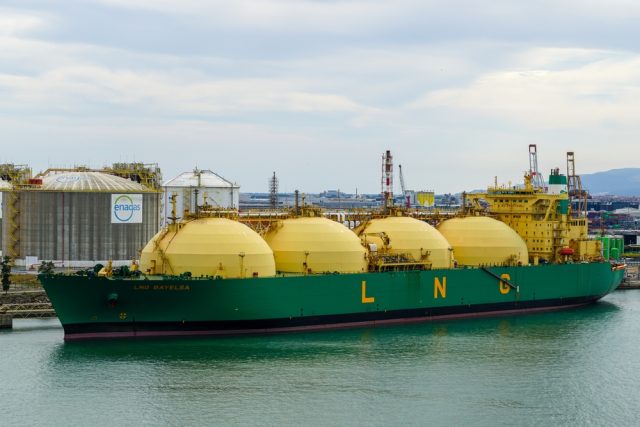
In recent years, the European Union’s energy security has become increasingly intertwined with external geopolitical dynamics, making the system particularly vulnerable to international shocks. Recent tensions between the United States and Iran have significantly impacted Middle Eastern oil and gas routes, with direct repercussions on global energy markets. In particular, attacks in the Gulf have slowed traffic in the Strait of Hormuz, which carries between 10 and 15 percent of liquefied natural gas destined for Europe. This situation has led to a reduction in supply and a consequent increase in electricity and fuel prices, highlighting Europe’s persistent exposure to external factors. This vulnerability has been further accentuated by regional political developments, including Iran’s stance, expressed through its intention to continue exerting pressure on the Strait, turning the LNG routes into a critical point for European energy security.
EVOLUTION OF EUROPEAN ENERGY DEPENDENCE
Despite efforts since 2022, when energy dependence emerged as a priority issue, the European Union continues to rely heavily on imported fossil fuels. In 2025, approximately 57 percent of the Union’s total energy needs were met through imports. Domestic gas production remains limited, meeting just 10 percent of demand. Despite this, policies adopted in recent years have favored a significant diversification of supply sources. While Russian gas accounted for 45 percent of European imports in 2021, this share fell to 13 percent in 2025. At the same time, the Union has increased its use of liquefied natural gas, whose share rose from 20 to 45 percent over the same period. In the third quarter of 2025, 60 percent of imported LNG came from the United States, while Australia and the United States accounted for 70 percent of coal imports. Norway, the United States, and Kazakhstan together supplied 42 percent of crude oil needs. However, this process has led to a shift in vulnerability rather than its elimination. Reducing dependence on Russian pipelines has been offset by increased exposure to maritime routes, particularly those crossing geopolitically unstable areas.
PROGRESS IN THE ENERGY TRANSITION
In parallel with the diversification of fossil fuels, the European Union has made significant progress in the development of renewable energy. In 2025, renewables accounted for 25.2 percent of total energy consumption and 23 percent of final consumption, surpassing fossil fuels in electricity generation for the first time. The REPowerEU plan has helped strengthen energy security by requiring Member States to maintain gas storage levels of at least 90 percent annually. This measure has improved the ability to respond to potential supply disruptions: however, sectors such as heating, transport, and industry continue to rely significantly on fossil fuels, keeping overall energy bills high.
THE EUROPEAN NETWORKS PACKAGE: OBJECTIVES AND CRITICAL ISSUES
In response to these challenges, the European Commission presented the EU Grids Package in December 2025, accompanied by the Citizens’ Energy Package. With an estimated investment of €1.2 trillion, this initiative represents the most ambitious attempt to reform the Union’s energy infrastructure. The project aims to create an integrated energy market through the development of cross-border infrastructure, improving coordination between Member States, and accelerating authorization and investment processes. The package addresses four key pieces of legislation, including the Renewable Energy Directive and the electricity market reform, with the aim of making the system more efficient, resilient, and less dependent on imports.
POLITICAL DIVISIONS AND FUTURE PROSPECTS
Despite the project’s ambition, significant divergences remain among Member States. Countries such as Germany and Denmark favor greater coordination at the European level, while expressing reservations about centralized planning that could limit national prerogatives. Other states, including Poland and Romania, call for greater flexibility in implementation times, citing internal administrative difficulties. Furthermore, the issue of cost-sharing remains unresolved. In this context, the network package is being presented by European institutions as the infrastructural foundation for an independent and sustainable energy system. However, its effectiveness will largely depend on the ability to translate regulatory objectives into concrete measures, overcoming the political resistance and operational complexities that characterize the European integration process.