





 Subscribe


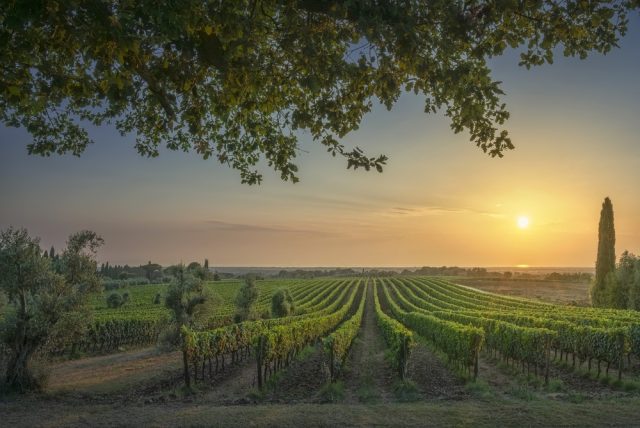
In the contemporary economic and production landscape, agriculture represents for Italy an element that transcends the simple economic dimension. It is a fundamental component of national identity, intertwining tradition, culture, land protection, and social development. During the “Agriculture, the Future” initiative, promoted by Confagricoltura in Milan, Prime Minister Giorgia Meloni highlighted how the agricultural sector is now central not only to the country’s economic growth, but also to food security, territorial cohesion, and Italy’s international reputation.
A NEW VISION BETWEEN SUSTAINABILITY AND DEVELOPMENT
In the contemporary debate on environmental policies, the Italian government has taken a critical stance toward approaches considered excessively ideological and distant from the reality of production. According to this approach, environmental protection cannot be pursued through punitive measures against farmers, but rather through a balance between technological innovation, sustainability, and production capacity. This approach has translated, in recent years, into a series of interventions aimed at restoring the centrality of Italian agriculture. Through discussions with trade associations and representative organizations, the Government has developed measures aimed at strengthening the sector’s competitiveness, increasing its sustainability and innovation.
THE INTERNATIONAL SUCCESS OF MADE IN ITALY AGRI-FOOD
The results achieved by the Italian agri-food system confirm the sector’s strategic importance within the national economy and internationally. Italy is currently Europe’s leading agricultural economy in terms of added value, and the agri-food sector continues to perform strongly on global markets. In 2025, exports of Made in Italy agri-food products reached a record value of nearly €73 billion, while PDO and PGI production exceeded €12 billion, recording annual growth of over 12%. These figures demonstrate the ability of Italian companies to assert themselves through quality, traceability, and manufacturing excellence. Italian products also constitute a tool for economic and cultural diplomacy. Italy’s international prestige as the home of good food and artisanal quality is founded on the work of farmers, processors, and restaurant professionals. This framework also includes the recognition of Italian cuisine as a World Heritage Site, a result achieved thanks to a joint mobilization of institutions and the entire national production system. Agri-food thus becomes a form of soft power, capable of strengthening Italy’s image worldwide and consolidating the value of Made in Italy products as a symbol of excellence, authenticity, and tradition.
INVESTMENTS, INNOVATION, AND PROTECTION OF EXCELLENCE
To support the agricultural sector, the Government has allocated over 15 billion euros over three years, an amount considered unprecedented in the history of the Republic. A significant portion of the resources of the National Recovery and Resilience Plan have been allocated to strengthening production chains, developing renewable energy without land consumption, and improving water resource efficiency. Particular attention has also been paid to the fight against “Italian sounding” products, food fraud, and counterfeiting. The recent law protecting the agri-food sector introduced new crimes and specific aggravating circumstances against agro-piracy, providing for penalties proportionate to the turnover of the companies involved. The goal is to defend the credibility of Made in Italy and protect producers, consumers, and the country’s international reputation. At the same time, the government has invested in younger generations and scientific innovation. The “Generazione Terra” project allows young farmers to purchase land through 30-year mortgages financed up to 100%, encouraging generational turnover and combating the depopulation of inland areas.
ITALY’S ROLE IN EUROPEAN AGRICULTURAL POLICIES
One of the most significant aspects of Italy’s efforts concerns its engagement at European level. Italy has taken an active role in negotiations regarding the Common Agricultural Policy, championing the need to ensure secure food supplies and fair remuneration for producers. In negotiations on the future CAP, the Italian government secured a €10 billion increase over the European Commission’s initial proposal. This result confirms Italy’s commitment to defending the agricultural sector as a pillar of European competitiveness and territorial cohesion. Rome has also committed to strategic issues such as containing energy costs, suspending tariffs on imported fertilizers, and developing a new European fertilizer strategy. In this context, animal digestate is promoted as a sustainable alternative capable of reducing dependence on external suppliers. Italy also supports the principle of reciprocity in international trade agreements, calling for rigorous controls on imported products and balanced competitive conditions for European companies. This approach emerges clearly in the debate on Mercosur and in the broader reflection on European food sovereignty.
AGRICULTURE, RESILIENCE, AND THE FUTURE OF EUROPE
In the current geopolitical context, marked by energy instability, international tensions, and supply chain crises, the agricultural sector plays a strategic role in Europe’s autonomy. Dependence on external actors for energy, raw materials, and security has exposed the limits of an economic model vulnerable to global crises. In this scenario, Italy proposes a vision based on the resilience of production systems, the valorization of national supply chains, and the ability to control resources considered essential. Agriculture is therefore interpreted not only as an economic activity, but as a territorial protection, an instrument of social solidarity, a source of sustainable energy, and a driver of responsible innovation.