





 Subscribe


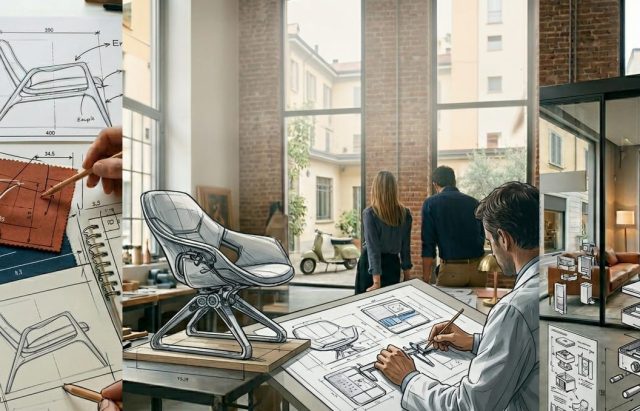
From manufacturing to public services, Italian design expands its reach while shaping the future of industry and governance
Italy has once again confirmed its position as Europe’s leading force in the design economy, a sector that continues to expand in both scale and influence. According to the latest Design Economy Report presented in Milan by Fondazione Symbola, Deloitte Private, PoliDesign, and ADI (Association for Industrial Design), the country stands at the forefront in terms of revenue, number of operators, and employment. With a system that spans companies, professional studios, and independent designers, Italy’s design ecosystem is proving to be both resilient and highly adaptable across multiple industries.
The European design economy as a whole includes nearly 295,000 enterprises, generating a total turnover of €31 billion in 2024. This represents a 3.2% increase compared to the previous year and an impressive 23.8% growth over the past three years. Employment figures reflect a similarly dynamic trajectory, with more than 356,000 workers employed across the sector, marking a 4.8% annual increase and a 16.1% rise over the same three-year period.
Within this landscape, Italy stands out as the undisputed leader. The country accounts for approximately 54,000 operators and employs around 76,000 people, representing 21.5% of the European total. Notably, Italy’s growth rate of 9.8% significantly exceeds the EU average of 4.8%, placing it ahead of France and Germany, which follow with 14.9% and 14.0% shares respectively in terms of employment distribution. Despite slightly lower productivity per worker compared to the European average, Italy maintains the largest share of the continent’s design-generated wealth, contributing 20% of the total, followed by Germany (17.6%) and France (13.4%).
Domestically, the design economy generates an added value of €4 billion. This wealth is heavily concentrated in Northern Italy, with Lombardy alone accounting for 33% of the total and nearly 29% of national employment in the sector. Emilia-Romagna, Veneto, and Piedmont also play significant roles, contributing 13.3%, 10.9%, and 10.3% respectively. These regions, characterized by strong industrial traditions, form the backbone of Italy’s design-driven production system.
Beyond the numbers, the report highlights several key transformations shaping the future of design. One of the most notable trends is the increasing integration of design into public administration. Designers are now contributing to the improvement of public services, enhancing usability for citizens, and in some cases even helping to shape regulatory frameworks. This shift signals a broader recognition of design as a strategic tool not only for business but also for governance.
At the same time, the range of industries engaging with design continues to expand. While Southern European countries such as Italy remain strongly rooted in traditional sectors like furniture, fashion, and food, countries like France and Germany are increasingly applying design to high-tech industries such as automotive and aerospace. Meanwhile, emerging markets such as Greece and Latvia are gaining traction, showing rapid growth and gradually reshaping the European design map.
Another significant development is the growing need for consolidation within the sector. According to the report, 56.2% of design organizations are considering strategies to strengthen their competitiveness, including partnerships, collaborations, and mergers and acquisitions. This reflects a broader trend toward scaling capabilities in order to meet the demands of an increasingly complex and globalized market.
Design’s role as both a material and immaterial infrastructure of the Italian economy is also becoming more evident. It is not only a driver of economic value but also a key element in defining the identity of “Made in Italy” worldwide. Major events such as the Salone del Mobile in Milan exemplify how design serves as a cultural and economic cornerstone, reinforcing Italy’s global reputation.
Looking ahead, digital transformation—particularly the rise of artificial intelligence—is expected to play a crucial role in the sector’s evolution. AI offers opportunities to redesign processes, improve efficiency, reduce costs, and optimize resources. However, experts emphasize the importance of maintaining a strong human component, ensuring that technology enhances rather than replaces creative input.
Education remains a critical pillar supporting this ecosystem. Italy boasts around 100 design institutions offering 369 courses in the 2024–2025 academic year, marking a 5% increase from the previous year. While Lombardy—and Milan in particular—continues to attract both domestic and international students, there is also notable growth in central and southern regions, often linked to local production specializations. Encouragingly, these educational trends align closely with employment growth, suggesting a healthy and sustainable pipeline of talent.
Ultimately, the report confirms the strength and centrality of Italy’s design sector. More than just an economic engine, it represents a cultural infrastructure that continues to shape industries, public services, and the global perception of Italian excellence.
Alessandro Fiorentino