





 Subscribe


The cause for the Swedish centre-right to be critical of the EU and its bureaucratic excesses has grown significantly lately. This has been reflected in the European centre-right gradually moving in a more conservative direction, such as when it comes to the green transition and immigration. These topics have in various ways seen the tide shift to the favour of the nationalists, such as by adjusting ambitions to realistic levels, and recognising that some policies pursued by the EU for many years have been self-destructive. That the EU has met the demands of nationalists on these topics has likely reinvigorated the Union as a lasting political force.
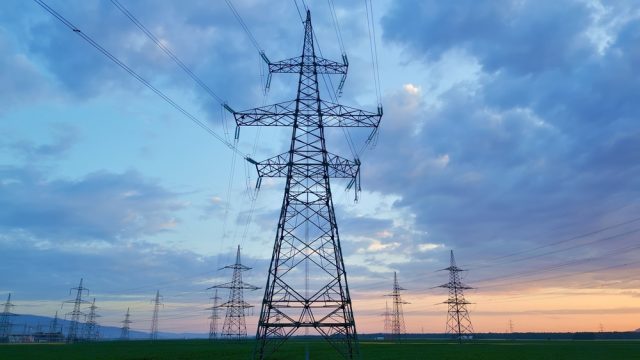
In the age of growing security concerns and the reminder that realpolitik is very much a factor in our world even in the 21st century, the trend of EU centralisation on other policy areas has however accelerated. Now, the EU has the European energy market as its target, which has increasingly become the subject of supranational legislation. The need to build away bottlenecks in energy transmissions across EU member states is seen as both a vital interest to the stability of the energy supply, and to the electrification efforts.
In concrete terms, the European Commission now essentially wants to tax member states that export energy to other member states, with excises on ‘bottlenecks’ in the transmission infrastructure, formally called congestion revenues. These bottlenecks traditionally appear along national borders, as most national energy grids are built to serve the national market, with only highly strategic cross-national capacity transmissions in place. Naturally, these bottlenecks, which in practice act as borders, must be broken down as per the common EU playbook. This means that the EU, by charging excise on cross-border transmissions, is incentivising the closer integration of the European energy market by removing congestion, but also that the EU is indirectly taxing the energy surplus produced by individual member states.
The congestion revenue is earmarked to fund investment projects into energy across the Union. More realistically, it is a redistribution of energy wealth from more advanced economies to less advanced economies. In Northern Europe, these types of redistributive efforts are often described as enriching Southern Europe while impoverishing the North.
The energy question disturbs even the Swedish pro-integrationists
This is where the Swedish right, which as of late has found it productive to engage constructively and actively in EU politics to accomplish necessary reforms on immigration, is suddenly becoming more Eurosceptical – and that’s not just limited to the nationalist Sweden Democrats, but also to the centre-right EPP parties the Moderates and the Christian Democrats.
It is not just an unfair redistribution that is the root for Swedish criticism however. A congestion charge is going to disproportionally affect Sweden, since the country is one of few in Europe that has several so-called bidding zones. Energy production and consumption in Sweden is very geographically uneven, which has made different zones, which can maintain stability in local prices, beneficial for energy producers – as well as Swedish energy export. But if these transmissions between zones are essentially taxed by the EU, it means Swedish consumers are going to have to pay more; in effect, footing the bill for less well-organised energy systems in other parts of Europe.
The Swedish energy minister Ebba Busch, of the Christian Democrats, already caused some notoriety in 2024 when she criticised Germany for not introducing bidding zones into its electrical grid. The unitary German energy market maintains common prices for electricity across the country, but it also means that it becomes harder for countries such as Sweden to import electricity from Germany. Southern Sweden in particular is dependent on German surplus, in order to make up for shortfalls when the local wind energy sector isn’t producing. The failure of the EU’s energy market in this regard is obvious, and many questions have been raised in Sweden regarding the reliability of energy imports from the continent.
The backdrop of this Swedish-German energy conflict, which rhetorically actually was a deviation from common discourse between Sweden and other EU member states, is of course that both countries have decommissioned nuclear energy and rely too much on weather-based energy. When there is no wind in northern Germany’s wind farms, there is none for Sweden’s wind farms either. This is an issue that Sweden is trying to resolve by investing in new nuclear facilities, but Germany currently isn’t – the anti-nuclear sentiments in Germany are still strong, despite the crises the decommissioning of the nuclear reactors has caused.
Ebba Busch has continued to air discontent with the EU’s energy market policy in Brussels. In March, she caused headlines in Sweden with a statement at the Energy Council:
“In Swedish you have a saying that is called “duktig flicka”, the good girl. Well, good girl is about to go bad”, citing the disproportionate cost for Sweden to fund the Commission’s new bottleneck tax. “[W]e have created internal bidding zones. We are the largest per capita net exporter of clean energy and electricity in the EU. And our electricity is almost 100 percent fossil free. And despite these achievements we are now on the losing end” – the words may just as well have come from a Sweden Democrat.
The significance of this rhetorical shift in the Swedish centre-right may be an indication that the EU is going further than even its most cooperative member states would like. Sweden has derisively, both by Swedish commentators and politicians, as well as internationally, been seen as a naïve good faith actor in the EU. The country is known to “over-implement” directives from Brussels, with its civil service dutifully interpreting rules from the Commission in such a way as to maintain the image of Sweden as a stable partner in global and regional affairs. The energy minister’s rhetoric shows self-awareness of this, and demonstrates a will to combat an unjust EU policy in a way that has rarely been expressed by a Swedish government.
Why energy matters for Sweden
Traditionally, there are few issues that have moved anti-EU sentiments in Sweden. Although issues on migration, such as the redistribution of asylum seekers across the member states on threat of penal fees, have been a big political topic in the last few years, they only really served to infuriate the already committed critics of the EU, mainly Sweden Democrats and other people in the broader nationalist movement. There was also some widespread political concerns about the EU’s enforcements of energy standards for buildings, which was decried as politically mandated renovations of houses, including private homes, at the owners’ expense. But that issue was so universally controversial, even in many other EU countries, that it was struck down even with aid from the left wing.
The congestion charge issue is different. Sweden is largely uniquely affected, and this while the country, as pointed out by Ebba Busch, already is on the forefront on green energy and efficiency, having paid a price to get there. To get targeted for punishment by the EU for trying to fulfill the Union’s climate goals and market integration, instead of getting lauded, is too much to stomach even for the normally pro-EU centre-right. Both in the 2022 elections and in the 2026 elections, the energy prices and cost of living are massive political issues. The government needs to correctly identify the source of Sweden’s approaching “energy poverty”, not just for campaigning purposes, but because politicians have a responsibility to crush the illusion that EU integration is only a net positive for Sweden. The enthusiasm for European multilateral governance might cool in Sweden, a country that many liberals have long taken for granted, as a result of this unfair energy taxation.