





 Subscribe


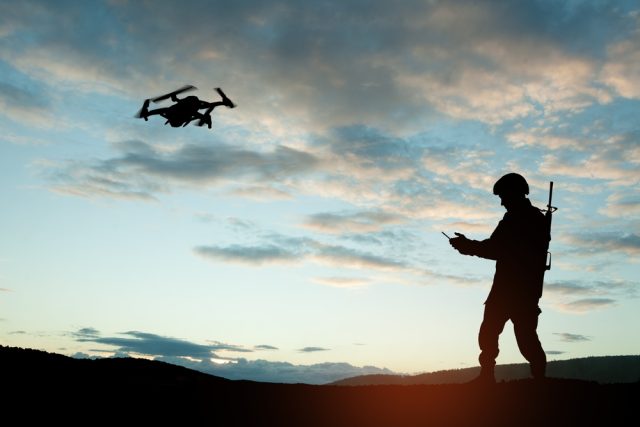
The establishment of Leonardo Ukraine LLC represents a particularly significant step in the progressive integration between the Italian defense industry and the Ukrainian military-technological ecosystem. The new company, headquartered in Kyiv, is wholly owned by the Leonardo Group through Leonardo International and has been consolidated into the Italian company. Registration in the Ukrainian Commercial Register dates back to May 20, 2026, while the news became public only a few weeks later, through the group’s half-yearly financial report published at the end of July. This is not, at least at this stage, the opening of a plant for the production of armaments. The company was established primarily to conduct experimental research and development in the scientific and engineering fields, with a scope of operations that includes communication and navigation systems, software, IT services, engineering, electronic and optical equipment, as well as installation, maintenance, and special machinery. The initial financial size confirms the still exploratory nature of the initiative: the share capital amounts to approximately 5.1 million hryvnia, equivalent to approximately 100,000 euros. This is therefore a modest investment, which can be interpreted primarily as a bridgehead designed to allow the Italian group a stable presence in the Ukrainian market and technology ecosystem.
UKRAINE AS AN INNOVATION LABORATORY
The significance of the operation is particularly evident considering the unique experience Ukraine has gained since the war with Russia began. The conflict transformed the country into one of the world’s leading laboratories for the development of drones, electronic warfare, autonomous systems, artificial intelligence, and air defense. The most interesting feature for Leonardo lies not only in the quantity of technologies developed, but also in the speed with which they are subjected to operational testing. The Ukrainian model is based on a particularly close cycle between design, field deployment, results collection, and solution correction. Technologies can be tested in real-world operational conditions, receive direct feedback from military units, and be rapidly modified. Such a process is difficult to replicate through traditional European defense industry development programs, which typically require longer lead times and require testing environments necessarily separated from the theater of war. It is precisely this speed that constitutes one of Ukraine’s most important technological assets. Leonardo’s interest therefore lies not only in the Ukrainian drone sector’s production capacity, but above all in the operational experience accumulated during the conflict. The opportunity to tap into the expertise, data, startups, and systems developed in this environment can offer Italian industry a wealth of knowledge that is difficult to obtain through conventional research programs alone.
THE ROLE OF ITALIAN ASSETS AND MUTUAL TECHNOLOGICAL GROWTH
Leonardo’s presence in Ukraine is particularly important because it can create a mutual exchange between two different yet complementary technological assets. On one side are Italian assets, represented by Leonardo’s industrial, engineering, and aerospace expertise and the group’s ability to develop complex integrated systems. On the other is a Ukrainian ecosystem characterized by rapid innovation and extraordinary experience gained in real-world operating conditions. The objective should therefore not be interpreted as a simple transfer of expertise from Ukraine to Italy, but as the opportunity to build a network of mutual technological growth. Ukraine can benefit from access to the industrial and design capabilities of a large European group, while Leonardo and, more broadly, the Italian technological system can gain first-hand knowledge of the needs and solutions developed in the field. This interaction could help accelerate the development of new technologies, making them more relevant to contemporary threats.
MICHELANGELO DOME AND THE INDUSTRIAL PERSPECTIVE
Another strategic element is the Michelangelo Dome, the integrated, multi-domain air defense architecture developed by Leonardo. The system aims to connect sensors, command and control structures, and effectors to counter various threats, from drones to missiles. Ukraine could become a particularly important operational testbed for this technology. Testing in a real-world warfare environment would allow for the verification of capabilities that are difficult to reproduce in standard test ranges, such as navigation without GPS, resistance to jamming techniques, and the management of swarms of interceptor drones. Added to this perspective is access to data platforms such as Brave1 Dataroom, developed jointly with the Ukrainian Ministry of Defense, the armed forces, military intelligence, and the US-based Palantir. The platform provides developers with visual and thermal data collected under real-world operational conditions, which can be used to train algorithms for recognizing and intercepting aerial threats. According to the platform, this data has already helped automate 95% of the process of downing Russian Shahed drones.