





 Subscribe


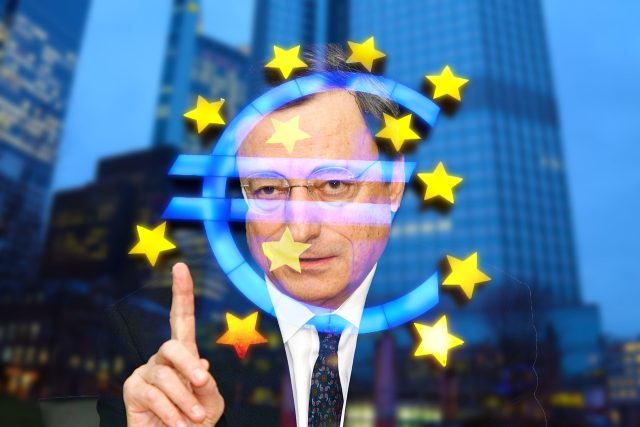
The speech delivered by Mario Draghi on February 2nd, upon receiving an honorary doctorate from the University of Leuven, comes at a time marked by a profound realignment of global political, economic, and strategic balances. The reflection proposed by the former President of the European Central Bank takes on a scope that goes well beyond the contingency of the European Union’s current difficulties, taking the form of a structural analysis of the conditions under which it can survive as an independent actor on the international stage. Draghi does not simply describe Europe’s vulnerabilities, but clearly identifies the systemic dynamics that are redefining the relationship between economic power, security, and political sovereignty. The heart of his argument revolves around a particularly incisive warning: in the absence of decisive political and institutional progress, Europe risks a triple decline. On the one hand, strategic subordination to the major global powers, primarily the United States and China, capable of integrating industrial policy, trade, and security into a single vision of power. On the other, persistent internal fragmentation prevents the Union from expressing itself as a unified entity in fundamental choices regarding foreign policy, defense, and industrial development. Finally, the risk of progressive deindustrialization, fueled by increasingly politicized value chains and global competition that penalizes players incapable of protecting and directing their strategic assets.
From this perspective, Draghi’s analysis appears as a genuine call to European political responsibility. The Union is not described as lacking resources or capabilities, but rather as an entity that risks being unable to systematize them. The implicit message is that Europe’s problem lies not so much in its lack of economic or technological tools, but in the inadequacy of its decision-making structures and its reluctance to make the leap toward greater integration that the changed global context has made indispensable. In this sense, the Leuven intervention represents a significant theoretical and political contribution, aimed at redefining the debate on the future of the EU in light of the systemic challenges of the 21st century.
FROM THE MARKET TO THE QUESTION OF POWER
According to Draghi, the fundamental issue facing Europe today is no longer technical or regulatory in nature. The Union has demonstrated its ability to build an efficient single market, with advanced rules on competition, trade, and monetary policy. However, in an international context increasingly marked by geopolitical competition, the market alone is not enough. Power, understood as the ability to defend strategic interests and influence global dynamics, requires a higher level of integration, one that transcends the confederal logic and approaches a federal structure.
THE ASYMMETRIES OF EUROPEAN INTEGRATION
Draghi identifies a clear asymmetry in the Union’s architecture. In areas where integration has been fully advanced, such as trade, the internal market, and monetary policy, Europe is recognized as a unified actor and negotiates from a position of strength. Conversely, where national sovereignty still prevails, in crucial areas such as defense, industrial policy, and foreign affairs, the Union appears as a fluid collection of medium-sized states, easily divisible and therefore less influential. This fragmentation becomes particularly problematic when security and economics are intertwined, as Europe’s strengths fail to compensate for structural weaknesses.
OVERCOMING THE POSTWAR GLOBAL ORDER
In his analysis, Mario Draghi challenges the interpretation that the post-World War II international order was founded on illusory or idealistic assumptions. On the contrary, he emphasizes how this multilateral architecture has generated concrete and widespread benefits, helping to shape a period of stability and political and economic integration for Europe, consolidating the leadership role of the United States, and offering opportunities for growth and development to numerous emerging economies. However, Draghi emphasizes that contemporary critical issues stem not from an intrinsic failure of this system, but rather from its progressive inability to adapt to new global dynamics, particularly the growing divergence between trade and security. China’s inclusion in the multilateral system has accentuated this fracture, introducing a player of unprecedented size and autonomous strategic ambitions, capable of exerting significant influence on global value chains and challenging the balance between economic interdependence and geopolitical competition. According to Draghi, contemporary globalization no longer follows the principles of comparative advantage, but tends to favor strategies aimed at absolute gains, often to the detriment of the industrial cohesion and security of European states.
THE RISK OF SUBORDINATION, DIVISION, AND DEINDUSTRIALIZATION
In this context, Draghi identifies the most serious risks looming over Europe. On the one hand, the United States appears increasingly inclined to perceive the Union’s internal fragmentation as an advantageous negotiating tool, adopting assertive and protectionist trade policies that reflect a logic of balancing historical costs and benefits. On the other, China exerts growing control over strategic nodes of global value chains, demonstrating its willingness to use these levers geopolitically, with potential repercussions on European production capacity and security. Between these two poles lies a European Union that, if it fails to develop common and coordinated responses, risks seeing its industrial autonomy progressively reduced, compromising its production base and increasing its dependence on external actors. Deindustrialization, in this context, takes on a significance that goes beyond the economic sphere: it becomes an indicator of political and social vulnerability, capable of weakening Europe’s ability to protect its strategic interests, its internal cohesion, and the resilience of its institutions in an increasingly competitive and conflict-ridden international context.
STRATEGIC RESOURCES STILL AVAILABLE
Despite this critical situation, Draghi emphasizes that Europe still possesses key assets. The Union remains the world’s leading trade player and a key partner for dozens of countries. European companies dominate crucial technological sectors, such as extreme ultraviolet lithography for the production of microchips, and maintain a central position in civil aeronautics and global navigation. However, these resources cannot be fully exploited without a common political strategy. Trade today is no longer simply a driver of growth, but a strategic tool that must be coordinated with security and autonomy objectives.
PRAGMATIC FEDERALISM AS A RESPONSE
The emerging proposal is that of pragmatic federalism. Draghi acknowledges the existing resistance and divergences, but maintains that unity is not a prerequisite for action, but rather its result. The history of European integration demonstrates that decisive steps, such as the introduction of the euro, were taken by groups of countries ready to move forward, over time generating common institutions and genuine solidarity. Even today, the goal must not be weaker cooperation, but a path clearly oriented toward a genuine federation.
AN INEVITABLE CHOICE
The argumentative trajectory developed by Mario Draghi leads coherently and inescapably to a fundamental question that affects the very fate of the EU: is Europe destined to remain a large, regulated economic area, highly integrated on a market level but structurally dependent on the strategic priorities of other global players, or does it intend to transition toward a political power capable of autonomously protecting its own interests, values, and social model? In the context of the new international order, characterized by growing competition between large geopolitical areas and a progressive fusion of economics, security, and technology, the idea of the Union’s institutional neutrality appears increasingly less viable. The absence of choice, far from preserving equilibrium, would ultimately translate into a form of passive adaptation to the decisions of the others. In this scenario, the choice between strengthening federal integration and gradual marginalization no longer presents itself as a theoretical or ideological debate, but as a necessity imposed by the structural transformations of the global system. The ability to influence the rules of international trade, protect strategic value chains, ensure energy and technological security, and play a credible role in crisis management now depends on the availability of common decision-making tools and a shared political vision. Without these elements, the Union risks being exposed to external pressures and internal divisions, with direct consequences for the economic and social cohesion of its member states. The looming choice is therefore neither postponable nor reversible without cost. It will define Europe’s role in the international system in the coming decades, determining whether the continent will be a player capable of guiding change or forced to endure it. In this sense, Draghi’s reflection invites us to recognize that the time for ambiguity is over: the Union must decide whether to equip itself with the political tools necessary to sustain its economic and value-based weight or accept a progressive loss of centrality in a world increasingly organized around the logic of power.