





 Subscribe


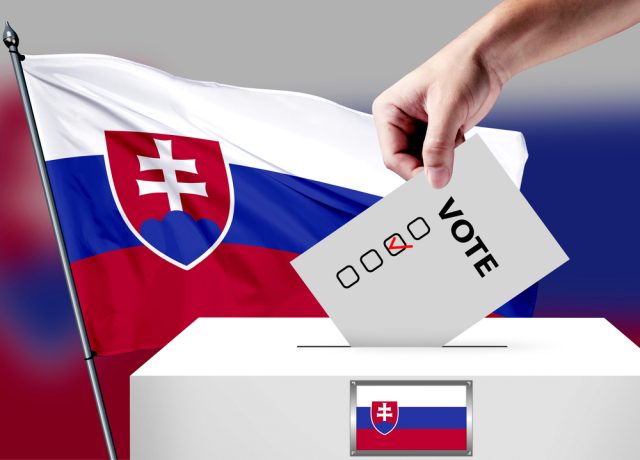
A law abolishing mail-in voting approved by the National Council of Slovakia (the country’s unicameral parliament) on November 24 made headlines across Europe. Following the vote by the parliamentary majority, Slovak citizens living abroad will no longer be able to vote by mail. Instead, they will have to travel and cast their ballots in person at embassies, consulates, or diplomatic missions.
As expected, the opposition harshly criticized the decision, calling it a “rape on democracy” and announcing that it would appeal to the Constitutional Court. But is this law an arbitrary restriction, as the progressive opposition claims? Or is it, in fact, a correction of an anomaly?
On the surface, mail-in voting appears to be a convenient and modern technical solution. In reality, it represents a dangerous erosion of one of the essential pillars of any legitimate political system: the free, equal, verifiable, and secret nature of the vote. Voting by mail introduces vulnerabilities that threaten precisely these principles. The idea that voting by mail can genuinely guarantee secrecy is highly questionable. Moreover, the process of collecting, transporting, and counting the ballots is time-consuming and easily contested.
It is worth recalling what happened in the last parliamentary elections, held in 2023. Nearly 60,000 Slovaks voted by mail. Progressive Slovakia secured over 60% of these votes, while the Smer-SSD party, led by Prime Minister Robert Fico, received only 6%. Votes from abroad accounted for just 2% of the total, yet they were overwhelmingly won by one political group. Is it any surprise, then, that the political opposition has reacted so vehemently against this bill? The reaction was predictable. The very same people who, under different circumstances, loudly invoke “electoral integrity” and “transparency” suddenly describe a measure aimed at restoring normal standards as an “attack” on democracy. Their argument – that the law “restricts the right to vote” – is essentially a plea for convenience.
The legislation passed by the Slovak Parliament on November 24 is by no means an isolated case. In an increasing number of countries, procedures for voting from abroad are being reevaluated. There is, of course, a humanitarian argument concerning students, people with health issues, and those living in isolated areas. The proper solution, however, is not to generalize remote voting, but to strictly define the exceptions. The integrity of an election is measured by the certainty that every vote expresses the free will of a citizen.
According to Slovakia’s governing coalition, in-person voting at diplomatic missions restores the direct, secret, and personal nature of the vote, in accordance with the Constitution. It is, in effect, a return to a classic principle of representative democracy: the vote is cast before a public authority, not placed in an anonymous envelope sent from an unknown location.
A vote whose integrity cannot be reasonably verified does not strengthen popular sovereignty; it weakens it. It also creates a de facto inequality: citizens inside the country vote under the direct supervision of electoral authorities and observers, while a significant group of voters abroad operates under a looser regime. Equality before the law is not limited to the formal right to vote; it also requires equal conditions for exercising that right.
There is another aspect that is often overlooked. The proliferation of remote voting methods is part of a broader trend toward turning democracy into a more convenient and customized version of itself. Although presented as a democratic advance, mail-in voting is primarily a concession to convenience at the expense of integrity. A healthy democracy rests on the free and unaltered choice of its citizens. Until it is demonstrated – through concrete evidence, not mere declarations of intent – that mail-in voting can ensure the same level of secrecy, oversight, and verification as in-person voting, it should be treated with the utmost caution or, better yet, strictly limited.