





 Subscribe


The mid-term review of the European Union’s cohesion policy marks a significant step in the evolution of EU development strategies. Traditionally focused on reducing territorial disparities, this policy is now being recalibrated in light of a profoundly changed international context. Geopolitical tensions, particularly those linked to the conflicts in Ukraine and the Middle East, have prompted the Commission, led by Ursula von der Leyen, to redefine intervention priorities. The review process led to the reallocation of €34.6 billion, corresponding to approximately 10% of the entire cohesion policy budget for the 2021–2027 cycle. This choice reflects the desire to adapt European financial instruments to new, strategic needs, such as industrial competitiveness, security, and infrastructure resilience.
THE EUROPEAN UNION’S NEW PRIORITIES
The distribution of reprogrammed resources clearly highlights the paradigm shift. €15.2 billion has been earmarked for strengthening competitiveness, with a focus on critical technologies, innovation, and skills development. This orientation responds to the need to consolidate Europe’s position in an increasingly competitive global context. In parallel, €11.9 billion has been allocated to defence and civil preparedness, including areas such as industrial capabilities, military mobility, and cybersecurity. This represents a significant increase compared to the past, demonstrating the emergence of security as a political and economic priority. Additional resources have been directed towards social and environmental areas. Specifically, €3.3 billion has been allocated to affordable housing, €3.1 billion to water management, and €1.2 billion to energy security and industrial decarbonization. These choices together form an integrated strategy that combines economic development, sustainability, and social cohesion.
THE DECISION-MAKING PROCESS AND THE ROLE OF INSTITUTIONS
The review was presented in Brussels by Raffaele Fitto, Vice President of the European Commission and Commissioner for Cohesion, at the end of a process that began about a year ago. This process involved Member States in a reprogramming exercise aimed at identifying the most urgent areas for intervention. Fitto highlighted how the new priorities include strengthening defence and civil protection, promoting sustainable housing, improving water resilience, and enhancing energy connectivity. These guidelines reflect a broader vision of cohesion, understood not only as reducing inequalities but also as the ability to address systemic challenges.
ITALY’S POSITION IN THE EUROPEAN CONTEXT
Within this framework, Italy emerges as one of the main actors in the reprogramming. With over €7 billion reallocated from a total budget of over €42 billion for the 2021-2027 period, Italy ranks second in the European Union in terms of reprogrammed resources, just behind Poland. Italy’s intervention involved 35 out of a total of 48 programs, including 28 regional and 7 national. This figure highlights the breadth of the operation and its impact on a large portion of the cohesion policies implemented nationwide.
THE DISTRIBUTION OF RESOURCES IN ITALY
An analysis of the distribution of resources allows us to understand the strategic priorities adopted by the Italian government. The largest share, amounting to €4.665 billion, was allocated to strengthening business competitiveness. This focus reflects the need to support the national productive system by fostering innovation and the adoption of advanced technologies. Another significant component concerns housing policies, to which €1.119 billion was allocated. The goal is to promote the construction of affordable housing, responding to growing social demand in urban areas. In terms of environment and infrastructure, €629 million was allocated to water resource management, while €396 million was allocated to the energy transition. These interventions aim to improve regional resilience and support the decarbonization process. Finally, €248 million was allocated to the defence sector. In this context, resources are aimed at supporting industrial capabilities, dual-use technologies, military mobility, and cybersecurity measures.
THE RELATIVE WEIGHT OF DEFENCE AND THE EUROPEAN COMPARISON
Despite the increase in defence resources at the European level, this item’s weight in Italy’s reprogramming remains relatively limited. Comparison with other Member States highlights a highly concentrated distribution. Poland stands out as the main beneficiary in this area, with €6.3 billion out of approximately €8 billion allocated overall. Romania follows with over €900 million and Spain with approximately €435 million, despite the latter having obtained a derogation from NATO spending targets. The Baltic states, such as Lithuania and Latvia, also allocate significant resources to defence, exceeding €400 million and close to this threshold, respectively, consistent with their geographic location and geopolitical context. On the contrary, France and Germany recorded lower levels, around 100 and 130 million euros respectively, even though Berlin had already launched an investment plan in the sector following the Russian invasion of Ukraine.
THE POSITION OF THE ITALIAN GOVERNMENT
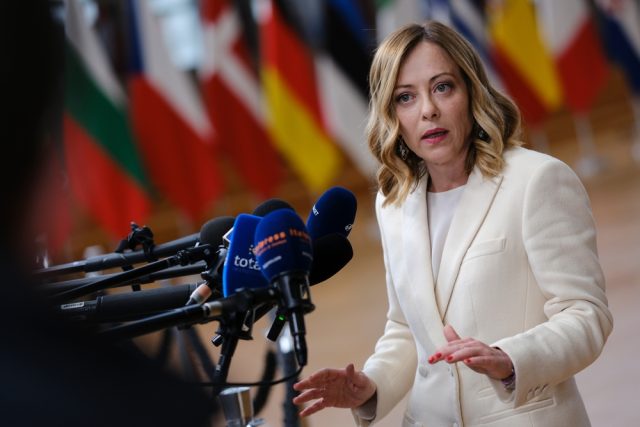
The Italian government interpreted the outcome of the reprogramming as a significant political and economic achievement, attributing to it a significance that goes beyond mere financial reallocation. Specifically, Prime Minister Giorgia Meloni highlighted how Italy had succeeded in obtaining, as part of the mid-term review of cohesion policy, a reorganization of over €7 billion, oriented toward strategic areas such as strengthening the competitiveness of the production system, support for housing policies, with a particular focus on affordability, and interventions in the water and energy sectors. In outlining the government’s position, it also emphasized the need to ensure greater flexibility and simplification in the use of European resources, principles considered fundamental to ensuring a more effective and concrete use of available funds. This approach is consistent with the reforms promoted at the European level by the Executive Vice President of the Commission, Raffaele Fitto, aimed at making cohesion policies more relevant to the current needs of Member States. From this perspective, the government reiterated its intention to continue along the path already undertaken, aimed at ensuring the full implementation of European resources through effective and timely administrative action, with the goal of structurally supporting the country’s economic development and growth. Overall, this position reflects a political approach that prioritizes maximizing the impact of European financial instruments through more flexible and results-oriented management.
ECONOMIC IMPLICATIONS AND FUTURE PROSPECTS
The reallocation of resources has significant implications for the Italian economy. The emphasis on business competitiveness could help strengthen the productive fabric, while investments in housing and the environment address long-term social and infrastructure needs. At the same time, the choice to allocate a limited amount to defence reflects a balance between security needs and domestic economic priorities. Looking ahead, the effectiveness of this strategy will depend on the ability to translate resources into concrete and timely interventions.
A CRUCIAL STEP
The mid-term review of the European Union’s cohesion policy represents a crucial step in the process of redefining the EU’s strategic priorities, marking a break with the traditional approach, primarily focused on reducing territorial disparities. The progressive shift toward objectives related to economic competitiveness, security, and systemic resilience highlights an adaptation of the European model to the changing global context, characterized by growing geopolitical tensions, technological challenges, and new structural vulnerabilities. This evolution implies a reconfiguration of the very role of cohesion policies, which are no longer limited to a redistributive function, but take on a broader dimension, aimed at strengthening the Union’s competitive capacity and overall stability. In this framework, the reallocation of resources toward strategic sectors such as innovation, defence, energy, and environmental resilience reflects an integrated vision of development, in which economic growth and security are increasingly interconnected. Within this scenario, Italy emerges as a key player in the reprogramming process, both in terms of the scale of reallocated resources and the decision to direct them toward areas deemed crucial to the national economic and social system. The focus on supporting business competitiveness, housing policies, and water and energy interventions highlights a commitment to combining economic development and social cohesion. The next phase, however, is particularly delicate, as the effectiveness of the review will largely depend on the ability to translate financial resources into concrete, timely interventions consistent with the established objectives. In this sense, the main challenge for the Italian system lies in strengthening implementation mechanisms, simplifying administrative procedures, and increasing coordination between the various institutional levels. Looking ahead, the success of the reprogramming will be assessed not only in terms of expenditure, but above all in relation to its impact on the economic, social, and territorial fabric. The ability to generate lasting and measurable impacts will be the true test of this new phase of cohesion policies, which must respond to an ever-changing context and contribute substantially to the European Union’s sustainable and inclusive growth.