





 Subscribe


It is not surprising that President Donald Trump enjoys considerable support in the United States. He forced the European member states of the North Atlantic Treaty Organisation (NATO) to pay for their own defences, not pass the bill on to the United States, as they had done for decades. In a sweeping operation, he wiped out the nuclear capabilities of the evil Iranian mullahs. The capture of the corrupt Maduros was a masterstroke. He has strongly supported Israel, the only democracy in the Middle East. Some would have been more critical of Putin, the obvious aggressor in the Ukraine War, but Trump may have plausibly assumed that we have to live with Putin’s Russia, not only wishing it mysteriously to disappear, and that it may be necessary to cooperate with Russia if China is to be constrained. Trump is also right in striving for tax cuts and deregulation; in rejecting the ill-founded climate change hysteria; in robustly responding to the fact that the mainstream media and the universities, not only in the United States, but in most other Western countries, have been taken over by the extreme Left; in restraining illegal immigration; and in recognising that men should not be allowed to compete in women’s sports.
No Need to Conquer Greenland
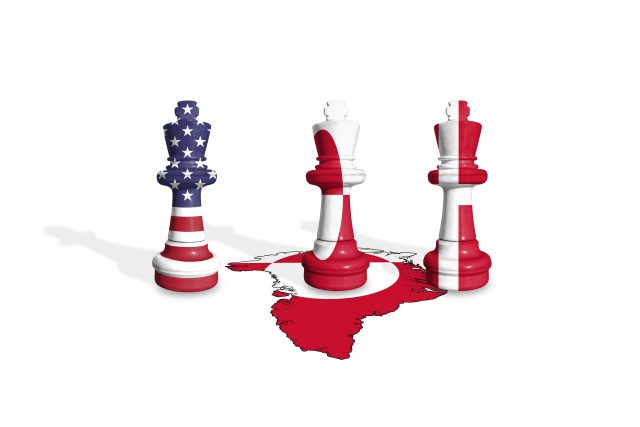
Trump, however, is wrong on tariffs. Adam Smith’s argument for free trade, which enables the wealth-creating division of labour, still applies. Of course, goods should be produced where it is cheapest to produce them, and the money so saved will be used for additional consumption or investment, to the benefit of everybody. I also find Trump’s position on Greenland hard to understand. There is no doubt that Greenland (as well as my own country, Iceland) is of great strategic importance for the West. But the United States already has military bases in Greenland. If she wants to strengthen the country’s defence and further coordinate it with her own defence, she can certainly reach an agreement with the Greenlandic people on this. There is no desire in Greenland to accommodate the Russians or the Chinese. The natural course of events seems to be that Greenland becomes independent, perhaps in a personal union with the Danish king (as Iceland did from 1918 to 1944), while maintaining existing ties with the Nordic countries, but entrusting her defence to the United States. Trump cannot buy Greenland from Denmark, simply because Greenland belongs to the Greenlanders, not to Denmark.
Punitive Tariffs
When the Danes and other Europeans try to explain this, Trump’s reaction is extraordinary. It is to announce a 10 per cent tariff, effective from 1 February, on goods from the eight European countries that recently sent expeditionary forces to Greenland—Denmark, Norway, Sweden, Finland, the United Kingdom, France, Germany, and the Netherlands. The tariff will be raised to 25 per cent on 1 June, he says. Most of those eight countries have been staunch allies of the United States. France’s assistance was indispensable to the American Revolutionaries in 1776. The United Kingdom long cherished the special relationship with the United States. Finland heroically defended the eastern border of our civilisation in the 1939–1940 Winter War. All eight countries are stable democracies and committed members of NATO, the most successful defence alliance in history. Trump now risks breaking up this alliance, which would only benefit the dictators in Moscow, Beijing, and Tehran.
No Practical Purpose
I do not believe that the United States will conquer Greenland by force. The threat to do so is a part of some negotiation strategy. But the punitive tariffs have already been announced. They serve no practical purpose. They violate the old Anglo-Saxon principle of no taxation without representation—the principle that indeed inspired the American Revolutionaries—and they impede free trade, as did the Sound Dues imposed in 1429 by Danish King Erik of Pommern on all ships passing through the Sound between Denmark and Sweden. The Sound Dues were eventually abolished. The Danes came to their senses. So, I hope, will the Americans.