





 Subscribe
Politics - March 8, 2026


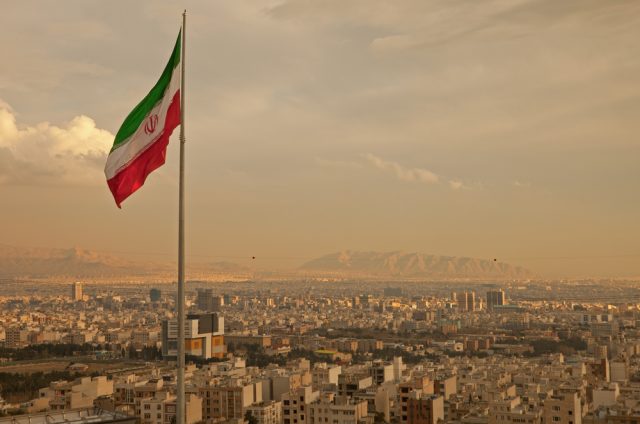
The American–Israeli joint operation against Iranian military assets and nuclear and ballistic-linked facilities has prompted a rapid diplomatic reaction across Europe. Within hours, the governments of France, Germany, and the United Kingdom released a joint statement urging Tehran to return to negotiations, while emphasising that none of the three had been directly involved in the operation.
The declaration, endorsed by President Emmanuel Macron, Chancellor Friedrich Merz, and Prime Minister Keir Starmer, reflects a common pattern in European crisis diplomacy: calls for restraint, renewed negotiations, and efforts to prevent the conflict from expanding into a regional war.
Yet the events that unfolded in the days after the strikes have put Europe’s position in an even more delicate position. In Madrid, the government of Pedro Sánchez announced that Spain would not authorise the use of jointly operated US–Spanish bases for operations related to the attacks. The decision was framed domestically as an effort to avoid further escalation. Internationally, however, it exposed an uncomfortable reality: a visible crack within NATO at the very moment the alliance’s deterrence posture in the Middle East was being tested.
Events on the ground quickly exceeded initial expectations. The killing of Iran’s Supreme Leader, Khamenei, along with several senior regime figures, shifted the confrontation from a punitive strike to a regime-change operation. By March 6, President Donald Trump openly called for Iran’s “unconditional surrender.”
These developments reveal a deeper structural tension in Europe’s strategic posture. EU member states continue to frame crises primarily through the language of diplomacy and restraint, even as the balance of power is being reshaped by actors willing to assume the risks that create real leverage.
Diplomacy Without Deterrence
European leaders are right: long-term stability requires negotiation or full-scale invasion. Military strikes, even precise ones, cannot replace either. However, negotiations rarely arise in a vacuum; they follow shifts in leverage—and the EU currently lacks any.
The current escalation was not initiated in a context of calm diplomacy but against a backdrop of years of Iranian regional projection, ballistic missile development, and a constant challenge to its nuclear capabilities.
The US–Israeli strikes, authorised by the Trump administration, represent a hard reset of deterrence dynamics. Regardless of support, they have altered the strategic calculus, and Iran will never be the same. Europe, by contrast, remains rhetorically committed to diplomacy while relying on others to apply the pressure that gives diplomacy meaning.
This arrangement may suit Europe’s domestic politics, but it is strategically fragile internationally. To sustain nuclear non-proliferation and promote civil liberties abroad, Europe must face a difficult truth: diplomacy rarely operates alone and usually follows—rather than replacing—credible deterrence.
The Sovereignty Paradox
Spain’s decision to refuse operational access to US bases highlights a deeper contradiction within Europe’s current strategic posture. Madrid framed the move as an effort to avoid additional escalation and to preserve its foreign credibility in the Middle East. Yet the decision also revealed a more extensive pattern: Europe’s persistent hesitation to take responsibility for forming the security environment in which it operates.
Across the continent, political leaders frequently invoke the goal of “strategic autonomy.” In practice, however, autonomy involves more than distancing oneself from American initiatives. It requires both the means and the political will to guide outcomes independently.
In this crisis, Europe did neither. It played no decisive role in the military action, nor did it offer a credible alternative to restrain Iranian escalation before it deteriorated. This shows a familiar pattern in European foreign policy: caution during critical phases, followed by diplomatic interaction after others have reshaped the strategic landscape.
The Shock of Regime Uncertainty in Iran
The killing of Khamenei adds volatility to an already volatile situation. For over four decades, the Islamic Republic has centred on the Supreme Leader, the ultimate arbiter among the regime’s political and institutional factions. His removal raises urgent questions about succession, command authority, and the internal balance of power, especially within the Revolutionary Guard.
At the same time, early signals suggest that Iran is unlikely to retreat quietly. Rather than signalling capitulation, the regime appears prepared to escalate if necessary, even at the cost of dragging the wider region into instability.
For Europe, this moment should not be interpreted solely as a regional conflict but as a wider strategic turning point. A weakening or fragmentation of Iran’s leadership will inevitably reshape energy markets, disrupt maritime trade routes, and intensify regional instability—all developments that directly affect European economic and security interests.
The consequences of the conflict are therefore unlikely to remain confined to the Middle East. Europe could face spillover effects in multiple forms: renewed migration pressures, volatility in energy supplies, financial turbulence, or even direct security threats, such as missile activity affecting Mediterranean territories like Cyprus.Yet Europe’s current approach leaves it largely reacting to events rather than influencing their trajectory.
The Multipolar Test
More broadly, the crisis exposes an emerging divergence within the Western alliance regarding how power should be exercised in an increasingly unstable international system. In Washington—notably under a foreign policy outlook centred on deterrence and national interest—there appears to be a greater willingness to use limited military force in order to alter strategic realities when necessary.
Israel, operating under acute security constraints, has followed a comparable logic. European governments, by contrast, continue to prioritise procedural legitimacy: observance of international norms, diplomatic mediation, and governing systems. This tendency has been visible not only in the present confrontation with Iran but also in earlier geopolitical disputes—from the Venezuela to Greenland “affaires”—where European actors emphasised dialogue and rules rather than coercive leverage.
None of these approaches is inherently wrong. Yet the gradual shift toward a progressively multipolar international order (or-disorder)—one in which revisionist powers increasingly challenge the existing rules—raises a difficult question. Are Europe’s diplomatic initiatives supported by its own capacity to shape events, or do they ultimately rely on the United States to impose the costs that diplomacy alone cannot deliver?
If the latter is true, then Europe’s calls for negotiations risk sounding less like deliberate leadership and more like a deliberately managed form of dependence.
A Moment of Strategic Clarity
Europe’s core principles are not misguided. Preventing Iran from acquiring nuclear weapons is still a legitimate objective. And escalation should indeed be contained, civilian populations protected, and a political settlement ultimately pursued.
Yet crises demand more than statements of principle; they entail strategic coherence. Diplomacy without credible deterrence invites opportunistic behaviour, while deterrence without diplomatic interaction risks uncontrolled escalation. Europe’s challenge is therefore to integrate both dimensions—not only rhetorically but in practice.
Recent events have already transformed the strategic landscape. Military strikes have altered the balance of power, while the possible leadership vacuum in Tehran introduces further uncertainty. Meanwhile, divisions within NATO have revived long-standing questions about Europe’s willingness to assume responsibility for hard security.
This debate goes beyond Spain’s refusal to allow US base operations. It also concerns the regional order that may emerge if Iran’s influence weakens. In that scenario, the Middle East could increasingly centre on competition between two assertive actors—Israel and Turkey—whose rivalry is already evident in Syria and the Eastern Mediterranean.
Against this backdrop, the European Union faces a fundamental choice. To remain primarily as a diplomatic observer, encouraging negotiations from the sidelines, or to begin building the strategic capacities necessary to influence the settlement it claims to support.
In today’s geopolitical environment, appeals for dialogue will only carry weight if backed by the ability to shape events rather than merely respond to them.
The question confronting Europe today is therefore no longer whether diplomacy matters. It is how many strategic shocks will be required before European leaders recognise that diplomacy alone is no longer sufficient.