





 Subscribe


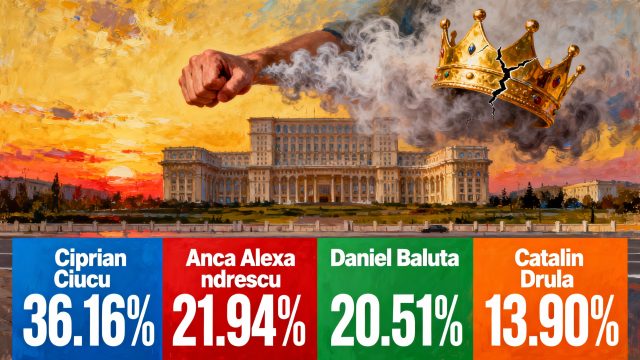
Last night can be described as a watershed period in Bucharest’s political landscape as the mayoral election played out in the shadow of last year’s presidential vote annulment. The final results show a voter base that has become more polarized and less engaged than it has been in previous electoral cycles.
For many right-leaning voters, last December’s annulment of the presidential elections crystallized a narrative: When electoral outcomes do not conform to the established order, the mechanics of democracy can be manipulated. This attitude has also caused a marked disconnection from the process, making many of these voters reconsider whether or not participation is a valid and healthy decision.
The Constitutional Court in a precedent-breaking order to annul the presidential election on grounds of irregularities and foreign interference shattered a long-standing confidence in Romania that national elections would be free of serious administrative issues. A string of protests and litigation ensued, cementing a sense of disenfranchisement, particularly among the younger urban electorate.
Earlier research highlighted an increasing lack of trust in political parties and institutions as one factor contributing to voter apathy. Since then that has deepened the trend and the fear that participation in elections could have little impact in reality. For residents of Bucharest, who were closely watching the unfolding crisis (which ended on August 10 with their mayor elected president in a new race), the reaction may be described as a curious blend of political interest followed by selective withdrawal from certain elections as illustrated by this day’s mayoral by-election.
In the June 2024 local election system, the candidate being backed by AUR failed to make much of an impact among the candidates leading the vote, indicating competition for protests but not penetrating the upper level. That said, Anca Alexandrescu, who represented AUR during this election cycle, is expected to have as much as 22% of the vote. The liberal candidate, Ciprian Ciucu, won the elections with over 30%, but 22% is a significant stabilizing force for AUR in Bucharest, as it points to a growing urban loyalty that the party had not been able to win.
Instead of seeing AUR’s ascent as a menace, many conservatives see the rise of AUR in today’s country as an important forum for frustration to be channeled into constructive political engagement. Calling AUR illegitimate is to serve only to reinforce the Coalition’s narrative of viewing all dissent as recklessly irresponsible. This rhetoric, paired with the coalition’s current pre-emption of budgets, media access, and regulatory mechanisms, fuels a climate of fear, especially among independent-minded voters, who fear the electoral systems are rigged to favor the ruling coalition. What it produces in Bucharest is a particular political chaos: the coalition presents itself as the only “responsible” option while whatever rises to the surface as challengers is branded disruptive, extremist or downright dangerous.
USR, which is associated with President Nicușor Dan, took a stinging defeat in Bucharest after the president ignored the constitutional rigor and publicly backed a unified pro-coalition candidate, initially USR’s Cătălin Drula, for its successor, but the fractured right split votes and handed the win to PNL’s Ciprian Ciucu. The result suggests that the citizens of Bucharest will not accept the coalition’s plans to micromanage the capital through presidential proxies and party deals, and they may prefer a mayor who boasts competence and won’t be fettered by the USR’s national entanglement or, importantly, the PSD’s dominance.
Despite winning only 12% of the vote and holding 40 seats in the Chamber of Deputies in Romania’s December 2024 parliamentary elections (the fourth-largest party), USR managed to achieve a major ministerial share in the new grand coalition government created in June 2025. This outsized importance is noteworthy especially when we factor in their recent electoral failures in the recent elections, including their loss in the Bucharest mayoral elections and the long list of controversies around the ministers. Their presence in the governing coalition headed by Ilie Bolojan gives them power over major policies, even though AUR were actually winning increased seats and are more dominant in the polls amid growing public support.
This type of structure illustrates one way by which coalition politics can empower smaller parties to exercise disproportionate power in places where larger parties need their backing to create viable governments and thus ignoring the will of millions of conservative voters.