





 Subscribe


For over a decade, the European Union has approached the Arctic primarily through a regulatory lens: a space for managed cooperation, a climate laboratory, an area of multilateral governance to be administered rather than secured.
This was not naïveté, but the coherent expression of a political culture shaped after the Second World War, grounded in the belief that force could be progressively replaced by rules, procedures and interdependence.
Today, that approach is showing clear limits. Not because European values have failed, but because the global strategic environment has evolved faster than Europe’s ability to adjust its strategic assumptions. The Arctic is now one of the regions where the gap between normative representation and strategic reality has become increasingly difficult to sustain.
Greenland as the linchpin of the Western Arctic
A recent in-depth report by POLITICO has brought renewed attention to an issue long treated as secondary in the European debate: Greenland’s role within the Western architecture of communications and space-based capabilities.
Brussels is reinforcing its presence on the island to protect satellite infrastructure that is increasingly exposed to interference, sabotage and hybrid threats.
The issue, however, is not technical. It is strategic.
Satellite communications underpin contemporary European security: defence planning, intelligence gathering, military navigation and the resilience of critical infrastructure. For geographic reasons, the Arctic is an unavoidable node within this architecture.
In this context, Greenland is not a remote periphery, but a central element in the security of the Western Arctic.
Acknowledging this reality does not amount to “militarising” Europe. It simply recognises that Europe is already embedded in a contested strategic environment, even when it prefers to describe that environment in neutral or administrative terms.
Power competition and Europe’s strategic ambiguity
The renewed centrality of the Arctic reflects a broader shift: the return of power competition as a structural feature of the international system.
Russia has invested systematically in the region, integrating it into its military posture and its broader strategic calculus. China, despite not being an Arctic state, has progressively incorporated the High North into its economic, technological and infrastructural outreach.
Faced with these dynamics, the European Union has often adopted an ambivalent stance. It has shown awareness of the evolving environment, but has struggled to translate that awareness into a coherent strategic posture. The obstacle has not been analytical capacity, but political, cultural and institutional resistance to treating security, deterrence and power as integral components of the European project.
This is the core contradiction: the EU was not wrong to rely on rules. It was wrong to assume that rules alone could endure without a credible security framework underpinning them.
Trump, Greenland and the European stress test
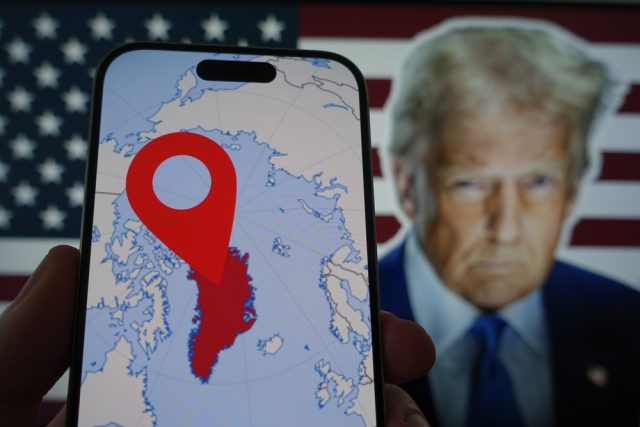
Donald Trump’s statements on Greenland must be read against this background.
When the American president argues – as reported by the BBC – that the United States “needs Greenland” for national security reasons, European reactions instinctively focus on legal principles and symbolic boundaries.
Such reactions are understandable, but incomplete.
Trump’s methods offer no model for Europe. Unilateralism, diplomatic coercion and transactional logic are incompatible with the European way of conducting international relations. Yet dismissing his remarks as mere provocation would be equally mistaken.
What those statements do, intentionally or not, is expose an issue Europe has long preferred to keep at the margins: the strategic centrality of the Arctic to Western security, and Greenland’s concrete role within that framework. In this sense, the episode functions less as a test of the transatlantic alliance than as a test of Europe’s capacity to articulate a mature strategic vision of its own.
NATO and European responsibility
Once the Arctic debate is framed in terms of responsibility rather than symbolism, one conclusion is difficult to avoid: the Atlantic dimension remains indispensable.
As noted by Corriere della Sera, Italy’s recent position on Greenland identifies NATO as the appropriate framework for addressing Arctic security, while fully respecting Danish sovereignty.
This is not a matter of subordination, but of strategic realism.
NATO does not replace Europe; it enables its security. And without security, no European ambition—industrial, environmental or political—can be sustained over time.
For years, a strand of European conservative thinking has made this point consistently: strengthening Europe means reinforcing its strategic credibility within the West, not constructing abstract notions of autonomy detached from existing alliances.
From awareness to strategy
Criticism of Europe’s Arctic posture does not stem from anti-European sentiment, but from the need for strategic maturity. The European Union has demonstrated its capacity to build rules, markets and cooperative frameworks. It must now demonstrate an equal capacity to operate in a competitive strategic environment.
The Arctic is a revealing test case. It does not allow for prolonged ambiguity, nor does it permit the separation of values from power. Ignoring the power dimension does not make Europe more principled; it makes it less consequential.
Trump’s language was blunt. The underlying strategic reality, however, has been evident for some time. The question now confronting the European Union is whether it can convert long-standing awareness into a coherent strategy.
Reality does not wait—but it still leaves room for choice.