





 Subscribe


For more than half a century, Europe has lived with the impression that energy is not a real problem and even if there really were an energy problem, it would be solved. Gas for heating homes and for factories producing industrial goods flowed fairly steadily to consumers, while the oil needed for mobility came from sources considered stable, which meant that energy was treated more as a commodity than as a security issue. However, if we read carefully the chapter “Changing Landscape of Energy Supply” from the study “Securing Supply: Rethinking Energy in a Changing Europe,” published in December last year, we can see how fragile this balance was and how quickly it collapsed when the geopolitical context changed dramatically. The Russian Federation’s invasion of Ukraine, which began almost four years ago, was not only a military shock for the old continent, but also a turning point that forced Europe to fundamentally rethink how it secures energy for its citizens.
What seemed stable and predictable has become uncertain and risky, causing the European energy landscape to change radically in a very short period of time. The study “Securing Supply – Rethinking Energy in a Changing Europe” emphasizes that this transformation was not the result of a single event, namely the war in Eastern Europe, but the culmination of decisions made over the last few decades. European countries have built an energy system based on economic efficiency, low production costs, and interdependence, assuming that trade relations would remain separate forever and above possible future political conflicts. This assumption proved to be one of the biggest strategic errors of the European continent. Before the crisis caused by the Russian-Ukrainian conflict, natural gas occupied a central place in the European energy mix, being perceived as a transitional solution between traditional fossil fuels and renewable sources (wind or solar energy). Until four years ago, the Russian Federation was the main supplier for many European countries, and this relationship was often presented as an example of pragmatic cooperation. However, the study “Securing Supply – Rethinking Energy in a Changing Europe” shows us that this dependence on Russian gas has created profound structural vulnerabilities across all economic sectors. The lack of real diversification, insufficient investment in alternative sources, and the concentration of infrastructure on a single supplier have turned energy into a weak point for the security of the European Union. With the reduction and subsequent interruption of gas supplies from the Russian Federation, Europe woke up from its slumber to face a harsh reality. Firstly, prices rose sharply; secondly, supply chains were destabilized due to a lack of predictability; and thirdly, European governments were forced to react and take measures to protect their citizens and industry under pressure. The study highlights that this energy crisis has revealed major differences between Member States. Countries that invested early in diversification and alternative sources have been able to adapt much more quickly to the current situation, while others have been much more exposed to the shock. The reader should understand that the change in the energy landscape is not limited to the source of supply, but also to the philosophy underlying energy policies. Energy has now moved from being a commodity to a strategic asset. Most European countries have begun to treat energy security as seriously as military or economic security. The chapter “Changing Landscape of Energy Supply” in the aforementioned study emphasizes that this change in perspective is one of the most important consequences of the current energy crisis.
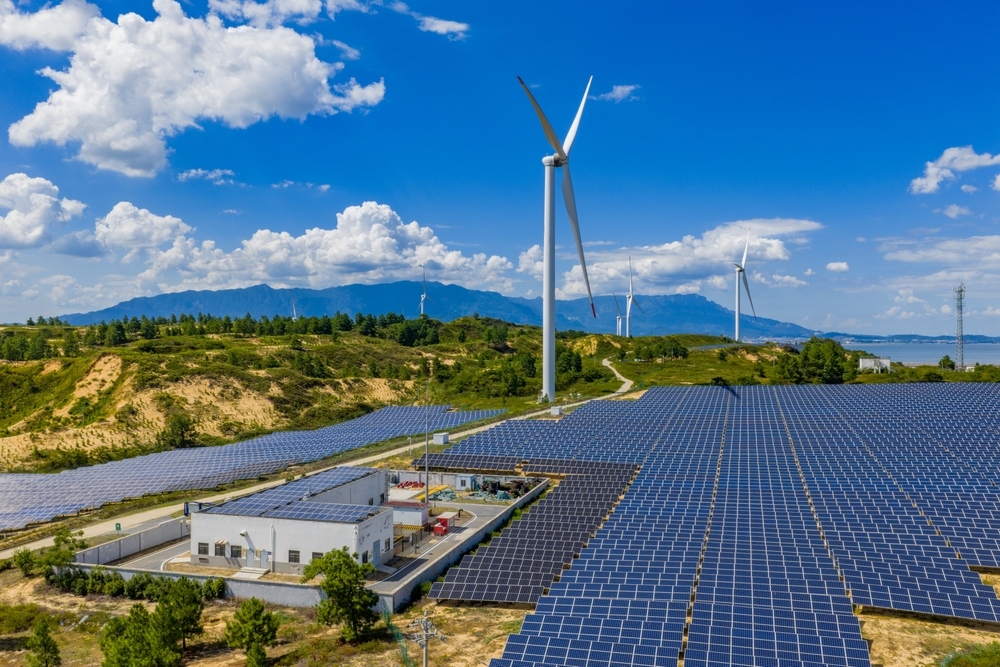
Another key aspect analyzed in the study is how the transition to renewable sources has been accelerated. The energy crisis has acted as a catalyst, speeding up processes that were previously progressing extremely slowly or were sometimes blocked by political debates and economic interests. In this sense, solar, wind, and other renewable sources have slowly but surely become not only environmentally friendly options, but also security solutions. However, the study warns us that this transition is not without challenges and involves high costs. Dependence on imported technologies (especially from Asian countries), critical raw materials, and global supply chains creates new vulnerabilities that are different in nature but just as serious as the current energy crisis.
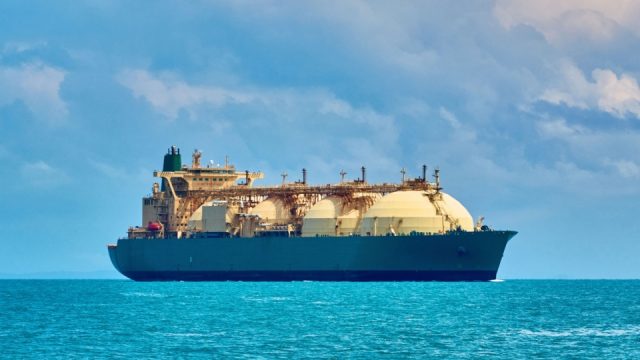
We can see how, step by step, the European energy landscape is being redefined through the diversification of gas and oil routes and suppliers. Over the past four years, imports of liquefied natural gas (LNG) have increased significantly, and cooperation with partners outside Europe, particularly the United States and Saudi Arabia, has become a priority for almost all Member State governments. This change has significantly reduced dependence on a single supplier (the Russian Federation), but at the same time it has led to much higher costs and created more intense global competition for resources, which shows us that the European Union’s energy security is no longer just an internal issue for the old continent, but one that is played out on a global level.
One element that has often been overlooked is the impact of this transformation in energy supply sources on end consumers, i.e. citizens. From the perspective of the average citizen, the increase in energy prices has directly affected living standards, fuelled inflation and amplified social inequalities. That is why the study suggests that the success of the new European energy policy will depend not only on the technical capacity to ensure supply, but also on how costs are distributed across civil society. Without public support and government funding, any strategy risks being challenged by citizens and, why not, even undermined. That is why changing the energy landscape also means rethinking the role of the state because, after years of liberalization and withdrawal from the market, governments have returned to the forefront, intervening to stabilize prices paid by citizens, protect consumers, and ensure continuity of supply. The study shows that this return is not necessarily temporary, but rather a sign of a new phase in which the state is becoming a central player in energy risk management.
If we were to draw a conclusion on the chapter “Changing Landscape of Energy Supply,” we can say that it describes a Europe undergoing an accelerated process of adaptation, in that the current energy crisis, which has destroyed old illusions, has also created an opportunity for strategic reconstruction for the future. We must be aware that energy is no longer a technical detail, but a fundamental component of the security and stability of the European continent. The way in which the European Union manages this transition will influence not only the economy and the environment, but also social cohesion and the long-term credibility of the European project. For many years, Europe believed that its energy supply was guaranteed, but the crisis triggered by the war in Ukraine has demonstrated once again how fragile this security was and how quickly dependence on a single supplier can become a threat to the security of Member States. Cheap gas has long been the foundation of European industry’s comfort, and when supplies were cut off, the entire continent discovered that energy security should not be seen as a luxury, but as a necessity. Europe has long ignored the warnings of political and economic analysts and is now paying the price for this. The changing energy landscape has revealed vulnerabilities that have built up over time, not overnight. We must be realistic when we say that the current energy crisis is not a mere accident, but the result of strategic choices made long ago because, as the authors of the study “Securing Supply – Rethinking Energy in a Changing Europe” have shown us, dependence on a single supplier has radically changed the rules of the game throughout Europe. One thing is crystal clear: energy has become one of Europeans’ greatest fears overnight, and the changing energy landscape has redefined the continent’s security.