





 Subscribe


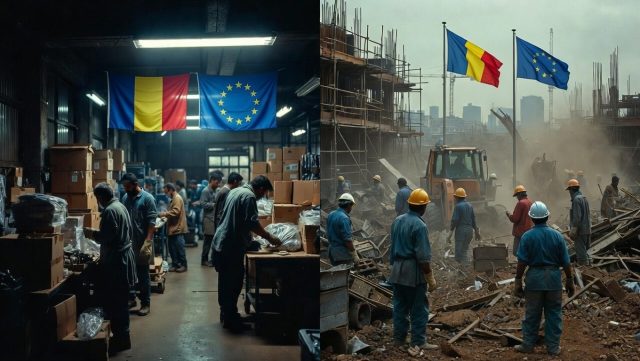
If you stop in the center of Bucharest’s warehouses or Timișoara’s construction sites, you’ll see a clear divide: low-wage jobs that Romanians are increasingly evading, replaced by waves of labor from outside the EU. But this is not merely about plugging gaps, it’s an outward symptom of larger problems, with Romania’s workforce being hit hardest.
The country remains beset by chronic labor shortages as the number of emigrants has risen with more than 6 million Romanians emigrating since 1989 seeking better prospects abroad. Rather than trying to explain why locals reject such positions, employers turn to importing workforce, creating a model of foreign workers who frequently cost more, but deliver steadfast reliability. Romania’s situation is not the only one. These trends are infecting Eastern Europe, transforming the work ecosystem in some areas while making room to argue for more equal treatment of citizens.
In recent years, Romania’s non-EU labor force has exploded. In late 2025, approximately 148,000 possessed work permits – a 48% increase from 2024 and almost double the 2023 figure. This growth is driven by government quotas of 90,000–100,000 per year. If around 15–20% annual increases persist, then the number would reach 200,000–250,000 by 2027–2028 or up to 300,000 in five years during high inflows. These workers, who are concentrated in urban centres like Bucharest, Ilfov, Constanța and Cluj, are primarily immigrants from Nepal, Sri Lanka, India, Turkey and Bangladesh. They do the grunt tasks: loading shipments, delivering packages by courier, unskilled building tasks, kitchen assistance, cleaning, dishwashing, packing, retailing, farming and servicing, jobs that sustain the economy at the expense of anchoring individuals in cycles of hardship.
Why Romanians refuse these jobs? It is simple math and quality of life. Wages are agonizingly low relative to the grind, contributing to “in-work poverty” that scarcely meets essentials. Most jobs require relocating or commuting long distances from family and support networks. Throw in grueling workloads, overtime shifts, terrible conditions and non-upgradability and it’s no wonder that locals drop out. Eligible Romanians usually pursue only short-term work abroad, where equivalent work is worth three times the wage, or pivot to self-employment, small businesses or household farming. These are not lazy decisions. They are rational reactions to a market that undervalues homegrown talent. As such, employers rely on foreign labor, but the shortcut is a cost to the country.
The real sting for Romanians? This flow threatens to bring down wages and create even more inequality. As migrants are willing to accept minimum pay (around €700 monthly) because there are too few new positions, they compete hard in the lower skilled sectors that threaten local business. But studies reveal mixed effects with some EU analyses finding no big job displacement of natives, though downward pressure on entry-level wages is visible, particularly among vulnerable cohorts. In Romania, that creates a double labor market: foreigners trapped in second-rate jobs with low options and Romanians rushing to fill mid-skilled jobs or quitting and settling on welfare. Resentment builds as locals see themselves pushed to the sidelines with growing fears of wage erosion and cultural shifts. The same may be said for Romania’s economy, which suffers from brain drain: emigration leaves potential GDP in ruins by 5–10%.
Strangely enough, foreign workers aren’t always “cheaper.” Base salaries are equal to locals’ minimums, but employers pay extra for recruitment, housing, meals and training, contributing to higher overall costs. “It’s expensive, yet they’re reliable,” one business owner conceded. The import of foreign workers has actually become a business in itself, not only in Romania, but in many parts of Eastern Europe. Romania’s system favors the exploitation of vulnerabilities and risks among foreigners over locals being recruited by providing better pay, better training or incentives.
The EU’s experience demonstrates that immigration can stimulate economies, but only when it is properly integrated, not at the expense of the European citizens or the EU’s security. Romania needs to focus on its people to end the cycle, transforming a potential crisis into shared prosperity.