





 Subscribe


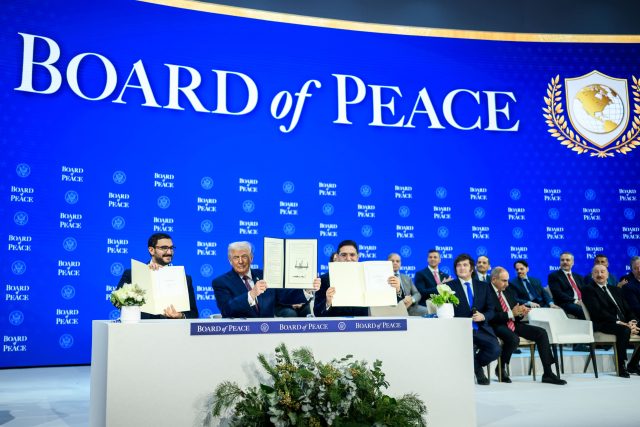
On the eve of the first formal meetings, the European Union is questioning the effectiveness and appropriateness of collaborating with the Board of Peace. This body was born as an initiative promoted by Donald Trump with the stated goal of supervising the ceasefire in the Gaza Strip and, at a later stage, extending its action to the resolution of global conflicts. Announced in September 2025 as an international instrument to support the various phases of negotiations on Gaza and subsequent reconstruction, the project received formal approval in November through a United Nations resolution, which recognized its role as the primary vehicle for the diplomatic process related to the crisis. It was officially established the following January, at the World Economic Forum summit in Davos, in the presence of the President of the White House, who significantly expanded its mandate, establishing it as an international body led by the United States and aimed at promoting peace on a global scale.
COMPOSITION AND DECISION-MAKING MECHANISMS
The Board of Peace has a distinctly pyramidal structure. At the top is Trump himself, who, according to the statute, holds the presidency of the Council. His replacement is possible only in the event of voluntary resignation or incapacity certified by a unanimous vote of the Executive Council, effectively establishing a strongly consolidated leadership position. Ordinary members are appointed by direct invitation from the promoter and serve a term of no more than three years, except those who contribute more than $1 billion, who are guaranteed a permanent seat. To date, only the United States and the United Arab Emirates have formalized this commitment. The Board’s operations are organized around a central executive committee, composed of political and diplomatic figures closely linked to the US president. These include Jared Kushner, Marco Rubio, Steve Witkoff, and Tony Blair, the latter serving as the Quartet’s Middle East envoy. A liaison role has been assigned to Bulgarian diplomat Nickolay Mladenov, former UN coordinator for the peace process, who is charged with liaising between the Executive Committee and a broader committee dedicated to Gaza and a Palestinian national committee for the administration of the Strip. This latter body is led by Ali Shaat, a former Palestinian Authority minister based in Ramallah, and includes Palestinian officials. Alongside the Executive Committee, there is a general subcommittee vested with the powers necessary to implement the peacekeeping mission, as well as a third body responsible for entrusting day-to-day administration to a group of Palestinian experts. A central element of the decision-making architecture is Trump’s veto power over all relevant decisions, including the creation, modification, or dissolution of subordinate bodies. This prerogative accentuates the Board’s highly personalized nature, raising questions about the internal balance of power and its compatibility with traditional multilateral models.
INTERNATIONAL MEMBERSHIPS AND MULTINATIONAL FORCE
Over twenty countries have declared their intention to join the Governing Council, including Albania, Argentina, Armenia, Azerbaijan, Bahrain, Belarus, Bulgaria, Egypt, Hungary, Indonesia, Israel, Jordan, Kazakhstan, Kosovo, Mongolia, Morocco, Pakistan, Paraguay, Qatar, Saudi Arabia, Turkey, the United Arab Emirates, Uzbekistan, and Vietnam. China and Russia have confirmed receiving an invitation, but have not specified their final position. Observers include Italy, Romania, Greece, and Cyprus. Operationally, the Board envisions the deployment of a multinational force tasked with stabilizing the most critical areas of the Gaza Strip, which are experiencing daily clashes. The mission would include the disarmament of Hamas, an objective that, however, remains controversial both in terms of its implementation and its political and security implications.
THE EUROPEAN UNION BETWEEN INVOLVEMENT AND DISSENT
In this context, the role of the European Union emerges as particularly delicate and complex. The European Commission’s decision to send Dubravka Šuica, Commissioner for the Mediterranean, to the first formal meeting of the Council in Washington sparked strong reactions among several member states. During a meeting of EU ambassadors on February 18, several capitals expressed outrage over the lack of prior consultation and the political significance of the participation of a high-level representative, given that the Union, as such, is not a member of the Council. France, Belgium, Spain, Ireland, Slovenia, and Portugal raised objections on both institutional and political levels, while Germany expressed more cautious reservations. Critics emphasized that Šuica’s presence, as a political figure, confers substantial legitimacy on a body whose governance and compatibility with the United Nations Charter have been the subject of repeated doubts by the Commission itself. The European Union thus finds itself in an ambivalent position. On the one hand, Brussels has raised concerns about the scope of the mandate, the governance structure, and the Board’s compliance with the multilateral principles enshrined in the UN Charter, to which all twenty-seven member states are signatories. On the other hand, the EU, as the largest donor of humanitarian aid to the Palestinian territories, with a total contribution of €1.65 billion since the beginning of the war between Israel and Hamas on October 7, 2023, does not intend to be marginalized in the decision-making process regarding the future of Gaza.
INTERNAL DIVISIONS AND DIPLOMATIC PROSPECTS
The divergences among member states reflect differing strategic orientations toward the US initiative. Hungary and Bulgaria have indicated their intention to permanently join the Board of Directors, while other capitals have expressed their desire to participate as observers. The debate will continue at the Foreign Affairs Council in Brussels, with the participation of Mladenov, appointed High Representative for Gaza by Trump and tasked with coordinating the Board with the Palestinian Committee. In this context, the European Union and its member states face a crucial strategic choice: maintain a prudent critical distance, consistent with traditional multilateralism, or seek active involvement to influence from within the evolution of an organization that aims to redefine the balance of international peace governance.