





 Subscribe


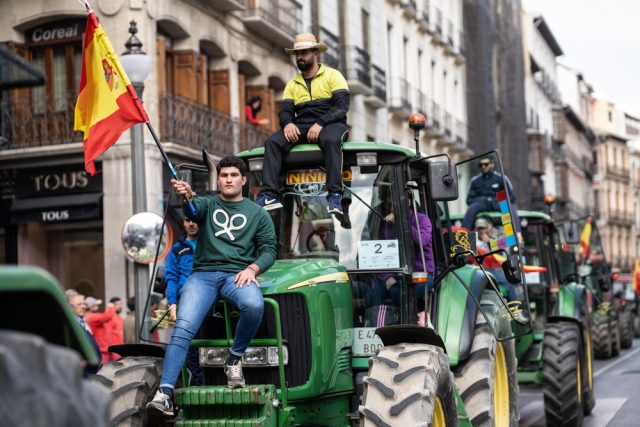
EU farmers (approx. 9 million holdings) are navigating a turbulent period, marked by widespread protests against high administrative burdens, low income, and competition from imports.
Throughout 2024, 2025 and early this year, mass protests erupted especially in France, Germany, Belgium but also Spain and Italy, with farmers using tractors to blockade major cities and highways. The protest reached its peak on December 18, 2025, when thousands of farmers (in a number between 7,000 and 10,000) and 1,000 tractors from across the European Union descended on Brussels and blocked the roads in the European Quarter.
Reasons of farmers protests are their concerns over several critical issues threatening their economic survival. Farmers complain about low incomes (often 40% lower than the national average), excessive bureaucracy in “green” policies, and competition from low-cost imports that do not meet the same European environmental and health standards.
Another major concern for the future of agriculture in the EU is a critical generational crisis in the farming sector that threatens long-term food security. This is mainly due to aging workforce, as only 12% are is facing under the age of 40, while the average age of EU farmers is 57. Also over 60% of EU farms are smaller than 5 hectares, making them particularly vulnerable to market shocks and rising input costs.
On February 12, the European Parliament adopted new measures to protect European farmers from unfair trading practices (UTPs) by large buyers of agricultural products. With 555 votes in favor, no votes against and 26 abstentions, new rules have been approved that oblige national authorities to cooperate on the issue of unfair trading practices, to ensure that farmers receive fair remuneration for their work. The adopted measures aim to prevent, tackle and punish cases of cross-border unfair trading practices damaging farmers and small producers.
To strengthen the protection of farmers, the new legislation will allow member states to act on their own initiative to stop abusive practices with no need of a formal complaint from the affected farmer. This new system will replicate the regime put in place in the single market for geographical indications protection.
New measures will be in force to protect producers from the unfair trading practices like late payments for perishables, last-minute cancellations, and unilateral contract changes and prevent large buyers from avoiding responsibility by relocating outside the EU. They will be obliged to designate an EU-based contact person in order to eliminate impunity for non-EU buyers: if a foreign company delays payments or unilaterally modifies a contract, the enforcement authority will be able to deal directly with the designated contact to obtain documents or notify sanctions.
This will guarantee an immediate reachability, avoiding international bureaucratic hurdles to launching an investigation, legal accountability with a physical presence within the Union that will have to respond to requests from national authorities and an equal protection of farmers, regardless of the buyer’s nationality.
The new EU regulation also enhance protections against cross-border unfair trading practices in the agri-food supply chain by requiring national authorities to use the Internal Market Information System (IMI), an existing secure, multilingual IT platform for administrative cooperation that streamlines communication between national, regional, and local authorities across the EEA. Its purpose is to provide a tool for exchanging information between public administrations in different member states, allowing for rapid, coordinated responses to stop unfair trading practices.
The new legislation aims to rebalance the food supply chain and will be applicable 18 months after publication in the EU Official Journal. These measures supplement the 2019 Unfair Trading Practices Directive which has been adopted in 2019 and aims to protect farmers from practices such as late payments or short-notice cancellations when selling their products to big supermarkets and food processing companies.
Laura Perreca