





 Subscribe


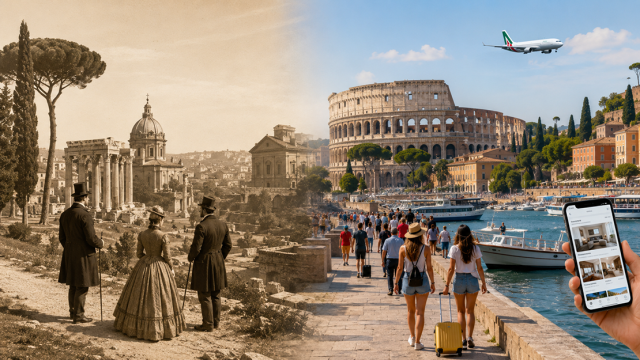
A century-long transformation has turned Italy from an exclusive destination for aristocrats into a tourism powerhouse, fueled by international visitors, digital innovation, and a sector that now contributes nearly one-tenth of the country’s economy.
Italy’s tourism industry has undergone one of the most remarkable transformations in Europe over the past century. Once the exclusive destination of aristocrats, scholars, and artists undertaking the famous Grand Tour, the country has evolved into one of the world’s most visited destinations, welcoming hundreds of millions of overnight stays every year. A new study released by Italy’s National Institute of Statistics (ISTAT), titled From the Grand Tour to Mass Tourism, traces this extraordinary journey from 1924 to 2025, highlighting how economic development, technological innovation, and changing travel habits have reshaped one of the nation’s most important industries.
The report illustrates how tourism has grown from a niche cultural experience into a pillar of Italy’s modern economy. Over the last hundred years, overnight stays in Italian hotels have increased almost ninefold, rising from approximately 32 million in the 1920s to 288 million today. When extra-hotel accommodation—including holiday apartments, bed and breakfasts, agritourism properties, and short-term rentals—is included, the figure reaches an impressive 535 million overnight stays.
One of the defining turning points came during the 1960s, when Italy’s post-war economic boom dramatically expanded access to travel. Improved highways, modern railways, and growing air transport networks made holidays affordable for a much larger share of the population. Tourism was no longer reserved for the wealthy elite but became an increasingly common part of everyday life for millions of Italians and international visitors alike.
This long period of expansion experienced only one major interruption during the COVID-19 pandemic. In 2020, tourism activity collapsed by more than 50 percent as international travel restrictions and health measures brought global mobility to a standstill. However, the recovery proved remarkably rapid, with visitor numbers rebounding strongly as borders reopened and travel demand returned.
International tourism has become an increasingly important driver of Italy’s success. While domestic travelers represented the majority of overnight stays until only a few decades ago, foreign visitors now account for 55.3 percent of total tourist presences, compared with just 33.6 percent in 1990. This profound shift reflects the growing globalization of travel and the increasing accessibility of Italy thanks to expanded international air connections.
Low-cost airlines have played a particularly significant role in this transformation. The rapid growth of budget carriers has reduced travel costs and connected Italian cities with destinations across Europe and beyond, making the country more attractive to millions of travelers who may previously have considered Italy an expensive or difficult destination to reach. Increased connectivity has also encouraged repeat visits and year-round tourism, helping many regions diversify their visitor base.
Tourism’s economic importance has grown alongside visitor numbers. According to Italy’s Tourism Satellite Account, the internationally recognized statistical framework used to measure the industry’s contribution, tourism directly generated around 5 percent of Italy’s Gross Domestic Product in 2023. When indirect economic effects—including spending on transportation, restaurants, retail, cultural attractions, and other services—are included, tourism’s total contribution rises to approximately 9.6 percent of GDP, underlining its strategic role within the national economy.
Italy’s position within Europe has also evolved. In the mid-1990s, the country ranked as the European Union’s leading destination for overnight tourist stays. Today, Spain occupies the top position, while Italy remains firmly among Europe’s tourism leaders, ahead of countries such as France and Germany in terms of total overnight stays. This continued competitiveness reflects Italy’s exceptional combination of historical heritage, world-renowned cuisine, diverse landscapes, artistic treasures, and cultural experiences.
The profile of international visitors has changed considerably as well. During the 1960s, the overwhelming majority of foreign tourists came from neighboring European countries. Today, nearly half of all international overnight stays are generated by visitors from outside Europe, demonstrating Italy’s growing appeal in long-haul markets across North America, Asia, the Middle East, and other regions.
Domestic tourism patterns have also become more geographically balanced. Although Rome remains Italy’s most visited destination, followed by Milan, Venice, Florence, and Naples, tourism is increasingly spreading throughout the country. Southern Italy, in particular, has significantly increased its share of national tourism over recent decades, with the region’s weight roughly doubling compared with the 1960s. Improved transport infrastructure, international promotion, and growing interest in authentic local experiences have helped previously underrepresented destinations attract larger numbers of visitors.
Perhaps the most visible transformation has been digital. Online booking platforms have fundamentally changed how travelers plan their holidays. Between 2018 and 2024, overnight stays booked through digital platforms such as Airbnb, Booking.com, Expedia, and TripAdvisor nearly doubled, rising from around 66 million to almost 127 million. Italy now ranks as Europe’s third-largest market for bookings made through these platforms, behind only France and Spain. Notably, three out of every four reservations made through these services come from international travelers—a proportion that exceeds the European average and highlights Italy’s enduring global appeal in the digital age.
A century after the era of the Grand Tour, Italy continues to reinvent itself as a destination. While its timeless artistic and cultural heritage remains its greatest strength, the country’s ability to adapt to changing travel habits, embrace technological innovation, and attract an increasingly international audience ensures that tourism will remain one of the driving forces behind Italy’s economy and global image for years to come.
Alessandro Fiorentino